
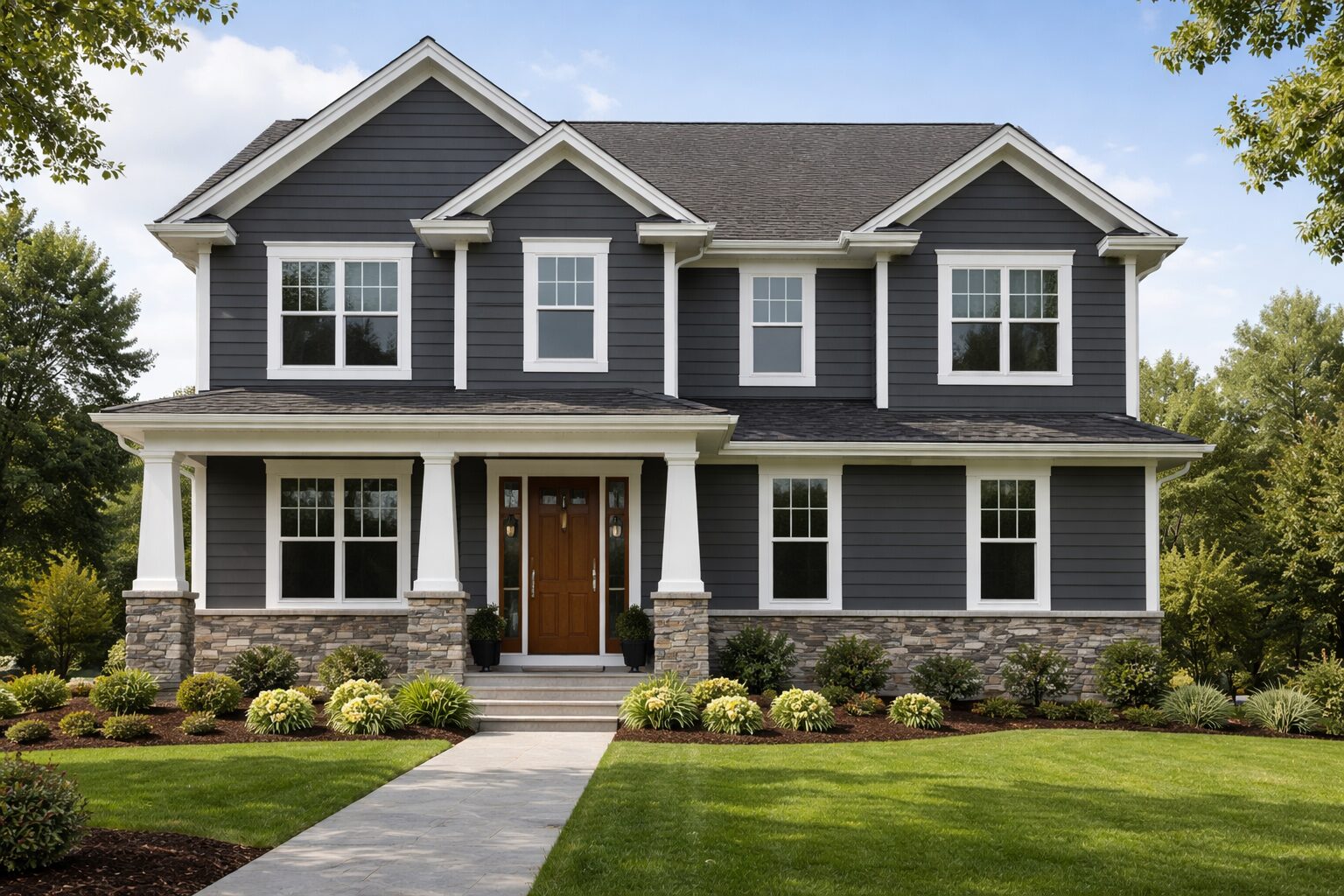
Gulf Coast Siding Color Guide
2026 Siding Color Trends for Louisiana and the Mississippi Gulf Coast
The strongest 2026 siding color directions combine warm neutrals, deep charcoal, muted greens, coastal blues, and controlled contrast. For Louisiana and Mississippi Gulf Coast homes, the right palette also needs to work with the roof, brick, trim, strong sunlight, humidity, and the exact siding product selected.
The quick answer
Popular siding colors in 2026 include Iron Gray and charcoal, warm greige and sand, muted sage and olive, coastal blue, and softer brown-charcoal tones. The most practical Gulf Coast palettes use one main siding color, a consistent trim color, and no more than one controlled accent. Always compare samples beside the existing roof, brick, stone, windows, gutters, and doors before making a final choice.
Iron Gray and Charcoal
Bold neutrals that create a clean, defined exterior with light or warm trim.
Warm Greige and Sand
Quiet main colors that coordinate well with brick, stone, and varied roof blends.
Sage and Olive
Nature-inspired colors that feel grounded without looking overly dark.
Coastal Blue
A versatile Gulf Coast direction that works with white, cream, bronze, or charcoal details.
Brown-Charcoal
A warmer alternative to black for shutters, doors, gables, and other accents.

Five siding color directions defining 2026
1. Deep charcoal and Iron Gray
Dark gray remains a leading exterior direction because it creates strong curb appeal without depending on a complicated color scheme. James Hardie named Iron Gray its 2026 Color of the Year, highlighting a deep neutral that can work as the main field color or as an accent. On Gulf Coast homes, charcoal is especially effective when the soffit, fascia, corner boards, and window trim follow one consistent plan.
Use a dark main color carefully around fixed features. Warm brick may call for cream or taupe trim instead of bright white, while cooler stone can support a crisper white-and-charcoal combination. Product availability also matters because not every dark color is offered in every vinyl or fiber-cement profile.
2. Warm greige, sand, and creamy neutrals
Warm neutrals are a practical choice for homeowners who want an updated exterior that will not feel tied to a short-lived trend. Greige, taupe, sand, Navajo Beige, and creamy off-white can soften strong sunlight and coordinate with many common Gulf Coast roof and masonry colors.
These shades are also useful when the home already has several permanent visual elements. A restrained main color gives brick, stone, shutters, landscaping, and roof texture room to work without making the elevation feel busy.
3. Muted sage, olive, and nature-inspired greens
Muted greens continue to move beyond accent doors and into full siding palettes. Sage and olive can feel traditional on a cottage, grounded on a ranch home, or contemporary when paired with simple trim. They are strongest when the undertone is compared directly with the roof and surrounding brick rather than selected from a screen.
4. Coastal blue without the beach-house cliché
Blue remains a natural fit for Louisiana and the Mississippi Gulf Coast, but the 2026 approach is more controlled than a bright nautical palette. Dusty blue, blue-gray, and deeper navy tones can serve as the main siding color, while white, cream, warm beige, charcoal, or dark bronze can define the trim and roofline.
5. Softer two-tone combinations
Two-tone siding is still useful for highlighting gables, entries, dormers, or board-and-batten sections, but the contrast does not have to be extreme. Warm neutral with olive, sand with brown-charcoal, or blue-gray with cream can create depth while keeping the home cohesive. The goal is to support the architecture, not divide every wall into a different color.
How to match siding with the roof, brick, and trim
A siding sample should never be evaluated by itself. Roof shingles, brick, stone, windows, gutters, fascia, and permanent metal finishes usually remain in place longer than paint or an accent door. Start with those fixed elements, identify whether their undertones are warm or cool, and build the siding palette around them.
| Siding direction | Trim and accent ideas | Check before choosing |
|---|---|---|
| Iron Gray or charcoal | White, cream, warm wood, or restrained black accents | Confirm the roof and brick do not create competing dark undertones. |
| Warm greige or sand | Cream trim, bronze fixtures, or a deeper neutral door | Compare the sample in shade and direct afternoon sun. |
| Sage or olive | Warm white, taupe, natural wood, or dark bronze | Check the green against landscaping and weathered roof tones. |
| Coastal blue | White, cream, charcoal, or beige trim | Compare blue undertones with the roof, stone, and window frames. |
| Light neutral | Darker shutters, gutters, gables, or one accent door | Make sure the exterior keeps enough contrast to show its details. |
Practical tip: view full-size samples on more than one wall. A color can look noticeably different in morning shade, bright midday sun, and reflected light near brick or concrete.
How 2026 colors read on vinyl and fiber-cement siding
The same color family can look different depending on the siding material, surface texture, panel width, and profile direction. Color selection should happen together with product selection, not as a separate final step.
Vinyl siding
Vinyl offers factory-finished color in lap, shake, and other profiles. Available colors vary by product line, so confirm the exact profile, panel exposure, trim accessories, and color before approving the estimate.
Fiber-cement siding
Fiber cement can support lap siding, panels, and architectural accents. James Hardie ColorPlus® Technology provides a factory-applied finish in selected colors and products, including options for homeowners comparing deeper or more traditional palettes.
Board-and-batten accents
Vertical siding can define a gable, entry, or addition without changing the entire home. It works best when the accent color and trim connect clearly to the main elevation.
Mixed exterior materials
Brick, stone, siding, fascia, and gutters should read as one exterior system. Limit the palette so different materials create texture rather than visual clutter.

A practical siding color planning checklist
- Photograph the full exterior. Include every elevation plus close views of the roof, brick, stone, windows, fascia, gutters, shutters, and doors.
- Separate fixed and changeable colors. Identify what will remain after the siding project and what can be included in the new trim or accent package.
- Choose the siding material and profile. Confirm whether the plan uses vinyl, fiber cement, lap siding, board-and-batten, shake accents, or a combination.
- Compare physical samples outdoors. Review the actual product in morning shade, midday sun, and late-afternoon light beside the home’s permanent finishes.
- Put every exterior detail in the written scope. Document the product, color, trim, housewrap, flashing, soffit, fascia, gutters, removal, repairs, cleanup, and final review.
Keeping the finished color looking clean on the Gulf Coast
Pollen, humidity, shade, rain splash, and storm debris can make any exterior look tired. Gentle routine care helps preserve the finished appearance and makes it easier to notice loose panels, damaged caulk, staining, or moisture concerns before they become larger repairs.
Rinse gently
Use a garden hose for loose pollen and dust. Avoid forcing water upward behind panels or trim.
Use mild cleaning methods
Follow the siding manufacturer’s care guidance and avoid abrasive tools that can damage the finish.
Inspect after severe weather
Check wall edges, corners, openings, trim transitions, and low areas where water or debris may collect.
Siding services and real Louisiana projects
Use these resources to compare materials, review completed color combinations, and plan the scope of a siding project.
Frequently asked questions about 2026 siding colors
What are the most popular siding colors in 2026?
Leading 2026 directions include warm greige, sand, creamy neutrals, charcoal and Iron Gray, muted sage and olive, coastal blue, and softer brown-charcoal tones. The best choice depends on the home’s roof, brick, stone, trim, lighting, and siding product.
Is dark gray siding a good choice for Louisiana homes?
Dark gray can create a strong, modern exterior when it works with the roof and masonry and is available in the selected product line. Review a physical sample in direct sun and shade, then confirm the complete trim and accent package before ordering.
What siding colors work with a brown roof?
Warm greige, cream, sand, taupe, muted green, and selected blue-gray shades can coordinate with a brown roof. The roof’s undertone and any existing brick or stone should guide the final sample comparison.
Should the soffit and fascia match the siding?
They do not have to match, but they should follow a consistent plan. Light soffit and fascia can create a crisp roofline around a darker siding color, while warm trim can soften a neutral or blue exterior.
Can vinyl siding and fiber cement use the same color palette?
Yes, but the available colors, textures, panel widths, and sheen can differ by manufacturer and product line. Compare actual product samples rather than assuming that two colors with similar names will look identical.
How many exterior colors should a home use?
Many homes look cohesive with one main siding color, one trim color, and one controlled accent. A second siding tone can work on a gable or architectural feature when it supports the home’s shape instead of dividing the elevation.
Plan a siding color and replacement scope that fits your home
Southern Home Improvement Center can help you compare siding materials, profiles, colors, trim details, and installation options for homes in Southeast Louisiana and along the Mississippi Gulf Coast.