Section 25C Energy Tax Credit Ended in 2025 — What Homeowners Filing in 2026 Should Know
Homeowners filing a 2025 federal tax return in 2026 may still need product identification and project documentation for qualifying improvements that were installed and placed in service during 2025. A window, door, HVAC, or other home improvement installed in 2026 does not qualify for the Section 25C Energy Efficient Home Improvement Credit under current federal law.
The Energy Efficient Home Improvement Credit, commonly called Section 25C, previously provided federal tax incentives for certain energy-efficient improvements such as qualifying replacement windows, exterior doors, insulation, heat pumps, water heaters, and other eligible property.
Federal law changed in 2025 and accelerated the end of the credit. For homeowners preparing tax returns in 2026, the key question is therefore not whether a new 2026 project qualifies. The key question is whether qualifying property was placed in service by December 31, 2025 and whether the documentation needed for the 2025 claim has been retained.
Current federal status
Can Homeowners Claim Section 25C for Improvements Installed in 2026?
No. The IRS states that the Energy Efficient Home Improvement Credit is not available for property placed in service after December 31, 2025.
Eligibility depends on the applicable Section 25C requirements, product qualifications, limits, documentation, and the homeowner's tax situation.
The federal Section 25C credit ended for property placed in service after December 31, 2025.
This distinction is especially important when a product was ordered or purchased in 2025 but installation was not completed until 2026. Federal tax-credit timing generally depends on when qualifying property is placed in service, not simply when a contract was signed or a deposit was paid.
2025 tax-return documentation
What Happened to the 17-Character 25C Product Identification Number?
Before the credit's termination date was accelerated, IRS guidance established a product-identification system for specified property. That system included Qualified Manufacturers and product identification requirements intended to help connect eligible products with tax-credit claims.
For qualifying specified property placed in service during 2025, the 2025 Instructions for Form 5695 require a four-character Qualified Manufacturer Identification Number, or QMID, for applicable items. IRS guidance also refers to this four-character identifier as a Qualified Manufacturer Code in some materials.
A full 17-character Qualified Product Identification Number, or QPIN, had been designed for specified property placed in service beginning in 2026. However, because Section 25C was subsequently terminated for property placed in service after December 31, 2025, homeowners should not interpret the existence of a 2026 QPIN framework as meaning that new 2026 installations qualify for the credit.
Use the current IRS Form 5695 instructions for the 2025 tax year and obtain the required manufacturer identification information for the exact qualifying product. Do not assume that a generic ENERGY STAR label, brand name, model description, or contractor invoice alone satisfies every federal filing requirement.
Records to keep
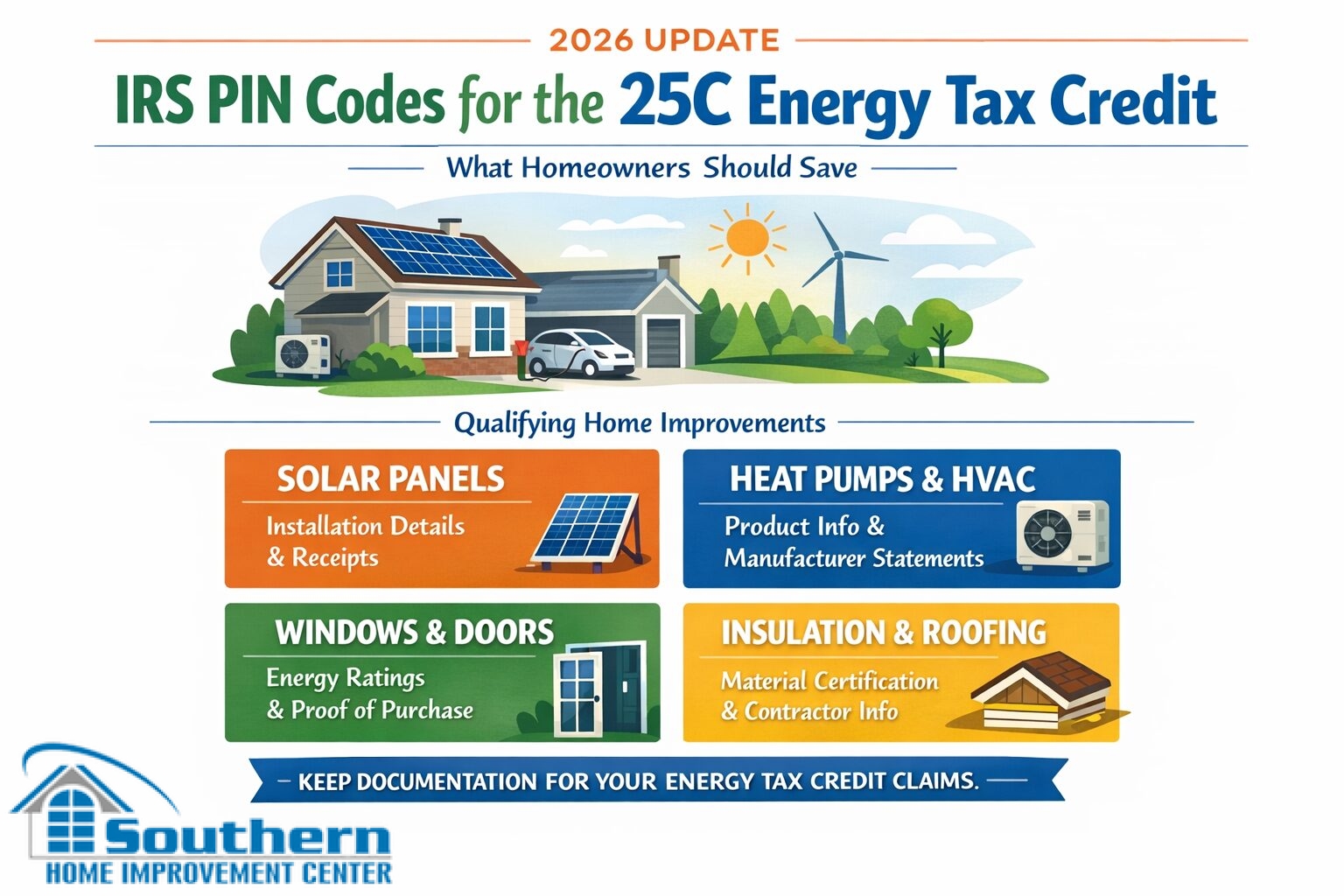
Documents to Save for a 2025 Section 25C Claim
Homeowners who completed potentially qualifying improvements in 2025 should keep project and manufacturer records together before preparing their federal return.
Keep an invoice showing the products installed, project address, installation details, and relevant costs.
Retain receipts, payment confirmations, financing records, or other documentation showing the completed transaction.
Save the exact manufacturer, product line, model information, and applicable Qualified Manufacturer identification information.
Keep manufacturer certification statements or other materials showing that the exact product met the applicable federal requirements for the 2025 credit.
Document when the improvement was installed and placed in service. This is especially important for projects that began late in 2025.
Use the IRS instructions for the correct tax year rather than relying on older articles, advertisements, or product literature.
Replacement windows and exterior doors
What Louisiana and Mississippi Homeowners Should Know About 2025 Window and Door Claims
Replacement windows and exterior doors were among the categories covered by Section 25C when applicable federal requirements were met. For homeowners filing a 2025 return in 2026, eligibility depends on the rules that applied to the specific property and tax year.
Not every replacement window or exterior door automatically qualified. Product performance requirements, manufacturer status, identification information, applicable credit limits, installation timing, and the taxpayer's individual circumstances all matter.
If qualifying windows or doors were installed and placed in service during 2025, locate the product documentation now rather than relying only on the total project invoice. When several windows or doors were installed, keep enough information to identify the exact products associated with the claim.
New products placed in service after December 31, 2025 are not eligible for this federal credit under current law. Home improvements should be evaluated based on the home's condition, comfort, energy performance, durability, weather exposure, product specifications, budget, and other available programs that are actually in effect.
Planning current projects
What Does This Mean for Window and Door Projects in 2026?
Homeowners replacing windows or exterior doors in 2026 should plan the project without assuming that the federal Section 25C credit will offset the cost.
There may be other federal, state, utility, manufacturer, financing, insurance, or energy-efficiency programs available at different times, but those programs have separate rules and should be verified independently before they are included in a project budget.
For Gulf Coast homes, product selection should focus first on the requirements that directly affect the property: energy performance, air and water resistance, glass options, installation quality, durability, maintenance, wind exposure, and the conditions specific to the home.
Official federal information
Verify Section 25C Information With the IRS
Federal tax rules can change, and eligibility depends on the individual taxpayer and the exact property involved. Homeowners should use current IRS guidance and consult a qualified tax professional when determining whether an improvement qualifies for a federal credit.
Related SHIC resources
Window and Door Resources
Frequently asked questions
Section 25C FAQ for 2026
Can I claim Section 25C for replacement windows installed in 2026?
No. Under current federal law, Section 25C is not available for property placed in service after December 31, 2025.
Can I still claim the credit when filing my 2025 taxes in 2026?
Potentially. Qualifying improvements that were placed in service during 2025 may still be considered when filing the 2025 federal tax return, subject to all applicable Section 25C requirements, credit limits, documentation rules, and the taxpayer's circumstances.
Do I need a 17-character PIN for property installed in 2025?
The 2025 Instructions for Form 5695 use a four-character Qualified Manufacturer Identification Number for applicable specified property. Homeowners should follow the current IRS instructions for the 2025 tax year and obtain the required information from the qualified manufacturer.
What if I bought the product in 2025 but it was installed in 2026?
A purchase date by itself does not make a 2026 installation eligible. The IRS states that the Section 25C credit is not available for property placed in service after December 31, 2025. Discuss unusual timing situations with a qualified tax professional.
Does ENERGY STAR certification automatically mean I can claim the credit?
No. Product eligibility for a federal tax credit depends on the specific requirements that applied to the property and tax year. Homeowners should verify the exact product and filing requirements rather than relying only on a general efficiency label.
Is Section 25C a rebate or cash payment from the contractor?
No. Section 25C was a federal income tax credit. Southern Home Improvement Center does not determine federal tax-credit eligibility or approve tax claims.
Tax information notice: Southern Home Improvement Center provides roofing and exterior home-improvement services and does not provide tax, legal, accounting, or financial advice. Federal tax-credit eligibility and filing decisions should be verified using current IRS guidance and, when appropriate, a qualified tax professional.
Planning an exterior upgrade?
Request an Estimate for Replacement Windows or Exterior Doors
Southern Home Improvement Center provides window and exterior door replacement services for homeowners across Southeast Louisiana, the Northshore, Greater Baton Rouge, and nearby Gulf Coast communities. Our team can provide a written project estimate and product information for your records.