2026 Gulf Coast Hurricane Season Update
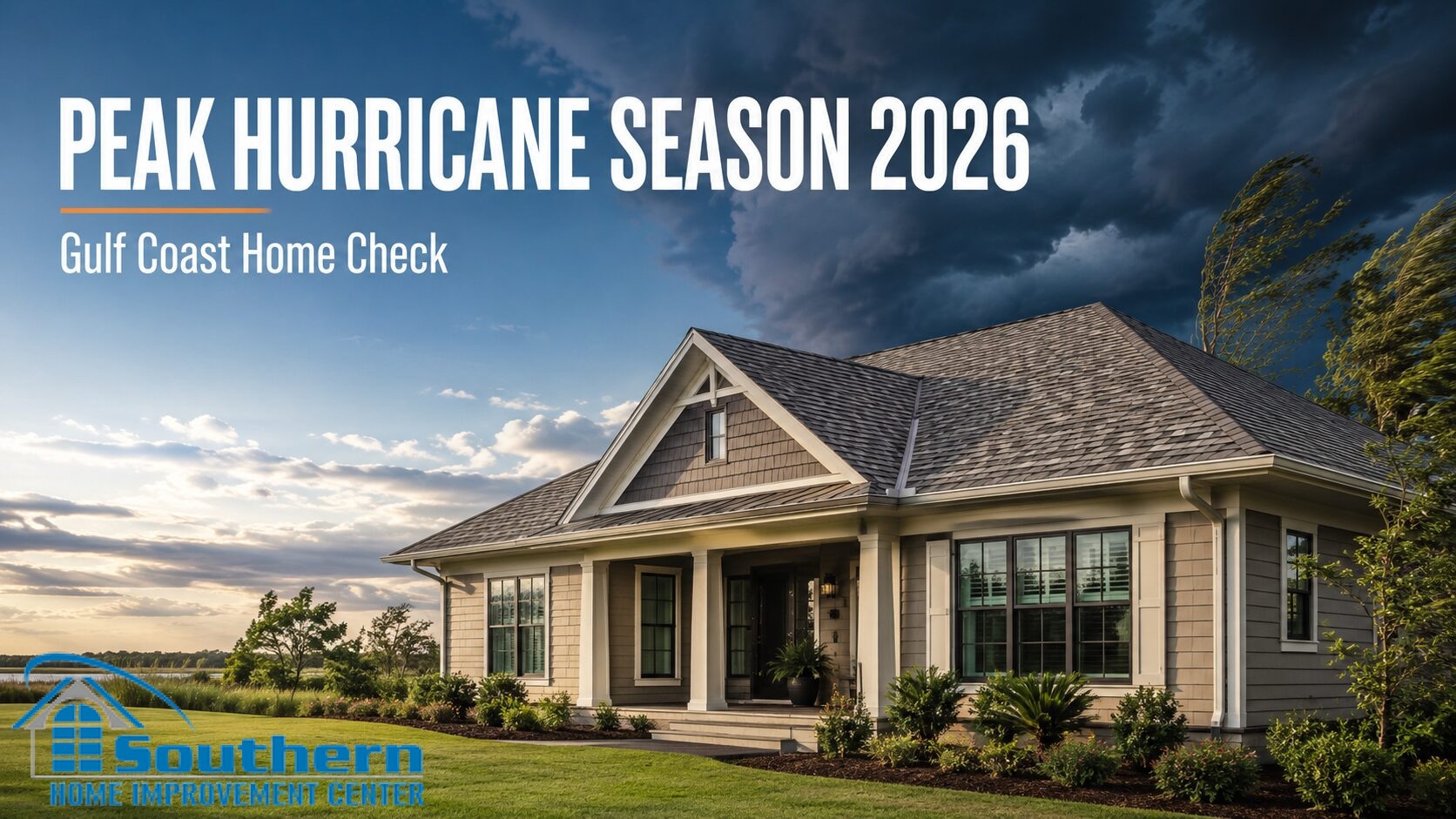
Peak Hurricane Season 2026: What Gulf Coast Homeowners Should Check Now
August marks an important shift in the Atlantic hurricane season. NOAA’s long-term climatology places the season’s statistical peak on September 10, with most Atlantic activity occurring from mid-August through mid-October. For homeowners in Southeast Louisiana and along the Mississippi Gulf Coast, that makes early August a practical time to address known exterior problems before a storm watch compresses the schedule.
Peak Hurricane Season at a Glance
The key point is not that a storm will arrive on a particular date. Climatology describes when Atlantic activity has historically been most concentrated. It does not predict a landfall for Louisiana, Mississippi, or any specific community.
Why the Calendar Matters Even in a Below-Normal Season
A seasonal outlook and the condition of an individual home answer different questions. NOAA’s 2026 outlook called for a below-normal Atlantic season, and El Niño can make the broader environment less favorable for tropical development. Neither fact shows whether a particular roof edge is secure, a flashing detail is watertight, or a gutter system can handle wind-driven rain.
| Information | What It Tells You | What It Does Not Tell You |
|---|---|---|
| Seasonal outlook | Expected activity across the Atlantic basin | Whether a storm will affect your neighborhood |
| Hurricane climatology | When activity historically becomes more concentrated | The track or intensity of the next storm |
| Roof and exterior evaluation | Visible conditions and scope options for your property | Future storm behavior or guaranteed damage prevention |
A quieter basin can still produce a damaging Gulf Coast landfall. The useful response is proportionate preparation: inspect what can be inspected safely, correct verified problems, organize records, and avoid replacing sound components simply because hurricane season is approaching.
What the Official Hurricane Data Says
NOAA reports that 78% of Atlantic tropical-storm days, 87% of Category 1 and 2 hurricane days, and 96% of major-hurricane days occur during the mid-August through mid-October peak window. Those percentages describe basin-wide historical activity, not the probability of damage to an individual home.
What Gulf Coast Homeowners Should Check in August
Start with conditions that can allow water or wind to exploit an existing weakness. Homeowners should not walk on a roof or attempt elevated storm-preparation work without the right training and fall protection. Many useful warning signs can be identified from the ground, from accessible interior spaces, or through a professional evaluation.
Roof Covering and Edges
Look from the ground for missing, shifted, lifted, cracked, or visibly damaged shingles. Pay attention to uneven roof edges, displaced ridge material, exposed areas, or changes that appeared after recent wind.
Flashing and Penetrations
Known trouble spots often include chimneys, walls, valleys, vents, plumbing penetrations, and low-slope transitions. Interior staining near these areas deserves attention even when it is currently dry.
Attic and Interior Clues
Check accessible spaces for fresh stains, damp insulation, musty odors, peeling paint, or signs of recurring water entry. A dry day does not rule out a leak that appears only during wind-driven rain.
Gutters and Downspouts
Remove debris where it can be reached safely. Confirm that gutters are secure, downspouts are connected, and discharge points move water away from the house instead of concentrating it beside walls or the foundation.
Soffit, Fascia and Siding
Look for loose panels, open seams, rot, impact damage, or sections pulling away from the structure. These components help manage the roof edge and exterior envelope during heavy rain and wind.
Windows and Exterior Doors
Confirm that units close and lock properly. Check visible perimeter gaps, failed sealant, damaged trim, loose screens, and signs that water has entered around an opening during previous storms.
Branches and Loose Objects
Address dead or damaged limbs through a qualified tree professional and plan where outdoor furniture, grills, containers, tools, and other movable objects will be secured before a warning.
Photos and Insurance Records
Take current exterior and interior photos, save policy and deductible information, and keep contractor records together. Documentation is easier to organize before a storm than after damage occurs.
Roof and Exterior Warning Signs That Should Not Be Postponed
Not every cosmetic concern requires urgent work. The following conditions, however, justify a closer review before the season moves deeper into its active period:
- an active leak or repeated staining after wind-driven rain;
- missing, lifted, creased, or displaced shingles;
- loose flashing, ridge material, fascia, soffit, siding, or gutter sections;
- soft, sagging, or visibly deteriorated roof areas;
- water entering around windows, exterior doors, wall transitions, or penetrations;
- temporary repairs or tarps that were never replaced with a permanent solution;
- several recurring repairs in different areas of an aging roof.
The next step should match the verified condition. A localized flashing or shingle problem may call for a targeted repair. Widespread deterioration, repeated leaks, damaged decking, or a roof near the end of its useful service life may justify discussing replacement. A credible proposal should explain the observed problem, the proposed scope, materials, exclusions, and how the home will be protected if weather interrupts the work.
Use the Right Action for Each Stage
Inspect and Correct
Schedule evaluations, complete appropriate repairs, clean drainage components, compare written scopes, and take current photos while normal planning time is still available.
Secure and Confirm
Follow official alerts, secure loose exterior items, protect documents, and confirm the status of any active project. Do not climb onto the roof or begin improvised work as conditions deteriorate.
Document and Stabilize
Prioritize safety, photograph visible conditions from safe locations, prevent additional water entry through qualified emergency work, and obtain a written repair or replacement scope.
If Roof Replacement Is Already Needed, Ask About the Whole System
Peak-season timing should not pressure a homeowner into an unnecessary roof replacement. When replacement is already supported by the roof’s condition, however, the proposal should cover more than shingle color. Deck condition and attachment, a sealed roof deck, perimeter details, starter and drip edge, flashing, ventilation, roof penetrations, underlayment, fastening, and final documentation all affect how the system performs.
Louisiana and Mississippi homeowners may also want to compare a standard code-compliant replacement with the FORTIFIED Roof path. FORTIFIED uses specific construction and documentation requirements and involves an independent evaluator when a designation is pursued. A grant, designation, insurance discount, or particular level of storm performance should never be assumed before the applicable program, evaluator, insurer, and project requirements are confirmed.
A Local August Check for Louisiana and Coastal Mississippi
Homes in Slidell, Mandeville, Covington, Greater New Orleans, Jefferson Parish, Baton Rouge, Bay St. Louis, Gulfport, Biloxi, and nearby communities do not all share the same roof age, exposure, drainage, building details, or insurance requirements. The useful goal is not a generic “hurricane-proof” claim. It is a clear assessment of the home’s current condition and a scope that addresses the actual weak points.
August is still early enough to make thoughtful decisions, but schedules can tighten quickly when a named storm enters the Gulf. If a leak, loose component, drainage problem, or aging roof is already on the list, resolve the uncertainty before an emergency timeline removes options.
Related Gulf Coast Hurricane and Roofing Resources
Peak Hurricane Season FAQ
When is the peak of Atlantic hurricane season?
NOAA identifies September 10 as the statistical peak. Most Atlantic tropical cyclone activity occurs from mid-August through mid-October, although storms can form at any point during the official June 1–November 30 season.
Does a below-normal 2026 forecast mean the Gulf Coast is safe?
No. A below-normal outlook describes expected activity across the Atlantic basin. It does not rule out a Louisiana or Mississippi landfall, and it does not measure the condition of an individual roof or exterior system.
Should every older roof be replaced before peak season?
No. Age is one factor, not a diagnosis. The decision should consider roof condition, leak history, storm damage, decking, flashing, repair history, material performance, and the scope identified during an evaluation.
What is the first roof check a homeowner can do safely?
Start from the ground and from safely accessible interior areas. Look for visible shingle displacement, loose edge components, gutter problems, ceiling or attic staining, damp insulation, and changes after recent wind or rain. Leave roof walking and elevated inspection to trained professionals.
Can major roof work begin when a hurricane watch is issued?
Major work requires an appropriate weather window and a clear dry-in and contingency plan. Once a storm threatens the area, homeowners should discuss project status directly with the contractor and avoid any rushed start that could leave the roof exposed.
Does a FORTIFIED Roof guarantee no storm damage?
No roof system can guarantee that a home will avoid all damage. FORTIFIED is a documented, beyond-code construction standard designed to strengthen vulnerable roof-system details against severe weather.
Concerned About a Roof or Exterior Weak Point?
Request a Clear Evaluation Before Peak Season Accelerates
Southern Home Improvement Center serves Southeast Louisiana and the Mississippi Gulf Coast. We can review visible roof and exterior concerns and provide a written repair or replacement estimate based on the condition of your home.
Request a Free EstimateSlidell / Northshore(985) 643-6611
New Orleans / Jefferson(504) 833-1835
Mandeville / Covington(985) 626-3755
Baton Rouge(225) 766-4244
Mississippi Gulf Coast(228) 467-7484