
Gulf Coast Siding Guide
Why Is My Vinyl Siding Buckling? Gulf Coast Causes and Solutions
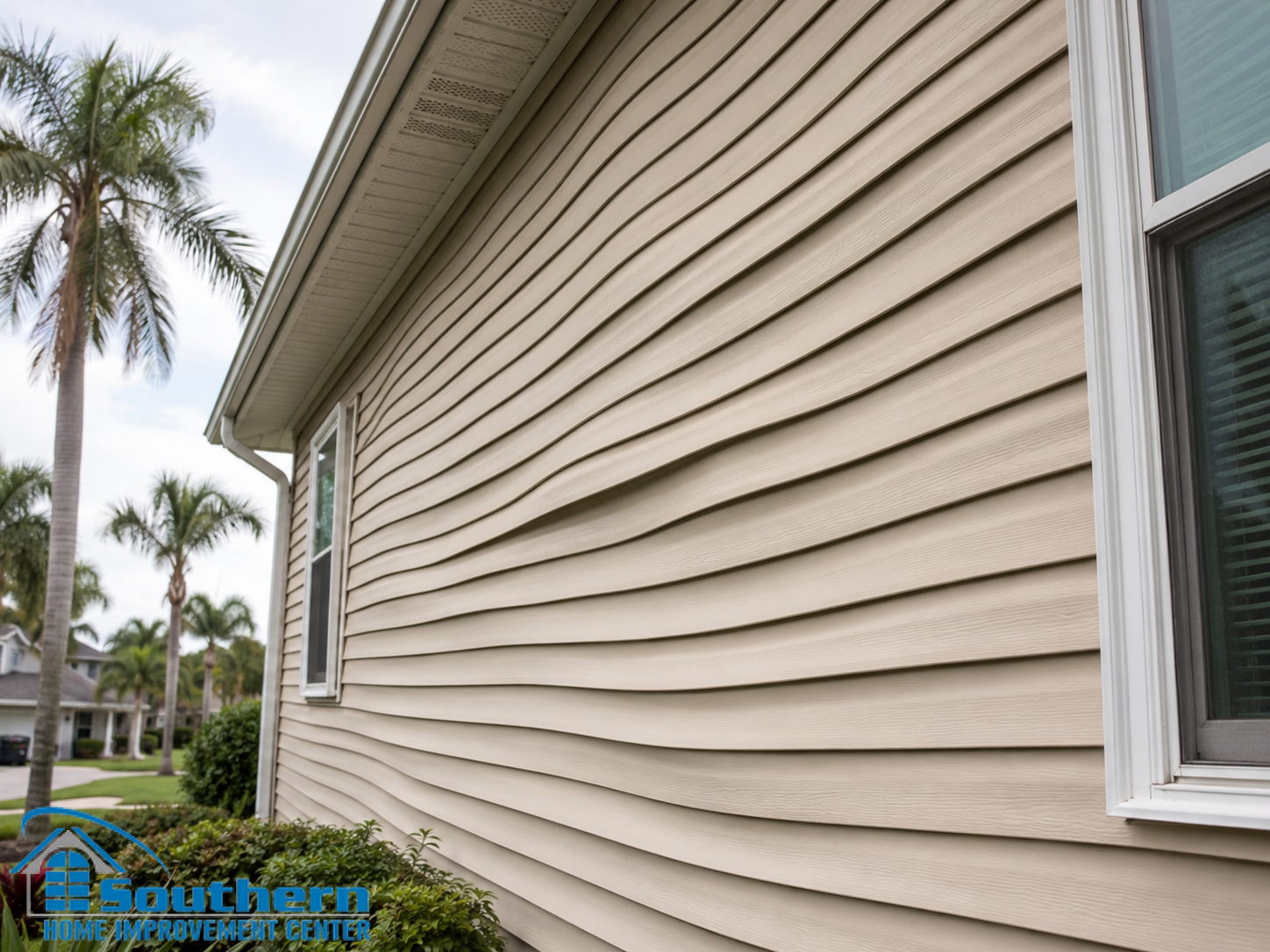
Wavy, bowed, or rippled vinyl siding is more than an appearance issue. The pattern may point to restricted panel movement, concentrated heat, an uneven wall surface, moisture behind the exterior, or storm-related damage. The right repair depends on identifying which condition is actually affecting the wall.
The Short Answer
Vinyl siding commonly buckles when the panels cannot move freely as temperatures change. Fasteners driven too tightly, insufficient clearance at trim, or panels forced into place can restrict normal expansion and contraction. Localized warping can also come from concentrated sunlight, a grill, a dryer vent, or another heat source. If the wall looks uneven and there are stains, soft trim, or recurring moisture, the condition behind the siding may also need attention.
Do not assume that every wave means the same thing. Heat-related distortion, installation-related buckling, wall movement, moisture damage, and wind-loosened panels require different responses.
Why Vinyl Siding Buckles, Warps, or Looks Wavy
Vinyl siding is designed to respond to temperature changes. Industry installation guidance recognizes that a full-length panel can expand and contract by a noticeable amount over the course of a year. That movement is expected. Problems begin when the panel is unable to slide within its fastening slots or does not have enough room at corners, trim, and openings.
Fasteners Are Too Tight
Vinyl siding should not be pinned firmly against the wall. When nail or screw heads clamp the panel in place, the material has nowhere to move as it warms. The panel may bow between fasteners, ripple across a wall, or push against neighboring pieces.
Clearance Is Missing at Trim
Panels need room where they meet corner posts, J-channel, windows, doors, and other stops. If a panel was cut too long or forced tightly into a receiving channel, expansion can make it press against the trim and buckle outward.
Concentrated Sunlight Is Heating One Area
Reflected sunlight from nearby Low-E windows or glass doors can focus heat on a limited section of siding. This often creates a sharply defined warped or melted-looking area rather than long, evenly spaced waves across an entire wall.
A Grill, Vent, or Other Heat Source Is Too Close
Grills, fire features, generators, dryer exhaust, and other concentrated heat sources can permanently deform vinyl. The damage is usually localized and may appear shinier, stretched, sunken, or more severely distorted than ordinary thermal movement.
The Wall Surface Is Uneven or Compromised
Siding follows the surface beneath it. Uneven sheathing, deteriorated wood, old wall materials, poorly prepared repairs, or movement in the supporting wall can telegraph through the panels. In this situation, replacing visible siding without correcting the surface may leave the same waves in the finished wall.
Wind or Impact Has Loosened the Panels
Strong wind can partially unlock panels or pull them away from the wall. Flying debris and previous repairs may also affect the locks or fastening slots. Storm-related movement may look uneven, loose, or lifted rather than smoothly rippled from heat.
Does Gulf Coast Humidity Make Vinyl Siding Swell?
Vinyl does not absorb moisture and swell in the same way that untreated wood can. However, persistent water entry can affect sheathing, trim, framing, or other materials behind the siding. A wall may then look bowed or uneven even though the vinyl itself is not the original source of the problem.
This distinction matters in Southeast Louisiana. High humidity, heavy rain, wind-driven rain, roof runoff, and weak flashing can expose problems around windows, doors, roof-to-wall connections, lower wall areas, soffit, and fascia. The visible wave may be the first clue, but the repair should address the water path or wall condition if one is present.
What the Siding Pattern May Be Telling You
The appearance and timing of the distortion can help narrow the possibilities. These clues are useful for documenting the condition, but they do not replace an on-site evaluation.
| What You See | Possible Direction | What to Document |
|---|---|---|
| Long waves that become more visible on hot afternoons | Restricted thermal movement or tight fastening | Time of day, sun exposure, wall direction, and whether the waves lessen after cooling |
| One sharply distorted or melted-looking patch | Focused heat or reflected sunlight | Nearby windows, glass doors, grills, vents, generators, or reflective surfaces |
| Loose edges, rattling, or panels that changed after a storm | Wind-related unlocking or fastener damage | Storm date, affected elevation, debris impacts, and changes at corners or trim |
| Uneven siding with stains, soft trim, or recurring dampness | Wall, flashing, trim, or moisture-control concern | Rain patterns, nearby roof runoff, window and door openings, and interior signs |
| Several brittle, faded, cracked, or mismatched sections | Age-related deterioration or repeated repairs | How many elevations are affected and whether matching panels remain available |
What Homeowners Can Check Safely
A useful first check can be completed from the ground. There is no need to remove siding or climb a ladder to gather basic information.
Identify the affected wall. Note whether it faces the strongest afternoon sun or receives reflected light from another window.
Photograph it at different times. Morning and afternoon photos can show whether the waves change as the wall heats and cools.
Look for a concentrated heat source. Check the location of grills, dryer vents, generators, outdoor heaters, and reflected sunlight.
Review recent weather. If the condition appeared after strong wind or flying debris, document the date and the changes you noticed.
Check nearby transitions. From the ground, look for stains, loose trim, open joints, overflowing gutters, or runoff near the affected area.
Compare the other elevations. A problem on one sun-exposed wall may have a different cause from waves appearing around the entire house.
Avoid a heat-gun repair
Trying to warm and reshape siding can deepen the distortion, damage neighboring panels, affect the finish, and create a fire risk. Prying panels loose without understanding the locking system can also crack older vinyl or disturb the water-shedding details around the repair.
Can Buckled Vinyl Siding Be Repaired?
Sometimes. A limited repair may be practical when the affected panels are still serviceable, the wall behind them is sound, and the cause can be corrected without disturbing a large area. Permanently heat-deformed vinyl generally does not return to its original shape and usually requires panel replacement.
A Targeted Repair May Make Sense When
- The affected area is small and clearly contained.
- Matching or compatible panels are available.
- The wall and trim behind the siding remain sound.
- The cause is a correctable fastening, clearance, or isolated damage issue.
- The repair can end at a natural break without looking patched.
Broader Replacement May Be More Practical When
- Waves or distortion affect most of an elevation.
- Heat has permanently melted or stretched multiple panels.
- The existing siding is brittle, faded, discontinued, or difficult to match.
- Moisture, wall-surface, flashing, or trim problems require wider access.
- Several previous repairs have created a visibly inconsistent exterior.
The repair decision should be based on more than the visible panel. If tight fastening caused the problem, the replacement section still needs proper room to move. If water affected the substrate, the water path and damaged materials should be addressed before the wall is closed again.
What a Professional Siding Evaluation Should Determine
Map the Distortion
Identify which panels, walls, openings, corners, and trim areas are affected.
Separate the Causes
Compare signs of restricted movement, concentrated heat, wind damage, and underlying wall concerns.
Review Transitions
Check accessible details around windows, doors, roof runoff, gutters, soffit, fascia, and trim.
Check Repair Feasibility
Determine whether compatible panels are available and whether a partial repair will blend cleanly.
Prepare a Written Scope
Explain what will be removed, corrected, replaced, finished, and reviewed at completion.
What Should Be Included in a Siding Repair or Replacement Estimate?
A clear estimate should describe the work behind the finished appearance. Homeowners should be able to see whether the proposal addresses the cause of the buckling or only replaces the visible panels.
- Affected area: the walls, elevations, panels, corners, trim, or openings included in the work.
- Removal: which materials will be removed and how concealed conditions will be documented if uncovered.
- Wall preparation: any surface correction, unsuitable material, or accessible sheathing concern included in the scope.
- Water management: the planned treatment of housewrap or another water-resistive barrier, flashing, penetrations, and drainage details.
- Material match: the siding profile, color, finish, accessories, and expectations for blending new material with existing siding.
- Trim and transitions: corners, J-channel, window and door trim, soffit, fascia, gutters, and roofline connections affected by the project.
- Cleanup and review: debris removal and a final walkthrough of the completed area.
Why This Problem Deserves a Gulf Coast Evaluation
Long hot seasons make correct panel movement especially important in Southeast Louisiana. At the same time, intense sun is only one part of the exterior environment. Heavy rain, humidity, tropical systems, tree debris, wind-driven rain, roof runoff, and closely spaced homes can all affect how a siding problem develops or appears.
A south- or west-facing wall may show heat-related movement first. A shaded wall near a roof-to-wall connection may instead reveal a drainage or moisture-control issue. A panel that changed immediately after a storm may have unlocked or suffered impact damage. Treating every condition as simple “heat damage” can lead to the wrong repair.
Related Siding Services and Projects
Frequently Asked Questions About Buckled Vinyl Siding
Can hot weather make vinyl siding buckle?
Heat makes vinyl expand, but properly installed panels should have room to move. Buckling often appears when fasteners, trim, or panel placement restrict that movement. Concentrated heat can also permanently warp or melt a localized section.
Can siding that was nailed too tightly be fixed?
Possibly. If the panels have not been permanently deformed and the affected area is accessible, the fastening condition may be correctable. Brittle, cracked, stretched, or heat-damaged panels may need replacement.
Why does my siding look wavier in the afternoon?
The wall and siding are warmer in the afternoon, so restricted thermal movement may become more visible. Photos taken in the morning and afternoon can help document the change for an evaluation.
Does buckled siding always mean there is water damage?
No. Tight fastening, insufficient clearance, concentrated heat, and wind-related movement can all create distortion without hidden water damage. Staining, soft trim, dampness, recurring leaks, or a visibly uneven wall make a moisture or substrate concern more likely.
Can only one wall of siding be replaced?
Sometimes. Partial replacement depends on the wall condition, the size of the affected area, material availability, color and profile match, and whether the new work can end at a natural break.
Will caulk fix wavy or buckled vinyl siding?
No. Caulk does not restore panel movement, flatten heat-deformed vinyl, or correct an uneven wall. It can also block drainage paths when applied in the wrong location. The cause should be identified before a repair method is selected.
Should I remove a panel to see what is behind it?
Homeowners can document visible conditions safely from the ground. Removing panels without the correct tools and sequence can crack older material, damage the locks, or disturb flashing and water-management details.
Siding Evaluation and Estimate
Get a Clear Plan for Buckled, Warped, or Damaged Siding
Southern Home Improvement Center can review the visible condition, discuss possible causes, compare repair and replacement options, and prepare a written siding scope for your home.
Request a Free Estimate