Before You Sign Storm Damage Paperwork — 5 Forms Louisiana Homeowners Should Read Carefully
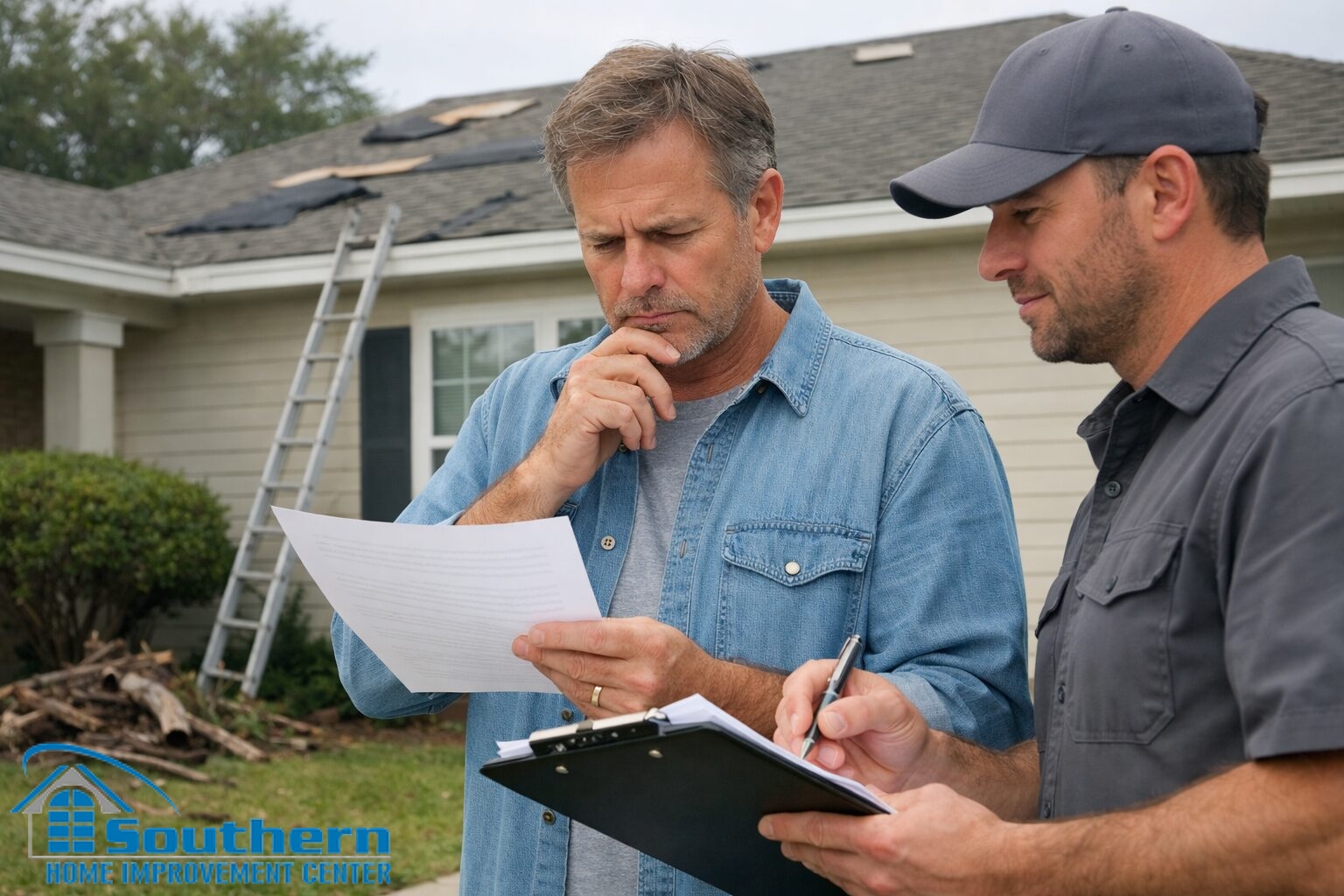
After storm damage, pressure shows up fast. A tarp may be needed, a ceiling stain may be growing, and someone may be asking for a signature before the full repair picture is clear. That is exactly when paperwork deserves more attention, not less.
This guide is designed to help homeowners slow the process down and read roofing and insurance-related paperwork more carefully after storm damage. It is practical, homeowner-focused, and built around the forms that create the most confusion after emergency dry-in work, temporary repairs, and insurance-related roof projects.
Why this matters after storm damage
Storm-related decisions are rarely made under ideal conditions. Homeowners may be dealing with active leaks, missing shingles, wet insulation, contractor urgency, or an insurance process that has only just started. In that setting, broad paperwork can feel routine even when it deserves a second look.
The problem is not that a document exists. The problem is that a homeowner signs it too quickly, assumes it means less than it does, or treats it as “just a formality” when it may affect scope, payment flow, or who controls parts of the job process.
A good contractor should be able to explain what a document does, what it does not do, and why it is being signed now instead of later. If that explanation feels rushed, vague, or overly aggressive, that is a reason to pause.
A simple rule
Temporary protection and full project approval should not be treated like the same decision. Emergency help may be urgent. Broad paperwork usually is not.
Read for these phrases
- insurance proceeds
- direction to pay
- additional work as needed
- full repair authorization
- claim rights or benefit language
- payment tied to future insurance funds
The 5 forms homeowners should read carefully
Practice shows that the issue is usually not one dramatic clause, but a few small lines that expand the document far beyond what the homeowner thought was being approved:
Emergency work authorization
This form is often presented when the home needs immediate protection. That can be reasonable. The issue is whether the document is truly limited to emergency service or quietly broad enough to authorize more than temporary stabilization.
Read carefully for:
- the exact emergency service being approved
- the areas of the home involved
- whether the work is temporary or part of a larger repair path
- the price, pricing method, or estimate basis
- whether additional work needs separate written approval
Temporary repair or tarp authorization
Homeowners often assume a tarp form is harmless by definition. Sometimes it is. Sometimes it is also the first step toward a much broader job relationship than the homeowner realized.
Pause when a tarp form also seems to:
- approve all necessary repairs
- authorize extra materials without a written change order
- tie payment directly to future insurance proceeds
- let the contractor decide scope without a separate signed contract
Benefit-transfer or claim-rights language
Even when the title does not say “assignment,” the body of the document may include language that appears to transfer claim rights, insurance benefits, or other payment-related authority. That deserves immediate attention.
Homeowners should not assume that every insurance-related signature is routine. If the wording seems to shift control away from the homeowner, stop and review it carefully before signing.
Direction to pay or insurance proceeds authorization
A direction-to-pay form is not automatically improper, but it should never be treated casually. These documents can affect how payments are routed, who receives them first, and how much flexibility the homeowner keeps if there is a dispute about scope or incomplete work.
Before signing, check:
- which payments the form actually covers
- whether it applies only to emergency service or to the full project
- whether the homeowner still approves invoices before payment
- whether the form can be limited or revoked in writing
Full repair contract before the scope is clear
A full roof replacement contract should not feel like rushed storm paperwork. If the insurer has not inspected yet, the estimate is still changing, or the proposal uses broad “to be determined” language, slow down and read closely.
Watch for contracts that:
- lock in the contractor before scope is defined
- use vague language instead of line-by-line details
- promise to “handle everything” without saying what that means
- tie the homeowner to a final job price that is not yet explained
What a careful contractor should do instead
Clear paperwork should become more specific as the job moves forward, not less. The document should match the actual service being approved, the estimate should be readable, and the homeowner should have time to review what is being signed.
Pressure, vague wording, and “we can sort that out later” language are not signs of clean process.
What to do before you sign anything
A practical homeowner process usually works better than trying to decode everything in the moment:
- Read the entire document, not just the signature block.
- Circle any phrase that mentions insurance proceeds, claim rights, additional work, or payment direction.
- Ask what the form authorizes today — specifically, not generally.
- Ask for the estimate, scope, and pricing in writing.
- Save every version of every document you receive.
- Do not rely on verbal explanations if the page says something broader.
- Contact your insurer before assuming a contractor document must be signed immediately.
- Ask for a narrower version if the wording is broader than the actual service being approved.
That sequence helps homeowners separate urgent stabilization from long-term contractual commitments and makes later decisions easier to review calmly.
Red flags homeowners should not ignore
Most paperwork problems show up before the signature, not after it. The signs are usually visible if the homeowner slows the process down enough to notice them:
Pressure red flags
- pressure to sign immediately on the spot
- resistance to leaving a copy behind for review
- “just sign here” language with no walkthrough
- reluctance to answer simple scope questions
Paperwork red flags
- broad wording on a form described as “just for the tarp”
- no estimate attached to the authorization
- insurance language that seems broader than the actual work
- unclear company name, unclear scope, or unclear payment flow
A trustworthy contractor should not be offended by careful reading. Homeowners are allowed to understand what they are signing before the project moves forward.
A safer next step after roof damage
After a storm, the best sequence is usually simple: protect the home, document the damage, notify the insurer, and keep every form as narrow and readable as possible. Emergency protection may be necessary. That does not mean broad repair paperwork should be signed before the homeowner understands exactly what is being approved.
Frequently asked questions
Homeowners tend to ask the same few questions when paperwork arrives before the full repair picture is clear:
Can I sign temporary tarp paperwork and still delay the full roof contract?
Yes. Temporary protection and full project approval should not be treated as the same decision. Homeowners should read both documents separately and make sure the first form is not being used to authorize the second.
Is every direction-to-pay form a problem?
No. The issue is not that the form exists. The issue is whether the homeowner understands what payments it covers, how broad it is, and whether it changes control over invoices or insurance-related payment flow.
What if a contractor wants a signature before the insurance inspection?
That is exactly when careful reading matters most. Emergency stabilization may still be appropriate, but broad repair commitments deserve extra caution before the full scope is understood.
What should I do if I already signed something I do not fully understand?
Save the document, keep the emails and text messages, and review the wording right away. Contact your insurer promptly and organize the paperwork before any misunderstanding grows into a larger scope or payment dispute.
Can SHIC help without pressuring me into a contract?
Yes. Southern Home Improvement Center (SHIC) can inspect visible roof damage, document conditions with photos, explain what appears urgent versus what can wait, and provide a written scope so the homeowner has a clearer basis for the next decision.
Related homeowner resources
On sites with strong storm and fraud clusters, internal links work best when they guide the reader from general caution into the exact next step that matches their situation:
Need a clearer roof damage inspection before you sign anything?
Southern Home Improvement Center (SHIC) can help you document visible roof damage, separate urgent stabilization from larger repair decisions, and review the project scope in plain language before the process becomes more confusing. Call Slidell at (985) 643-6611, Baton Rouge at (225) 766-4244, or New Orleans / Jefferson at (504) 833-1835, or fill out the estimate form below to request a no-pressure inspection and written project guidance.