
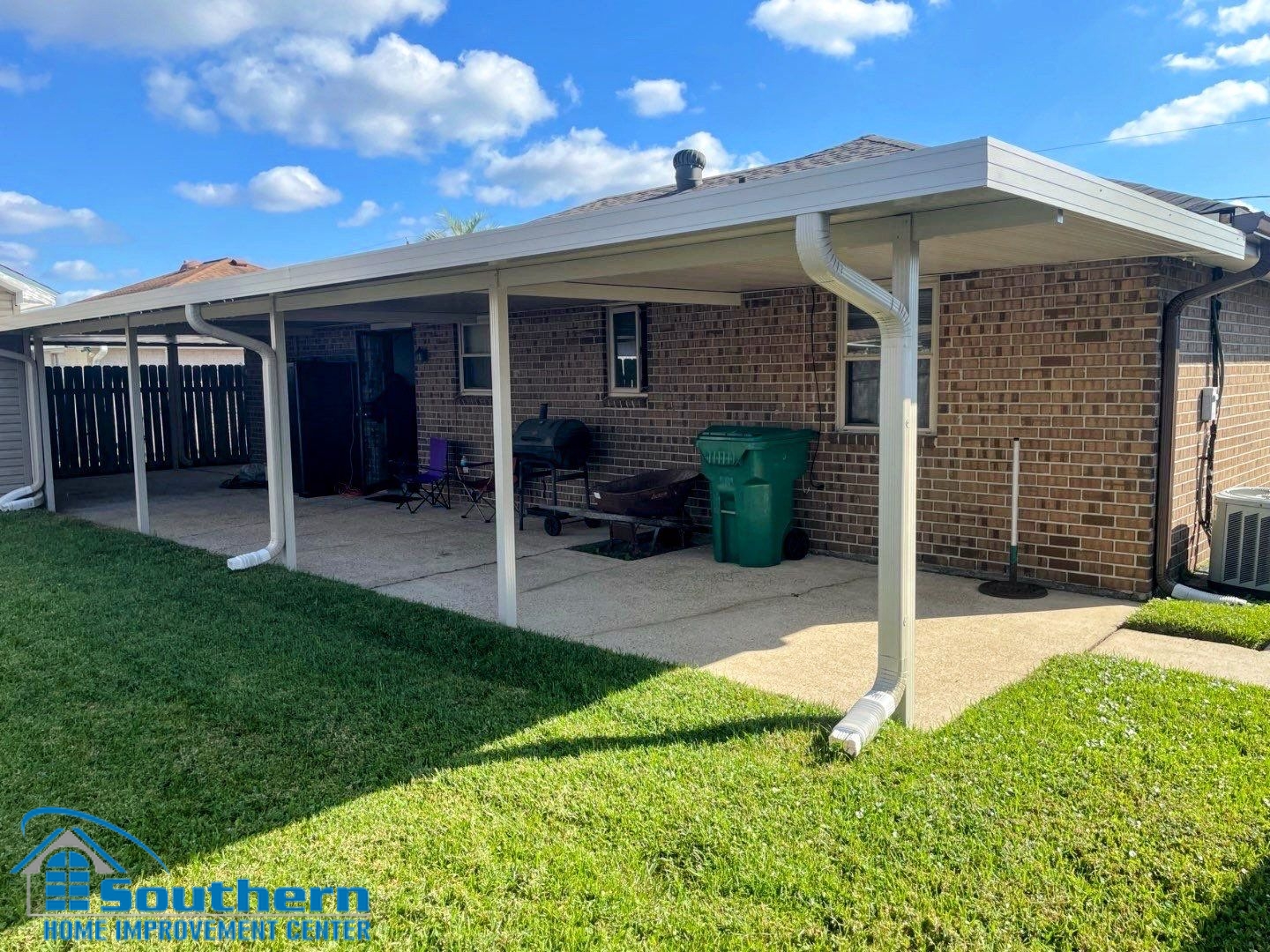
Flat Pan Non-Insulated Patio Cover and Carport — Wicker Finish
This project features a heavy-duty flat pan patio cover system designed to add reliable shade and rain protection across two high-use areas — a backyard living zone and a long side run that functions like a lightweight, clean-lined aluminum carport. The result is practical coverage with straight lines, controlled drainage, and built-in support for airflow upgrades.
On the Gulf Coast, a patio cover has to do more than “look nice.” It needs to handle humid months, wind-driven rain, and fast weather changes without turning your slab into a puddle zone. If you are comparing options, it helps to start with the basics of patio cover installation and the real-world advantages of an aluminum patio cover when you want clean lines, easy upkeep, and strong long-run stability.
Use the quick links below to jump to the section you need.
- Project Snapshot
- Layout and Coverage Areas
- Back Patio Coverage
- Side Run — Carport-Style Protection
- Materials and Build Details
- Why Choose a Non-Insulated Flat Pan Patio Cover?
- Drainage Control and Comfort Planning
- Wicker Color Finish
- FAQ
Below is the full breakdown, with practical notes for Gulf Coast weather and daily use.

Project Snapshot
Here are the core specs at a glance, based on the installed layout and approximate measurements captured for this build. If you are planning a similar structure, it also helps to review how budget and scope typically work in this regional guide: patio cover cost in Louisiana (2025).
These are the key details that define the system.
- System: Southern Shademaker heavy-duty flat pan aluminum (non-insulated)
- Color: Wicker
- Coverage (approx.): 11 ft x 37 ft; 9 ft x 9 ft; 7 ft x 39 ft
- Drainage: Extruded gutter system
- Finish details: Valances
- Comfort framing: (3) fan beams
- Posts: 3″ x 3″ extruded aluminum posts
These details matter for Gulf Coast weather because they help the cover stay true, manage runoff more predictably, and feel more comfortable during humid months.
Because this is a non-insulated flat pan roof, comfort planning matters more than people expect. Shade is immediate, but airflow and proper drainage are what make the coverage feel “finished.” If you want a simple side-by-side overview of panel styles, see Patio Roof Panels — Flat-Pan vs W-Pan vs Insulated.

Layout and Coverage Areas
The layout was planned to protect the spaces that get used the most, rather than forcing one oversized roofline that doesn’t match the way people move through the home. This approach is common in Gulf Coast builds because it keeps the structure clean while making rain control easier. For more examples of local builds and planning considerations, visit Patio Covers in Southeast Louisiana.
Back Patio Coverage
The rear spans create consistent shade for seating, grilling, and everyday backyard traffic. A flat pan profile keeps the look clean from the yard while still delivering dependable overhead protection during light rain and quick pop-up showers. If you want to compare layouts and typical upgrade options, start with the aluminum patio cover overview to see what usually gets included when homeowners plan for fans, lighting, and clean finishing.
A backyard zone like this benefits from planning the dry walk lines first — where you step out, where you sit, and where you want water to avoid. That is also why many homeowners begin with a scope review via a free estimate before locking in sizes and attachment points.

Side Run — Carport-Style Protection
The side run provides a long, covered path and a protected zone that can be used for parking, storage, or simply keeping an entry path drier. This is where an aluminum patio cover system can do double duty, especially when you want coverage without building a fully enclosed structure.
If your goal is “carport-style” protection, it helps to look at real installs and how the runs are supported, drained, and finished. Two examples are Carport Installation in Mandeville, LA and Apartment Carport Replacement in Baton Rouge, LA. Even when the property type is different, the same structural and drainage principles apply.

Materials and Build Details
This patio cover installation uses components selected for rigidity, clean finishing, and control of water along the edge line. On the Gulf Coast, edge-line control is a big deal — runoff that “spills anywhere” can stain finishes, create splash-back, and turn walk paths into messy zones after storms.
Here is what was used and why it matters.
- Heavy-duty flat pan roof system: a streamlined profile that fits modern and traditional exteriors
- Extruded gutter system: integrated drainage to help capture and direct runoff
- Valances: a finished edge detail that improves curb appeal and creates a cleaner perimeter line
- (3) fan beams: framing support for ceiling fans and comfort upgrades
- 3″ x 3″ extruded aluminum posts: strong, straight support that keeps long runs stable
When these parts work together, the cover looks sharper, drains better, and stays more stable over time compared to lighter, basic assemblies.
Because drainage is part of the performance, homeowners often review cover runoff as a “roof and gutters together” system. A useful related read is gutter services, along with this local guide: seamless gutters in Southeast Louisiana.

Why Choose a Non-Insulated Flat Pan Patio Cover?
A non-insulated patio cover is often the right choice when the priority is shade, weather coverage, and a clean look — without moving into a premium insulated roof system. For many homes, it’s a straightforward way to make outdoor space more usable for a larger portion of the year while keeping the structure visually light.
The most common benefits show up immediately in day-to-day use.
- More usable outdoor time: shade reduces direct sun exposure on seating areas
- Better protection for doors and furniture: overhead coverage helps with rain and UV
- Low maintenance materials: aluminum resists rot and warping issues common in humid climates
- Clean exterior lines: a flat pan profile keeps the structure tidy and uncluttered
If your main goal is maximum heat reduction under the roof surface, an insulated patio roof may be a better fit. For deeper reading, compare insulated patio roof panel benefits and insulated patio roof advantages.

Drainage Control and Comfort Planning
Rain management is not a “nice-to-have” on the Gulf Coast. The extruded gutter system helps control where roof runoff goes, which can reduce splash-back at slab edges and keep entry paths cleaner during heavy storms. If you are comparing typical capacities and what works better locally, see 6″ vs 5″ seamless gutters on the Gulf Coast.
Comfort was also built into the framing plan. The three fan beams create clear attachment points for ceiling fans, helping move air through the covered zones and making the space feel noticeably better during warmer, more humid days. For general planning ideas, examples, and installation considerations, the article Expert Patio Cover Installers is a useful reference.
Wicker Color Finish
The Wicker finish offers a warm, neutral tone that pairs well with brick, light siding, and many common trim colors. It’s a strong option when you want the cover to feel integrated with the home, not like an add-on that looks too bright or too stark. If you are still deciding on style and scope, review the options and examples on patio covers to see what fits your exterior best.
FAQ
Is a non-insulated flat pan patio cover still effective in summer?
Yes. Shade is the biggest immediate upgrade, and airflow improvements like ceiling fans can make a noticeable comfort difference under the cover. If you want to compare comfort by panel type, see Flat-Pan vs W-Pan vs Insulated.
What does an extruded gutter system change?
It helps collect and direct runoff instead of letting water spill randomly along the edge line, which is especially helpful during heavier rain. For related drainage planning, review seamless gutters.
Can this style be used as an aluminum carport?
Yes. Flat pan aluminum systems are commonly installed in long side runs where homeowners want practical overhead protection for parking, storage, or a drier access path. Examples include Carport Installation in Mandeville and Carport Replacement After Storm Damage.
Why include fan beams?
Fan beams provide proper framing support so fans can be added where people actually sit and move, improving comfort without changing the open-air feel. If you are considering a finished ceiling with an insulated system, review insulated panel benefits.
What maintenance does an aluminum patio cover require?
Most homeowners stick with basic washing as needed and periodic checks to keep the drainage path clear, especially after major storms. If you are addressing overflow and drainage behavior around walk paths, see gutter overflow repair and downspout upgrades.
If you want a flat pan aluminum patio cover or a patio cover and carport-style layout tailored to your home, request a free estimate today and share any photos through the contact form. Call (985) 643-6611 or (225) 766-4244, and Southern Home Improvement Center (SHIC) will help you choose the best patio cover configuration for your home in Southeast Louisiana or the Mississippi Gulf Coast.