2026 Hurricane Season Roof Prep: IBHS Urges Homeowners to Inspect and Strengthen Roofs
As the 2026 Atlantic hurricane season approaches, the Insurance Institute for Business & Home Safety (IBHS) is urging homeowners to prepare now instead of waiting until a storm is in the forecast. For Louisiana and Mississippi Gulf Coast homeowners, that message starts with the roof — the part of the home most exposed to wind, rain, debris, and storm-season wear.
IBHS released its hurricane-season preparedness guidance ahead of National Hurricane Preparedness Week, encouraging homeowners in high-risk areas to take practical steps that can reduce storm damage and speed recovery. The official Atlantic hurricane season runs from June 1 through November 30, which gives homeowners a limited window to inspect, repair, and plan upgrades before tropical activity increases.
What IBHS Recommended Before Storm Season
IBHS advised homeowners to begin with larger projects that take time, especially roof-related work. The organization specifically recommends scheduling a professional roof inspection, making needed repairs, and considering a FORTIFIED Roof when it is time to reroof.
The reason is straightforward: roof performance changes over time. Older shingles, weak edges, worn flashing, tired pipe boots, and roof penetrations can become vulnerable during wind-driven rain. A roof may look acceptable from the ground but still have details that need correction before severe weather arrives.
IBHS also points to FORTIFIED Roof upgrades such as stronger roof-deck attachment, a sealed roof deck, adhered starter strips, and securely fastened drip edge. These details are designed to help the roof system resist common storm failures and reduce the chance of water entering the home if outer roof covering is damaged.
Why This Matters for Louisiana and Mississippi Homeowners
Homes in Southeast Louisiana, the Northshore, Baton Rouge, New Orleans, and the Mississippi Gulf Coast face a demanding mix of heat, humidity, heavy rain, and storm-season exposure. Even before a named storm forms, strong thunderstorms and wind-driven rain can test the same weak points that hurricanes later exploit.
For many homeowners, hurricane prep is treated as a last-minute checklist. But roof work does not always fit into a last-minute schedule. If a roof inspection finds damaged shingles, failing flashing, soft decking, ventilation issues, or edge problems, those repairs may need planning, materials, and safe weather windows.
That is why a pre-season roof inspection can be useful. It gives homeowners time to understand whether the roof needs a targeted repair, a broader storm-damage review, or a full replacement with stronger system details.
What Homeowners Should Check Now
Before hurricane season becomes active, homeowners can safely look for visible warning signs from the ground and inside the home. This does not replace a professional roof inspection, but it can help identify issues that should be reviewed before the next heavy rain event.
- Missing, lifted, curled, or creased shingles after wind or hail.
- Granule loss, exposed mat, or uneven shingle wear on older roof slopes.
- Stains on ceilings, closet corners, attic decking, or around roof penetrations.
- Damaged flashing near walls, chimneys, skylights, valleys, and vents.
- Clogged gutters, loose downspouts, or roof edges that do not drain correctly.
- Overhanging branches that could scrape shingles or become debris during storms.
If any of these signs are present, the next step should be a documented inspection rather than a quick surface patch. A small roof issue can become a major interior water problem when wind pushes rain under weak materials.
When Roof Prep Should Lead to Repairs
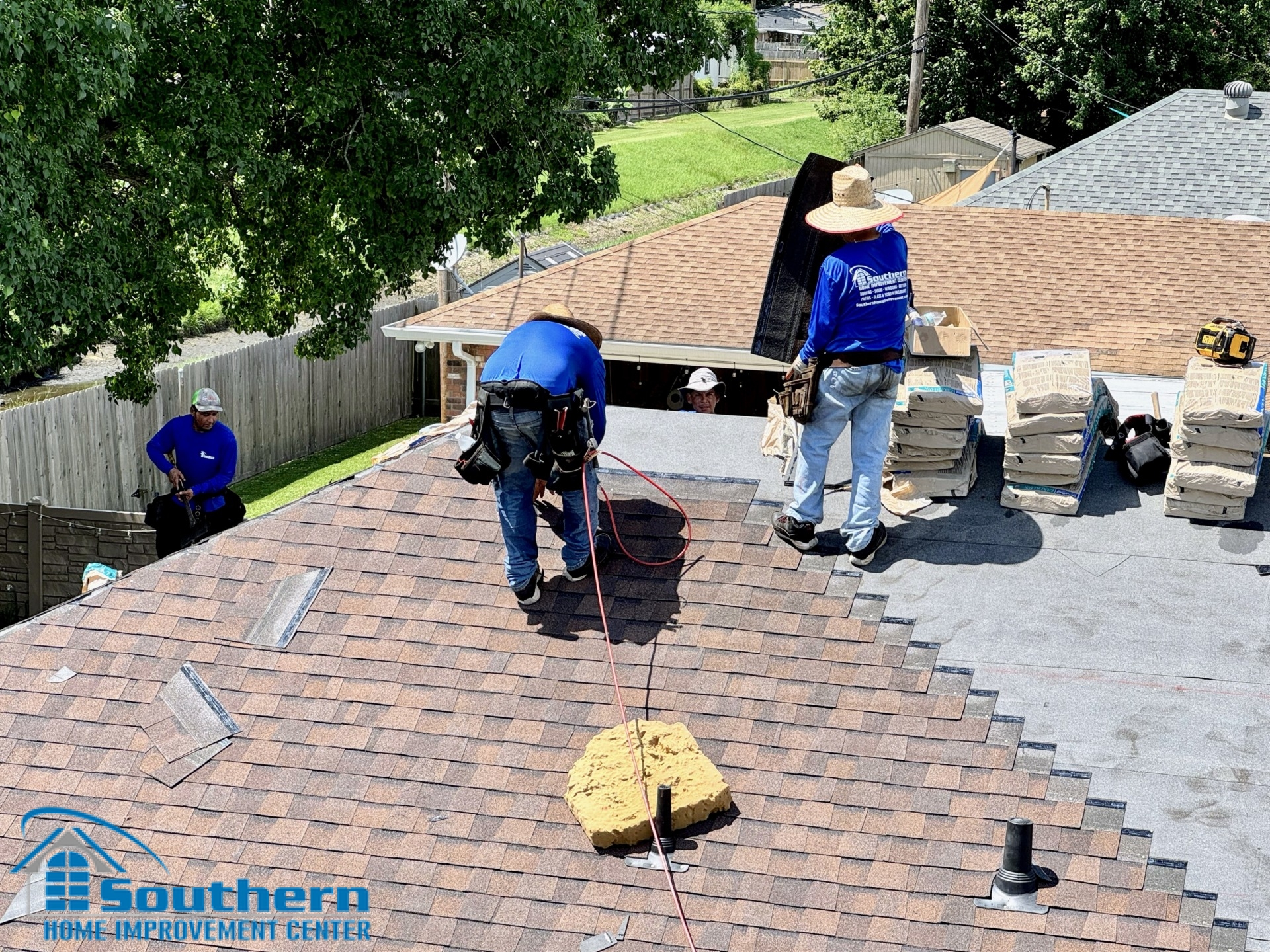
Roof repair before hurricane season makes the most sense when damage is isolated and the rest of the roof still has useful life left. That may include replacing failed pipe boots, correcting flashing, repairing a localized leak, replacing missing shingles, sealing a vulnerable transition, or addressing a small section of damaged roof edge.
For Louisiana and Mississippi homeowners, the goal is not only to stop today’s leak. It is to reduce the chance that a known weak point becomes the entry path for wind-driven rain during the next storm. This is especially important around valleys, ridges, rakes, eaves, skylights, and roof penetrations.
Southern Home Improvement Center (SHIC) can help homeowners evaluate whether a roof issue is a targeted repair or a sign that the entire roof system needs review. For service details, visit our roof repair in Louisiana page.
When It May Be Time to Talk About a FORTIFIED Roof
If the roof is near the end of its service life, repeated patching may not be the best long-term plan. Reroofing creates an opportunity to address the full roof system: deck attachment, sealed roof deck protection, edge metal, starter strips, flashing, ventilation, and roof penetrations.
This is where FORTIFIED Roof planning becomes important. FORTIFIED is a voluntary construction and reroofing standard developed through IBHS research to strengthen homes against severe weather. It is not a claim that a home is storm-proof, and it does not replace insurance, but it can help homeowners build back with stronger details when reroofing is already needed.
Homeowners can learn more about SHIC’s approach to Certified FORTIFIED Roof installation in Louisiana and Mississippi or review our guide to sealed roof decks in Louisiana.
Other Storm-Season Steps IBHS Highlighted
Although the roof is a major priority, IBHS also reminded homeowners to look beyond the roofline. Attached structures, gutters, trees, garage doors, exterior gaps, and loose outdoor items can all affect how a home performs when high winds and heavy rain arrive.
Porches, patio covers, and carports should be properly designed, connected, and maintained. Gutters and downspouts should be cleared so heavy rain can drain away from the home. Branches near the roof should be trimmed to reduce impact damage. As storms approach, outdoor furniture, grills, and loose items should be secured or brought indoors.
These steps do not replace roof repair or reroofing when a roof is already vulnerable, but they can reduce avoidable damage around the home.
Related Roofing Resources for Gulf Coast Homeowners
Homeowners who want to prepare before hurricane season can use these related SHIC guides to compare roof inspection, storm repair, FORTIFIED upgrades, and stronger roof-system planning.

Roof Inspection After Storms
Start here if you need photos, documentation, and a clear plan after wind, hail, or heavy rain.

Storm Damage Roofing
Review repair and replacement options after wind, hail, hurricane conditions, or roof leaks.

FORTIFIED Roof Installation
Learn how sealed decks, stronger edges, and documented installation details fit together.
SHIC Can Help Homeowners Prepare Before Hurricane Season
The best time to find a roof weakness is before the next storm tests it. Southern Home Improvement Center (SHIC) helps Louisiana and Mississippi homeowners inspect roofs, repair known problem areas, compare reroofing options, and plan stronger roof systems for Gulf Coast conditions.
Whether your home needs a roof inspection before hurricane season, a targeted repair, storm damage documentation, or a FORTIFIED Roof discussion, SHIC can help you understand the condition of the roof and the next practical step.
Prepare Your Roof Before the Next Storm
Contact Southern Home Improvement Center (SHIC) to schedule a roof inspection, review repair options, or discuss a stronger roof system before the 2026 hurricane season becomes active.