
Screen-room planning for Gulf Coast homes
Patio Screen Mesh: Standard, Pet, Solar & No-See-Um
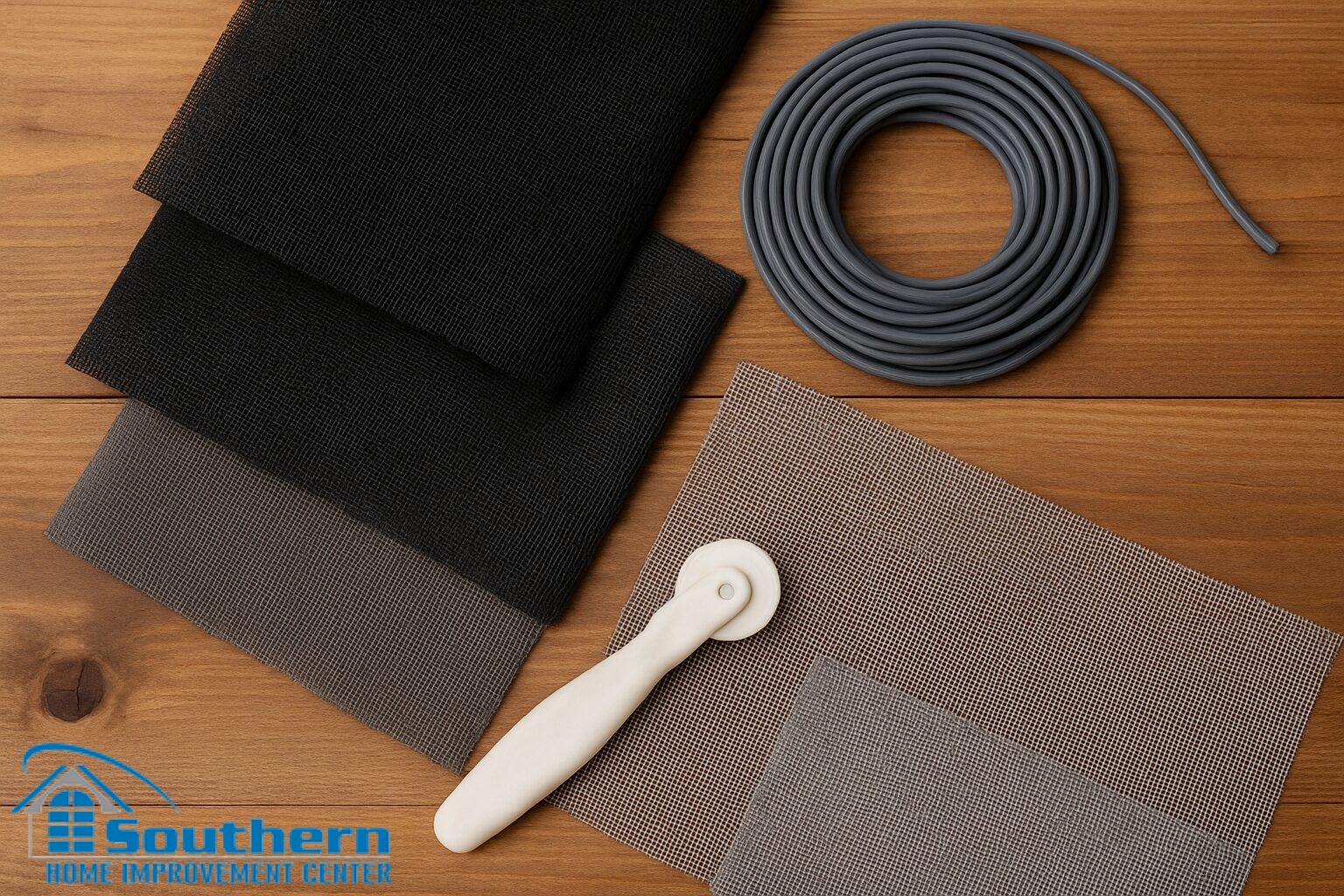
The best patio screen mesh is the one that matches the actual problem: standard fiberglass for balanced airflow and value, no-see-um mesh for smaller insects, pet-resistant mesh for high-contact areas, solar mesh for a specific hot exposure, or a high-visibility product when the view matters most. Material alone is not enough — the exact weave, openness, panel size, frame, spline, and installation all affect the result.
Quick answer
There is no single “best” screen for every wall
For many screened porches, a quality dark fiberglass insect screen is the practical baseline. Choose a tighter no-see-um weave only where tiny insects are a recurring problem, heavier polyester mesh where pets or traffic create damage, and solar mesh where glare or direct sun justifies the reduction in light and airflow. Mixing compatible products by exposure can work better than specifying one mesh throughout the room.

Side-by-side decision
Patio screen mesh types compared
Names such as “standard,” “pet,” “solar,” and “no-see-um” describe different priorities, not one universal specification. Compare the exact product data rather than relying on a category name alone.
| Screen type | Best fit | Main tradeoff | What to verify |
|---|---|---|---|
| Standard fiberglass | Everyday insect control, balanced visibility, flexible installation, and value | Can tear or puncture in high-contact areas | Mesh count, yarn diameter, openness, UV-resistant coating, panel size, and approved spline |
| Aluminum | A taut metal-screen appearance and applications where the exact product fits the frame and environment | Can crease or dent when pushed and may show glare depending on color and light | Wire diameter, finish, corrosion compatibility, cut edges, frame contact, and installation method |
| No-see-um | Homes where midges, gnats, or other very small insects regularly pass through standard mesh | A tighter weave can reduce airflow, brightness, and outward visibility | Aperture, mesh count, openness, product width, and whether full-room use is necessary |
| Pet-resistant or heavy-duty | Lower panels, door zones, and walls exposed to scratching, pushing, toys, or frequent contact | Thicker yarn can make the screen more visible and reduce openness | Material, puncture/tear claims, compatible spline, maximum panel size, and repair method |
| High-visibility | Low-contact areas where a clearer view and stronger airflow are the main goals | Finer yarn may be less appropriate near pets, doors, grills, or active play | Openness, yarn diameter, insect protection, product location, and durability data |
| Solar or privacy | West-facing or high-glare exposures where product-specific sun control is useful | Reduced daylight, airflow, and nighttime privacy compared with common expectations | Openness, solar performance, color, daytime view, nighttime lighting, and intended application |
Read the specification correctly
Mesh count, openness, aperture, and yarn diameter are different
Two products can have a similar mesh count and still deliver different airflow, visibility, strength, and insect protection. The complete data sheet matters.
Mesh count
The two numbers describe how many yarns or wires run in each direction within one inch. A common 18 × 16 designation does not by itself identify material or openness.
Openness
This is the percentage of open area. More openness generally supports more light, airflow, and visibility; less openness can support smaller-insect or solar-control goals.
Aperture
The aperture is the actual opening between adjacent yarns or wires. It helps determine which insects may be excluded.
Yarn or wire diameter
Thicker material can improve resistance to contact, while finer material may improve the view. Diameter also changes openness even when mesh count stays similar.
The two common baseline materials
Fiberglass vs. aluminum screen mesh
Flexible, non-denting, and broadly useful
Vinyl-coated fiberglass is common because it is flexible, available in several weaves, and does not hold a metal-like dent when bumped. Dark colors can provide a clean outward view with limited glare.
- Practical for many porch and patio walls
- Available in standard, no-see-um, solar, and high-visibility constructions
- Suitable for many humid and coastal applications when approved by the manufacturer
- More vulnerable to claws, sharp objects, and repeated pushing than heavy-duty polyester options
Taut metal mesh with different handling needs
Aluminum screen can provide good ventilation and a crisp appearance. It does not behave like fiberglass: once sharply bent or pushed, a metal wire mesh may retain a crease or dent.
- Available in several colors, wire diameters, and small-insect patterns
- Can remain taut when correctly sized and installed
- Requires careful handling during fabrication and rescreening
- Finish, coastal exposure, adjacent metals, and manufacturer guidance should be reviewed
Wind performance belongs to the tested or engineered enclosure system, including framing, panel dimensions, spline or retention method, anchors, connections, openings, and installation. A stronger mesh name does not establish a wind rating for the completed room.
Choose the upgrade for a specific problem
No-see-um, pet, high-visibility, and solar screens
No-see-um screen
A tighter weave is intended to block most smaller insects that can pass through standard insect screen. Manufacturer offerings commonly include constructions such as 20 × 20, but the aperture and openness of the exact product are more useful than the name alone.
Choose it when: small biting insects are a repeated, observed problem. If only one exposure is affected, using it selectively may preserve more airflow elsewhere.
Pet-resistant and heavy-duty screen
These products often use thicker vinyl-coated polyester yarn designed to resist tears and punctures better than standard fiberglass. The stronger fabric still depends on compatible spline, sound framing, appropriate panel size, and secure installation.
Choose it when: dogs, cats, toys, door traffic, or furniture repeatedly contact lower panels. A solid kickplate may be more effective where impacts are concentrated.
High-visibility screen
High-visibility products use finer yarns and carefully designed weaves to improve clarity and airflow. They are most valuable where the view matters and physical contact is limited.
Choose it when: a primary view from a seating or dining area is the priority. Avoid treating it as the default beside pet routes, grills, or active doors without checking durability.
Solar and privacy screen
Denser solar products can reduce glare and solar transmission, but performance varies substantially by product and color. The same density that supports shade can also reduce air movement and daylight.
Choose it when: one wall receives difficult afternoon sun or glare. Privacy is mainly a daytime effect; interior lighting can make occupants visible from outside at night.
Climate and enclosure design
What Gulf Coast homes should evaluate beyond the mesh
Wind and panel size
Large screen fields catch wind and place demand on the complete enclosure. Panel width and height, intermediate rails, framing, retention method, anchors, attachments, and openings should fit the selected system and project conditions.
Salt, humidity, and material contact
Fiberglass, polyester, aluminum, stainless steel, frames, fasteners, and finishes age differently. Near the coast, confirm the manufacturer’s intended environment and compatibility between adjacent materials.
Wind-driven rain and drainage
Insect screen does not make a room watertight. Roof runoff, gutters, downspouts, slab pitch, thresholds, splashback, and the direction of wind-driven rain still determine how wet the space becomes.
Doors and high-contact zones
Door location, closer adjustment, latch alignment, pet routes, grill heat, furniture backs, yard equipment, and kickplates often affect service life more than upgrading every panel to heavier mesh.
Match the product to the real priority
Which patio screen mesh should you choose?
Use when airflow, visibility, common insect control, and value matter more than heavy-contact resistance.
Use when smaller insects are a confirmed problem and the airflow tradeoff is acceptable.
Protect the lower bays and door areas instead of automatically darkening every upper panel.
Place it in low-contact walls where the yard or water view is more important than maximum puncture resistance.
Compare actual solar and openness data, then preserve standard mesh where shade is not needed.
Do not select from mesh material alone. Review framing, spans, connections, anchors, retention, and project requirements.
Cleaning and repair
How to care for patio screen mesh
Follow the exact manufacturer’s cleaning instructions. Current Phifer guidance recommends rinsing metal screening with water and cleaning vinyl products with a mild soapy solution while avoiding hard scrubbing. Do not assume that bleach, solvents, abrasive brushes, or close-range pressure washing are compatible with every mesh, coating, frame, or finish.
After strong wind or debris impact, check from a safe location for torn fabric, displaced spline, loose edges, bent frames, misaligned doors, damaged anchors, and water-entry paths. A damaged individual bay may be rescreened without replacing the entire enclosure when the surrounding system remains serviceable.
Inspect these high-wear areas first
- Door corners, latch side, and closer attachment
- Lower panels beside pet or child traffic
- Mesh and framing near a grill or cooking area
- Spline that is loose, shrunken, or pulling from corners
- Base channels collecting leaves, dirt, or standing water
- Frames or attachments changed by wind or impact
Make proposals easier to compare
What should a screen-enclosure estimate specify?
- 01
Exact mesh selection
Manufacturer, product line, material, color, mesh count, openness, and intended location within the enclosure.
- 02
Panel and framing layout
Bay dimensions, intermediate rails, kickplates, door openings, framing profile, finish, and tie-in locations.
- 03
Retention and attachment
Spline or proprietary retention method, fasteners, anchors, substrate assumptions, and product installation requirements.
- 04
Water-management details
Roof runoff, gutters, downspouts, thresholds, slab drainage, splash areas, and expected wind-driven-rain exposure.
- 05
Doors and daily-use details
Door size and swing, closer, latch, threshold, pet access, grill clearance, furniture paths, and lower-wall protection.
- 06
Approvals, exclusions, and care
Permit or HOA responsibilities when applicable, warranty documents, cleaning guidance, repair approach, and clearly stated exclusions.
Continue your planning
Screen-room and enclosure resources
Homeowner questions
Patio screen mesh FAQ
What is the best screen mesh for a patio?
For many patios, quality dark fiberglass insect screen offers the best starting balance of airflow, visibility, insect control, and price. Upgrade only where a specific problem justifies it: no-see-um mesh for smaller insects, pet-resistant mesh for contact zones, solar mesh for a hot exposure, or high-visibility mesh for a primary view.
Is no-see-um screen better than regular screen?
It is better at excluding most very small insects, but its tighter weave can reduce airflow, daylight, and visibility. It is useful where small biting insects are a recurring problem; it is not automatically the best choice for every wall.
Does pet-resistant screen look darker?
It often uses thicker yarn than standard fiberglass, so it can appear more visible and have lower openness. Using it in lower bays and door zones can protect high-contact areas while preserving a clearer view above.
Does solar screen provide privacy at night?
Do not rely on it for nighttime privacy. Denser, darker solar screens can limit views into a space during the day, but interior lighting may allow people outside to see in after dark. Curtains, shades, landscaping, or another privacy strategy may still be needed.
Is aluminum screen better for coastal homes?
Not automatically. Aluminum screen can provide good visibility and a taut appearance, while fiberglass and polyester products are also widely used in humid and coastal applications. Compare the exact material, finish, adjacent metals, exposure, frame system, and manufacturer guidance.
Can heavy-duty mesh make a screen room hurricane-rated?
No. A mesh category alone does not establish a wind rating. Any wind-performance claim must apply to the documented complete system, including framing, spans, retention, anchors, attachments, openings, and installation.
Can insect screen replace a porch guard or railing?
Ordinary insect screening should not be treated as a required guard. Elevated walking surfaces may need a code-compliant guard or a specifically tested guard-infill system. Confirm the locally adopted requirements for the actual porch or deck.
Can different mesh types be used in one screen room?
Yes, when the products are compatible with the framing and retention system. A practical layout may use pet-resistant mesh below a rail, high-visibility or standard mesh above, no-see-um mesh on an affected exposure, and solar mesh only where glare is difficult.
Screen-room and enclosure planning
Need help matching the screen system to your patio?
Southern Home Improvement Center can evaluate the opening, roof or cover, traffic paths, insect concerns, sun exposure, drainage, doors, framing, and finish — then prepare a measured screen-enclosure scope for homes in Southeast Louisiana and along the Mississippi Gulf Coast.
Request a Free EstimateNew Orleans / Jefferson(504) 833-1835
Slidell / Northshore(985) 643-6611
Baton Rouge(225) 766-4244
Mississippi Gulf Coast(228) 467-7484