August 2026 Louisiana Disaster Recovery Update
SBA Disaster Loans After Tropical Storm Arthur: What Louisiana Homeowners Need to Know
Louisiana homeowners with uninsured or underinsured damage from Tropical Storm Arthur may have another recovery option beyond an insurance claim or FEMA assistance. The U.S. Small Business Administration is accepting applications for low-interest disaster loans that may help eligible homeowners repair or rebuild a primary residence, replace damaged personal property, and address certain future-risk improvements.
The physical-damage application deadline is August 31, 2026. This is a loan program, not a grant, and approval is not automatic. The useful next step is to confirm whether the damaged home is in an eligible parish, document the loss, understand what insurance or FEMA may cover, and submit the application before the deadline.
Quick answer
Can Louisiana Homeowners Apply for an SBA Disaster Loan After Tropical Storm Arthur?
Yes, if the primary residence is in a parish approved for physical-damage assistance and the loss is connected to Tropical Storm Arthur. The current declaration covers storm damage from June 17–18, 2026. Homeowners may apply for up to $500,000 to repair or replace a primary residence, while homeowners and renters may apply for up to $100,000 for eligible personal-property losses. The final amount is based on verified disaster damage that is not fully covered by insurance or another source.
Important: “Up to” is a statutory ceiling, not a guaranteed award. SBA determines eligibility, verified loss, interest rate, loan amount, term, collateral requirements, and ability to repay.
Location matters
Which Louisiana Parishes Are Eligible for Home Repair Loans?
The original disaster declaration made homeowners in four parishes eligible for physical-damage loans. A federal amendment published July 27 added two more. As of this update, the primary parishes approved for physical-damage and economic-injury assistance are:
- Avoyelles Parish
- St. Landry Parish
- St. Tammany Parish
- Terrebonne Parish
- Lafourche Parish
- Pointe Coupee Parish
For SHIC’s Southeast Louisiana service area, the inclusion of St. Tammany Parish is especially relevant to storm-affected homeowners in and around Slidell and the Northshore. Eligibility still depends on the address, occupancy, type of loss, insurance recovery, and SBA review.
Do not confuse a primary parish with a contiguous parish
Several neighboring Louisiana parishes and the Mississippi counties of Hancock and Pearl River appear in the disaster declaration for Economic Injury Disaster Loans. That category is intended for qualifying businesses, small agricultural cooperatives, and certain nonprofit organizations. A homeowner should not assume that an adjacent-parish listing alone creates eligibility for a home physical-damage loan.
Repair funding
What Can an SBA Home Disaster Loan Cover?
SBA physical-damage loans are designed to address verified disaster losses that insurance or other recovery sources do not fully cover. For an eligible primary residence, that may include repair or replacement of storm-damaged real estate. Depending on the documented loss, the scope may involve roofing, structural components, electrical or plumbing systems, walls, flooring, doors, windows, and other parts of the home.
Primary Residence
Homeowners may apply for up to $500,000 for eligible repair or rebuilding costs at the primary residence. Secondary homes and vacation properties do not qualify as homeowner primary-residence losses under this program.
Personal Property
Homeowners and renters may apply for up to $100,000 to repair or replace eligible personal property such as furniture, clothing, appliances, and vehicles damaged by the disaster.
Uninsured Loss Gaps
The loan amount cannot exceed the verified loss that remains uncompensated. Insurance payments and assistance covering the same purpose can reduce the eligible amount because federal programs cannot duplicate benefits.
Mitigation Improvements
Approved applicants may be eligible for additional funds, generally up to 20% of verified physical damage, for SBA-approved measures intended to reduce future disaster risk. Any increase and proposed improvement require SBA approval.
Costs and repayment
Is an SBA Disaster Loan the Same as FEMA Assistance?
No. FEMA assistance and SBA disaster loans serve different purposes. FEMA may provide grants for eligible serious needs and basic home repairs, while an SBA disaster loan is borrowed money that must be repaid. Homeowners do not need to own a business to apply for an SBA home disaster loan.
| Recovery source | What it does | Key limitation |
|---|---|---|
| Insurance | Responds according to the policy, covered cause of loss, deductible, limits, exclusions, and claim decision. | Coverage and payment depend on the specific policy and documented loss. |
| FEMA assistance | May help with eligible serious needs, temporary housing, and basic repairs after a declared disaster. | It is not intended to return every home to its pre-disaster condition or replace insurance. |
| SBA disaster loan | May finance eligible uninsured or underinsured repair, rebuilding, personal-property, and approved mitigation costs. | It is a credit-based loan that must be repaid, and SBA determines the approved terms. |
For this disaster, the published homeowner physical-damage rates are 2.875% for applicants SBA determines do not have credit available elsewhere and 5.750% for applicants who do. Rates are fixed for the loan term. Terms may extend up to 30 years, but the actual rate, payment, maturity, and any collateral requirements depend on SBA’s review of the individual application.
Prepare before applying
What Documents Should a Homeowner Gather?
Application requirements vary with the applicant and loss, but organizing the following information can reduce delays and make the repair need easier to explain:
- Contact information and Social Security numbers for all applicants
- FEMA disaster number DR-4927-LA
- Deed, mortgage, or other primary-residence information
- Homeowners, wind, and flood insurance policy and claim information
- Photos and video showing damage before cleanup or permanent repair
- A room-by-room and component-by-component damage list
- Receipts for emergency protection, cleanup, temporary housing, or other disaster expenses
- Contractor findings and written repair estimates when available
- Financial information requested through the MySBA Loan Portal
Do not discard damaged materials before they have been documented unless removal is necessary for safety or to prevent additional damage. If emergency work is required, keep photographs, invoices, receipts, and a written description of what was done.
Roof and exterior damage
How to Document a Storm-Damaged Roof for a Repair Estimate
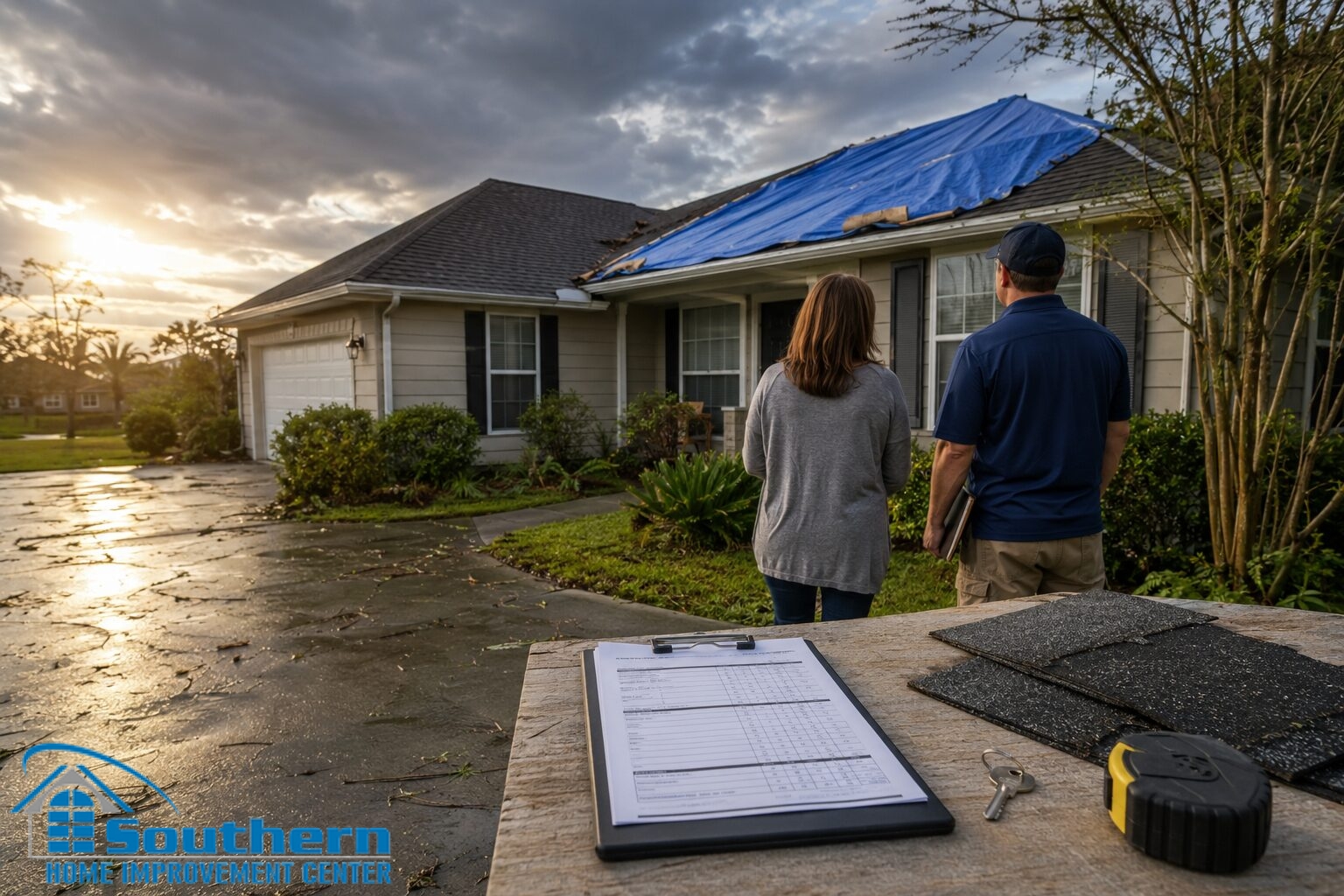
A useful roof estimate does more than state a total price. It should identify the damaged or affected components, explain the proposed repair or replacement scope, and separate known work from concealed conditions that may only be visible after removal begins.
Photograph Safe, Visible Conditions
Capture interior water staining, damaged belongings, fallen debris, detached materials, roof edges, gutters, siding, and other visible changes. Do not climb onto a wet or damaged roof.
Record the Storm and Leak Timeline
Note when the damage occurred, when water first appeared, which rooms were affected, and whether the condition changed during later rain.
Separate Temporary and Permanent Work
Tarping or emergency dry-in should be listed separately from permanent roofing. Keep the authorization, scope, photos, and receipt for temporary protection.
Request a Written Construction Scope
The proposal should identify roof covering, underlayment, decking allowances, flashing, ventilation, roof edges, penetrations, gutters or related exterior work, disposal, permits, and change-order procedures as applicable.
SHIC can inspect visible conditions, prepare photographs and a construction estimate, and explain the proposed roof or exterior scope. The company does not determine SBA eligibility, approve funding, interpret loan rules, or guarantee that an agency or insurer will pay for the work.
Before signing a contract
Five Mistakes That Can Complicate Disaster Recovery
- Missing the deadline while waiting for insurance. An unresolved insurance claim does not stop the August 31 application deadline. Report all coverage and pending payments accurately, then update SBA when the claim changes.
- Assuming an adjacent parish qualifies for a homeowner loan. Verify that the damaged primary residence is in a parish approved for physical-damage assistance.
- Treating the loan maximum as an expected award. The approved amount cannot exceed the verified uncompensated loss and depends on SBA’s review.
- Authorizing vague permanent work. Get a written scope, price, products, exclusions, payment schedule, permit responsibility, and concealed-condition procedure before signing.
- Starting a mitigation upgrade without approval. If you want stronger roof or exterior details, ask SBA whether the proposed measure and added cost qualify before changing the funded scope.
Official application resources
Where to Verify the Rules and Apply
Related SHIC resources
Plan the Roof and Exterior Scope
Homeowner questions
Louisiana SBA Disaster Loan FAQ
Do I need to own a business to apply for an SBA home disaster loan?
No. SBA disaster assistance includes loan programs for eligible homeowners and renters as well as programs for businesses and nonprofit organizations.
Is an SBA disaster loan free money?
No. It is a loan that must be repaid. SBA determines the interest rate, term, payment, loan amount, and other conditions after reviewing the application.
Can the loan help pay for roof repairs?
Potentially. Eligible homeowners may use approved physical-damage loan proceeds for verified disaster-related repairs to a primary residence when those losses are not fully compensated by insurance or another source. SBA makes the final eligibility and funding decision.
Can I apply if my insurance claim is still open?
Homeowners should not miss the August 31 deadline while waiting for a final settlement. Disclose all insurance coverage and pending claims accurately, and report later insurance payments because the same loss cannot be paid twice.
Does St. Tammany Parish qualify for homeowner physical-damage loans?
Yes. St. Tammany is listed as a primary parish for physical-damage and economic-injury assistance under the Tropical Storm Arthur declaration. The individual applicant, property, occupancy, loss, insurance recovery, and credit review still must meet SBA requirements.
Can I use the loan to upgrade to a FORTIFIED Roof?
Do not assume a particular upgrade will be funded. SBA may approve additional mitigation funding for qualifying measures, but the proposed work and cost must be reviewed and approved. A FORTIFIED project also requires its own evaluator, documentation, installation, and designation process.
Where do I apply?
Use the official SBA disaster assistance website and MySBA Loan Portal, or request help from SBA staff at an announced recovery location. The SBA disaster assistance customer service number is 1-800-659-2955, and relay users may dial 7-1-1.
Need a clear construction scope?
Request a Roof or Exterior Estimate
If Tropical Storm Arthur damaged your roof or exterior, Southern Home Improvement Center can evaluate visible conditions and prepare a written proposal for the appropriate repair or replacement scope. Contact us to request a free estimate.
Request a Free Estimate