
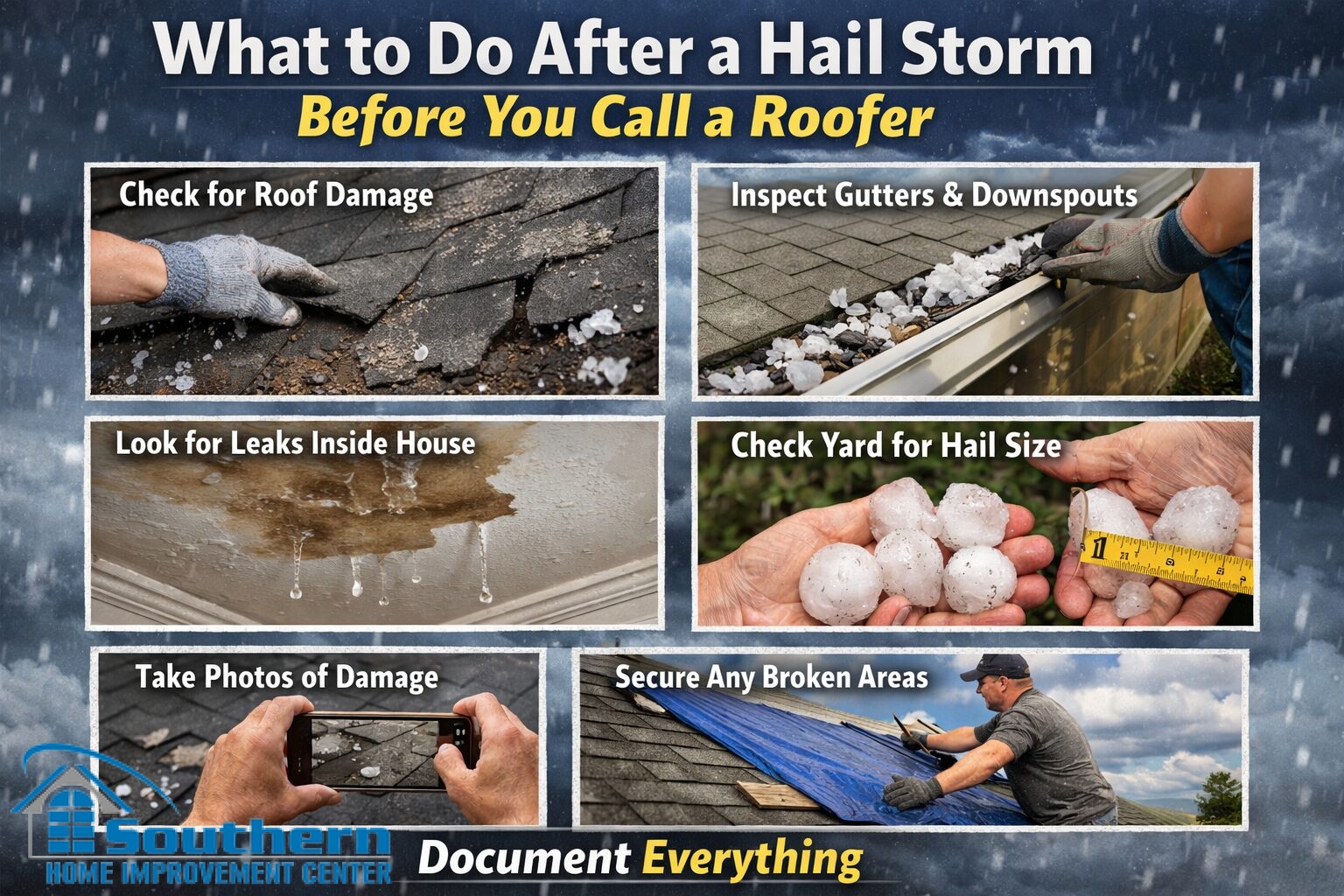
What to Do After a Hail Storm Before You Call a Roofer
A hail storm can leave behind more than visible dents and scattered debris. It can also leave you with a fast-moving decision: what should you do first, and what should you avoid before a roofing company ever arrives? For homeowners in Southeast Louisiana and the Mississippi Gulf Coast, the smartest next step is not panic and it is not guesswork. It is a safe, organized response that helps you protect the home, document what happened, and prepare for a professional evaluation.
This guide explains what to do after a hail storm before you call a roofer, how to follow a practical hail storm roof checklist, and how to avoid the most common mistakes homeowners make in the first few hours after severe weather. If you want formal photo documentation and a clear written scope after you complete the first safety steps, start with a roof damage inspection and insurance documentation so you can move into the next stage with better information.
Why the First Hour After a Hail Storm Matters
The first hour after a storm often shapes everything that happens next. If you move too fast, you may miss important details, overlook safety hazards, or agree to something before you fully understand the condition of your home. If you move in the right order, you can reduce secondary damage, keep better records, and make clearer decisions about inspection, repair, and next steps.
That is especially important on Gulf Coast homes, where wind-driven rain, humidity, and follow-up weather can turn a manageable issue into a larger one if the roof system is left exposed. A roof may look mostly fine from the driveway while water has already started finding weak points around edges, penetrations, or previously worn areas.
1. Make Sure the Storm Has Fully Passed
Before you think about roof damage, make sure the weather event is actually over. Do not step outside just because the hail has stopped. Severe weather can leave behind slick walkways, unstable debris, downed limbs, standing water, and dangerous conditions around the house.
If the area still feels unsafe, stay inside and wait. A roof inspection can happen later. Your safety cannot be replaced, and no roof issue is worth an injury caused by rushing outside too soon.
2. Do Not Climb on the Roof
One of the most important rules in any after hail storm checklist for homeowners is simple: do not climb onto the roof to inspect it yourself. A wet or impact-affected roof can be dangerous even when it looks normal from the ground. Loose granules, slick shingles, hidden weak spots, and damaged edges can turn a quick look into an avoidable accident.
Your role right now is not to diagnose the full roofing system. Your job is to observe safely, gather useful information, and avoid making the situation worse before a qualified inspection takes place.
3. Start With a Ground-Level Exterior Check
The safest first inspection is from the ground. Walk around the property slowly and look for visible changes that suggest the storm made contact with exterior surfaces. You are not trying to confirm every detail of hail damage. You are building a first layer of evidence.
Pay attention to gutters, downspouts, siding, window screens, patio covers, visible flashing, soffit areas, and any scattered debris in the yard. If you notice fresh dents, broken screens, displaced trim, or impact marks on metal components, that can help you understand where the storm hit hardest.
If the storm also exposed edge-related drainage issues, it can help to review how your roofline should manage runoff as part of the overall system. For that broader context, SHIC’s guide to attic ventilation in Louisiana is useful because storm performance is not just about shingles — it is also about airflow, moisture control, and how the full roof assembly works together.
4. Document Visible Damage Before Cleanup Begins
Before you call a roofer, create a basic record of what happened. This is one of the most useful steps you can take after a hail storm, and it often makes later conversations much easier. Use your phone to take clear photos from safe positions around the home.
The most useful documentation usually includes visible exterior impact, scattered debris, damaged screens, dented gutters, displaced materials, and any interior signs of leaking if water has entered the home. It is also smart to make a short note with the time of the storm, when you first noticed the issue, and which part of the house seemed affected first.
You do not need a technical report at this stage. You need organized, usable information. If you later need a professional record for claim support or next-step planning, SHIC’s roof damage inspection and insurance documentation page outlines the type of documented evaluation that helps homeowners move forward more confidently.
5. Check the Attic or Ceiling for Interior Warning Signs
If it is safe to do so, look inside the home for signs that water may already be entering. A roof can take hail impact without creating an immediate dramatic leak. In many homes, the first clues are more subtle: a new ceiling stain, damp insulation, a drip near a vent penetration, or discoloration that was not there before.
This is an important part of a strong hail storm home damage checklist because it shifts the focus from “Did hail hit the roof?” to “Is the home already showing signs of water intrusion?” That is the question that helps define urgency.
6. Protect the Interior if Water Is Getting In
If water is actively entering the home, the immediate goal is containment. Move furniture, electronics, paperwork, rugs, and valuables away from the affected area if you can do so safely. Place containers under drips, use towels to limit spread, and keep moisture away from finished surfaces as much as possible.
The best emergency action at this stage is usually focused on the inside of the home, not on self-performed roof work. Trying to fix the issue from the roof during unstable conditions often creates more risk than protection.
If you have active leaking, exposed sections, or immediate water entry, skip the wait-and-see approach and move directly to emergency roof repair. If the first need is temporary protection to keep more water out before permanent repairs are scheduled, use 24/7 emergency roof tarping and temporary dry-in so the home can be stabilized first.
7. Review Your Insurance Basics Before You Start Calling Everyone
Many homeowners feel pressure to call multiple people immediately after storm damage. A better approach is to take a few minutes to understand your own starting position first. Locate your homeowner’s policy information, review basic coverage details, and make sure you know how to access your claim process if needed.
This does not mean you must file a claim immediately. It means you should know what information is already in your hands before outside advice starts shaping your decisions. When homeowners skip this step, urgency often controls the process instead of facts.
8. Watch for Storm-Chasing Contractors
After hail and wind events, homeowners are often approached by contractors who move quickly through affected neighborhoods. Some may be legitimate. Some may not. The problem is that severe weather creates urgency, and urgency makes people easier to pressure.
Before agreeing to anything, slow the process down and verify who you are dealing with. Ask for a written scope instead of relying on verbal promises, avoid high-pressure “sign today” conversations, and make sure you understand exactly what is being offered before you sign anything.
A legitimate contractor does not need panic to make a sale. If the pitch depends on pressure, that is a reason to step back and proceed carefully.
9. Get Your Information Ready Before You Call a Roofer
Before you make the call, organize the facts you already have. This makes the first conversation more productive and helps the roofing company understand whether the issue sounds like a routine post-storm inspection, an urgent leak situation, or a broader storm-damage concern.
The most useful details to have ready are:
- the date of the hail storm
- whether you see visible exterior impact from the ground
- whether there is active leaking inside the home
- which area of the house appears affected first
- whether the issue seems limited to one area or more than one side of the property
- whether you already took photos and notes
- whether your main need is inspection, emergency protection, or next-step evaluation
Once you have this information in front of you, the call becomes clearer and more efficient. Instead of saying “I think something happened to my roof,” you can explain the situation in a way that helps a professional respond appropriately.
10. What Not to Do After a Hail Storm
Sometimes the fastest way to protect your home is to avoid the wrong move. A strong what not to do after a hail storm roof damage checklist helps prevent the most common mistakes.
- Do not climb onto the roof too soon.
- Do not ignore ongoing hazards around the property.
- Do not clean everything up before documenting visible conditions.
- Do not assume there is no problem just because there is no major leak yet.
- Do not sign for work under pressure before the scope is clear.
- Do not treat a post-storm roof issue as minor without a professional inspection.
These mistakes can lead to more damage, weaker documentation, and a much harder repair process. The better approach is steady and simple: stay safe, observe carefully, document what you can, and let the next step be informed.
When Urgent Help Should Come First
There is a difference between a post-storm checklist and an active emergency. If your home has active dripping, exposed decking, open roof sections, or fast-spreading interior water damage, you should not stay in research mode for long. In that situation, immediate stabilization should come first.
If the storm left you with a larger damage picture and you need a structured path from documentation to repair-or-replace decisions, review storm damage roof restoration. If the roof issue turns out to be part of a broader aging system rather than isolated impact, SHIC’s roof replacement cost in Louisiana guide helps homeowners understand the bigger picture before approving a larger scope.
FAQ
Can hail damage a roof even if I do not see a leak right away?
Yes. Some roofing problems do not show up as an immediate interior leak. A roof can take storm impact and still appear functional from inside the home for a period of time. That is why a lack of visible dripping should not be treated as proof that everything is fine.
Should I call a roofer or insurance first after a hail storm?
The best first move is usually to get organized before making either call. Confirm safety, document visible conditions, protect the interior if needed, review your policy basics, and then make the call with clear information. That leads to a more useful conversation and fewer rushed decisions.
What should I photograph after a hail storm?
Focus on what you can safely document from the ground and inside the home. Useful photos usually include visible exterior impact, damaged screens, gutters, siding, debris patterns, and any interior water signs if leaking is present.
Is it safe to inspect my roof myself after a hail storm?
A ground-level inspection is the right first step. Walking the roof immediately after a storm is not the right starting point for a homeowner. If the roof needs inspection, that should happen under safe conditions and with a professional approach.
How soon should I call after a hail storm?
You should call once the storm has fully passed, the property is safe to assess, and you have basic information ready. If there is active leaking, call promptly for immediate protection and inspection. If there is no active leak, do not delay unnecessarily, but do take the time to document the situation first.
Final Step
If your home was hit by hail and you want a clear next step without guesswork, contact Southern Home Improvement Center (SHIC) for a professional roof evaluation. Call Slidell / Northshore at (985) 643-6611 or Baton Rouge at (225) 766-4244, or use the online contact form here to request an inspection, describe what happened, and share the areas of concern before your appointment.