
Gulf Coast Roof Guide
Lifted Shingles After Wind: What Gulf Coast Homeowners Should Know
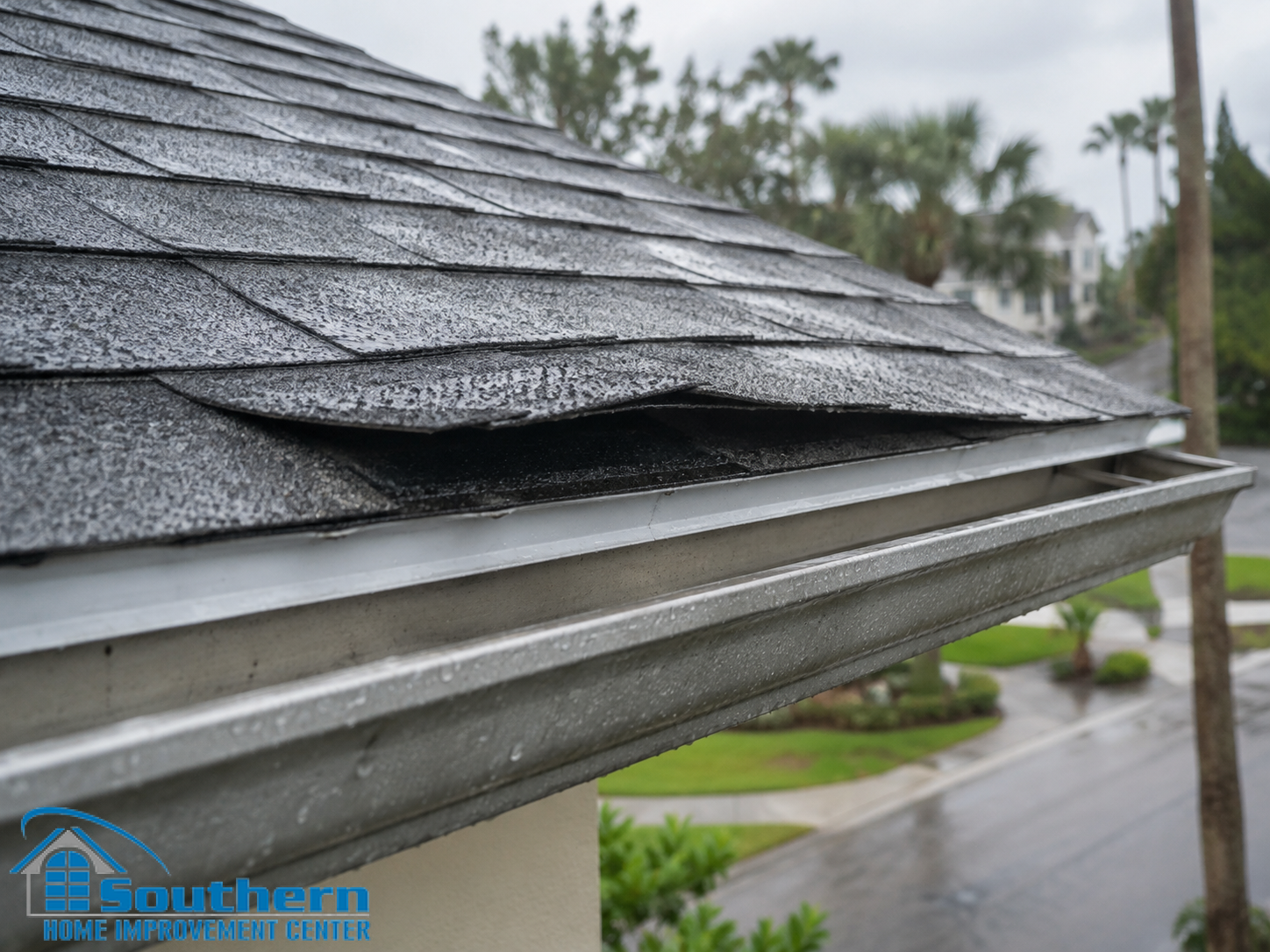
A shingle that looks raised after a storm may have lost its seal, shifted, or developed a crease that is difficult to see from the ground. This guide explains what those conditions mean, whether a shingle can seal again, and how homeowners in Southeast Louisiana and coastal Mississippi can choose a sensible next step.
Start with the distinction
“Lifted” Does Not Describe Every Type of Wind Damage
Homeowners often use “lifted shingle” for any tab that looks uneven after strong wind. For an accurate repair decision, the important question is what actually changed. The adhesive seal may have separated while the shingle stayed in position. The tab may have folded far enough to leave a permanent crease. A shingle may have shifted and exposed a fastener or joint. In more obvious cases, part or all of the shingle may be missing.
Those conditions do not have the same consequences. An unsealed edge can look normal once it settles. A crease can weaken the shingle even if the tab lies flat again. A displaced shingle can redirect water toward a joint or exposed fastener. That is why a roof should be evaluated by condition and pattern instead of by a single label.
Condition guide
Lifted, Unsealed, Creased, Displaced, or Missing?
The terms below describe different observations. They do not, by themselves, establish when the condition occurred or whether a particular storm caused it. Roof age, installation details, previous repairs, heat, dirt at the seal line, and earlier weather exposure may also contribute.
| Condition | What it means | Why it matters |
|---|---|---|
| Lifted tab | The lower edge of a shingle rises away from the course beneath it during or after wind. | The tab may be actively moving, temporarily raised by debris, or no longer bonded at its seal line. Movement can place added stress on the shingle and its fasteners. |
| Unsealed shingle | The sealant strip is not bonded continuously to the surface below, even if the shingle appears flat. | The shingle can be more vulnerable to later uplift. Dirt, moisture, cool installation weather, aging, or prior wind movement can interfere with sealing. |
| Creased shingle | The tab has bent far enough to leave a fold line, surface crack, or distortion in the shingle mat. | A crease is not corrected simply because the tab lies back down. The shingle may have lost strength and weather resistance along the bend. |
| Displaced shingle | The shingle has shifted from its intended position but remains partly attached. | Offset joints, exposed fasteners, or a changed water path may increase the chance of water entry. |
| Missing or torn shingle | A tab or full shingle has separated from the roof. | The underlying course, fasteners, or underlayment may be directly exposed, making prompt evaluation more important. |
Broken seal lines, creases, and small shifts may be difficult to see from a driveway. Missing shingles are an obvious warning sign, but they are not the only condition worth checking after strong wind.
Direct answer
Will Lifted Shingles Reseal on Their Own?
They might settle flat, and some clean, undamaged sealant strips can bond when the roof becomes warm enough. That possibility should not be treated as proof that a storm-affected shingle has returned to its original condition. Factory-applied sealant is designed to activate after installation, but an older or previously bonded seal line may not behave like a new one after it has been pulled apart.
Dust, pollen, granules, plant debris, and moisture can contaminate the sealant surface. Repeated movement may stretch or tear the shingle. A crease, crack, displaced fastener, or damaged mat will not disappear because the tab warms in the sun. Even when the edge lies flat, a hands-on evaluation may be needed to determine whether it is securely sealed and still repairable.
What may support re-bonding
- The shingle is still aligned and has no visible crease, tear, or crack.
- The sealant and mating surface remain clean and compatible.
- The shingle is flexible enough to settle without breaking.
- Warm, dry conditions allow the sealant to activate as intended.
What makes waiting unreliable
- A visible crease, torn edge, fracture, or permanent distortion.
- Dirt, loose granules, moisture, or debris at the seal line.
- Brittle shingles that no longer lie naturally in position.
- Repeated lifting, nearby missing tabs, or another storm approaching.
Practical rule: do not use “it looks flat now” as the only test. The question is whether the shingle is undamaged, aligned, securely bonded, and able to resist the next wind and rain event.
After the storm
A Safe Check for Gulf Coast Homeowners
In Slidell, the Northshore, New Orleans, Jefferson Parish, Baton Rouge, Mandeville, Covington, and Mississippi Gulf Coast communities, high wind often arrives with heavy rain and flying debris. Wait until local conditions are safe, then document what can be observed without climbing.
- 1
Record the event
Write down the storm date, approximate time, wind direction if known, and when you first noticed the roof condition. Save relevant weather alerts and any earlier roof photographs for comparison.
- 2
Photograph from safe locations
Use ground-level views from more than one side of the home. Photograph missing pieces, uneven roof edges, displaced ridge material, debris impact, damaged gutters, and shingles found in the yard. Do not stand beneath loose materials.
- 3
Check the interior
Look for new ceiling stains, damp drywall, peeling paint, musty odors, or moisture near exterior walls and penetrations. If the attic is safely accessible, look for wet decking, darkened wood, damp insulation, or daylight without stepping beyond a stable walking surface.
- 4
Protect the area below
Move belongings away from active interior dripping when it is safe to do so. If water is near electrical fixtures or wiring, avoid the area and contact the appropriate emergency professional.
- 5
Request a condition-based evaluation
Ask the inspector to identify the affected locations, describe the observable condition, separate wind-related concerns from age or installation issues, and explain why a repair or replacement scope is recommended.
Edges and corners
Eaves, rakes, and corners can be vulnerable because wind acts at the roof perimeter. Starter-strip sealing and edge details matter here.
Hips and ridges
Ridge and hip caps have exposed edges and may loosen, crack, or disappear even when the field shingles look mostly intact.
Transitions and penetrations
Valleys, vents, chimneys, skylights, and roof-to-wall areas should be reviewed because wind-driven rain can enter where materials meet.
Avoid added damage
What Not to Do With a Lifted Shingle
Pulling on a brittle or partly sealed shingle can break the mat, enlarge a crease, or separate a seal that was still holding.
A fastener placed outside the intended nailing area can create a direct water path and may not address the original cause of movement.
Unplanned surface patching can trap water, collect debris, complicate later repairs, and may not match the shingle manufacturer’s repair method.
High-pressure cleaning can remove granules, force water beneath shingles, and create damage that was not part of the storm event.
A broken seal or crease may not produce immediate interior dripping. Vulnerability can become apparent during a later wind-driven rain event.
Photograph where the material was found and keep it in a dry, safe location if it can be collected without approaching a hazard.
Decision framework
Lifted Shingle Repair or Roof Replacement?
One lifted shingle does not automatically require a new roof. A localized repair may be durable when the affected material and the surrounding roof can be worked without causing additional damage. Replacement becomes a more reasonable comparison when the problem is widespread, the shingles are no longer repairable, or the roof system has broader concerns.
| A targeted repair may be reasonable when | A replacement comparison may be reasonable when |
|---|---|
| The condition is limited to a small, clearly defined area. | Lifted, creased, displaced, or missing shingles appear across multiple areas or slopes. |
| Surrounding shingles remain flexible enough for a controlled repair. | Surrounding shingles are brittle, fractured, or likely to break when a repair is attempted. |
| Compatible replacement material is available and can be integrated correctly. | Material availability, condition, or layout makes a dependable spot repair impractical. |
| The deck, underlayment, flashing, and nearby components are sound. | There are broader deck, underlayment, flashing, ventilation, or moisture concerns. |
| The repair can restore fastening, alignment, and sealing without exposed shortcuts. | Previous patches, repeated failures, or ongoing leaks show that isolated corrections are not solving the roof-level problem. |
An older roof may still have a repairable localized condition, while a newer roof may need broader correction if installation details or storm effects are widespread. The decision should reflect actual material condition, repairability, water entry, and the roof system as a whole.
Inspection scope
What a Professional Evaluation Should Document
A useful roof report should make the recommendation understandable. It should not rely on vague statements such as “wind damage everywhere” or “the roof is old.” The documentation should connect visible conditions to specific roof locations and explain any limits on the inspection.
Roof-surface observations
- Which slopes, edges, hips, ridges, valleys, and penetrations were reviewed.
- Where shingles are lifted, unsealed, creased, torn, shifted, or missing.
- Whether the pattern is isolated, repeated, or present on multiple slopes.
- The condition of surrounding shingles and whether they can be repaired without breaking.
- Visible fastening, seal-line, flashing, edge-metal, or previous-repair concerns.
- Areas that could not be accessed safely and how that limits the conclusion.
Water and scope observations
- Signs of moisture at accessible decking, insulation, ceilings, and walls.
- Whether water may be entering at a shingle field, edge, flashing, vent, or another transition.
- Which items require immediate temporary protection, if any.
- What a targeted repair would include and why it is expected to be durable.
- Why a broader scope is being considered if localized repair is not practical.
- Clear photographs tied to roof locations rather than an unlabeled group of close-ups.
Storm documentation
If an Insurance Claim May Be Involved
A roofing contractor can document visible construction conditions, explain repairability, and prepare a proposed scope and estimate. The insurance carrier determines coverage under the terms, exclusions, deductibles, and procedures in the policy. A contractor should not promise that a claim will be approved or that a particular settlement is guaranteed.
Keep dated photographs, inspection findings, temporary-protection invoices, repair estimates, correspondence, and any earlier roof records together. Before authorizing permanent work, understand any emergency duties in the policy and the documentation your carrier requests. If immediate protection is needed to limit further water entry, document the condition before and after the temporary measure whenever it is safe to do so.
Future resilience
If Replacement Is Chosen, Look Beyond the Shingle Color
Wind performance depends on the roof system, not only the visible shingle. The proposed scope should address the condition of the roof deck, fastening, underlayment or a sealed roof deck approach, starter strips at eaves and rakes, edge details, flashing, ventilation, and the selected roof covering’s installation requirements.
Gulf Coast homeowners may also want to ask whether a FORTIFIED Roof approach is practical for the project. Eligibility, evaluation, documentation, and installation requirements should be confirmed for the specific home and current program standard before work begins. The goal is to build a coherent water-shedding and wind-resistant assembly rather than add one product label to an incomplete scope.
Related next steps
Use the Right SHIC Resource for Your Situation
Frequently asked questions
Lifted Shingles After Wind FAQ
Can a lifted shingle lie flat again after a storm?
Yes. Gravity, warmth, and calm weather may allow a tab to settle. That does not prove the sealant has re-bonded or that the shingle was not creased, torn, or weakened during movement. Flat appearance and dependable sealing are different questions.
Can wind damage exist without missing shingles?
Yes. Wind can separate seal lines, lift edges, crease tabs, shift shingles, or loosen ridge material without leaving a full shingle in the yard. Some of these conditions are difficult to confirm from the ground.
Is a crease in a shingle only cosmetic?
Not necessarily. A crease means the shingle bent sharply enough to leave a line or distortion. That movement may affect the asphalt, reinforcement mat, surface granules, or ability to resist later weather. It should be evaluated as a material condition, not dismissed because the tab settled down.
Does one lifted shingle mean the roof must be replaced?
No. A small, accessible area may be repairable when the surrounding shingles are flexible and sound, compatible materials are available, and the repair can restore alignment, fastening, and sealing. Widespread damage or poor repairability may support a replacement comparison.
Can I glue a loose shingle down myself?
Roof access and an improvised adhesive can create safety, water-shedding, compatibility, and warranty problems. A repair should follow the shingle manufacturer’s instructions and account for the fasteners, seal line, surrounding material, and any hidden damage. Homeowners should not climb onto a wet or storm-affected roof.
How soon should lifted shingles be inspected?
Arrange an evaluation promptly when shingles are missing or displaced, interior moisture is present, underlayment or fasteners appear exposed, or more severe weather is expected. A less obvious concern still deserves timely documentation because the next wind or rain event may change the condition.
Should I inspect the roof if there is no ceiling leak?
A ceiling leak is not required for a seal-line or shingle concern to exist. Water may not enter during the first storm, and some entry points send moisture along decking or framing before a stain becomes visible. Use the roof condition and storm exposure — not only interior dripping — to decide whether an evaluation is appropriate.
Will homeowners insurance cover wind-lifted shingles?
Coverage depends on the policy, cause, timing, exclusions, deductible, documentation, and carrier evaluation. A contractor can document observable roof conditions and prepare a repair or replacement proposal, but the insurer determines coverage. Review the policy and carrier requirements before relying on any assumed outcome.
A clear next step
Not Sure Whether the Shingles Resealed?
Southern Home Improvement Center can document the visible condition, explain whether a localized repair appears practical, and outline the next construction step for homes in Southeast Louisiana and along the Mississippi Gulf Coast.