
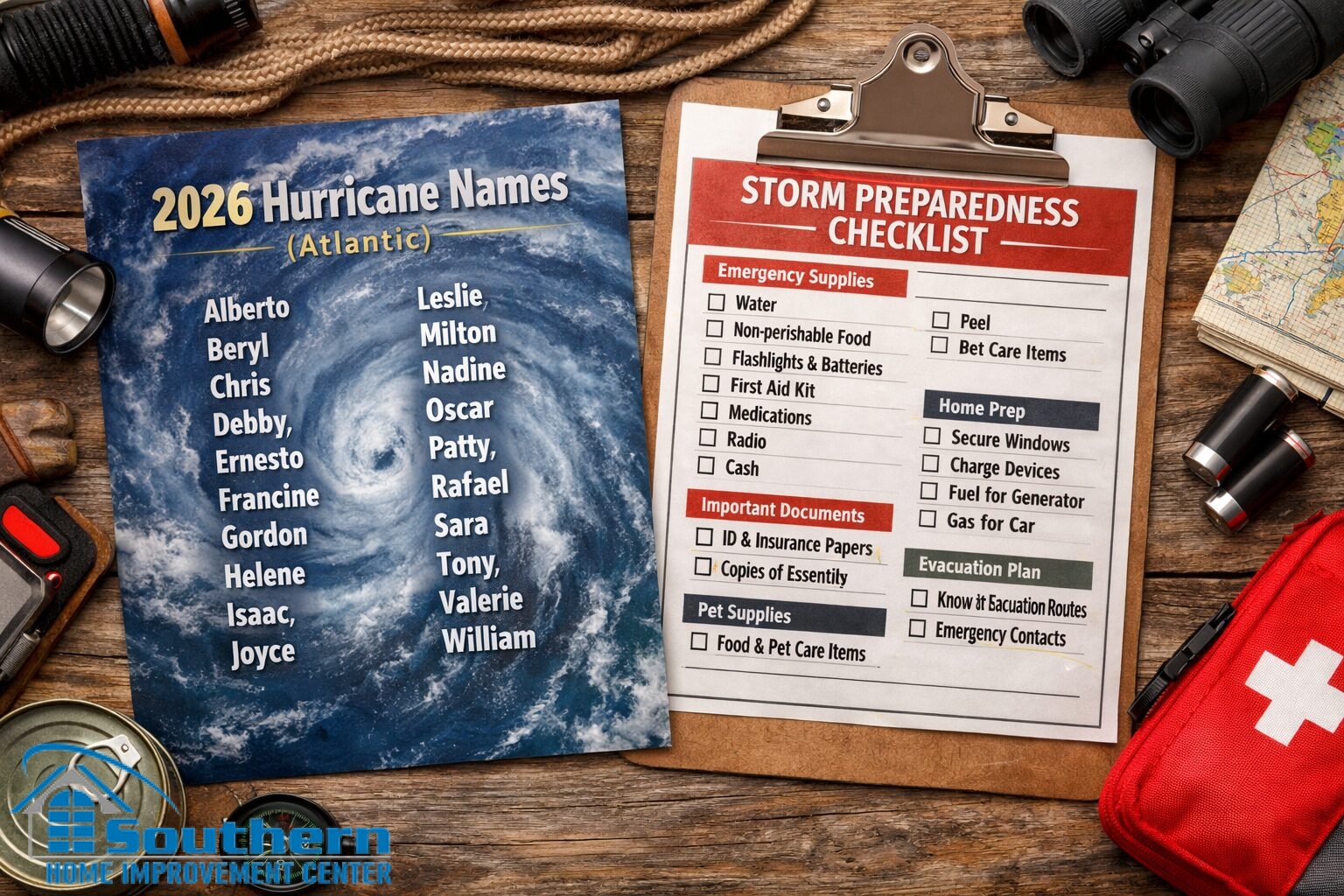
2026 Atlantic Hurricane Names List: Arthur to Wilfred
The official 2026 Atlantic hurricane names begin with Arthur and continue through Wilfred. These names are assigned in order when tropical systems reach tropical-storm strength in the Atlantic Ocean, Caribbean Sea, or Gulf.
As of August 6, 2026, Arthur and Bertha have been used. The next Atlantic tropical storm will be named Cristobal. The remaining names will be used only if additional tropical storms form before the season ends.
Arthur and Bertha
Pronounced krees-TOH-bahl
Cristobal through Wilfred
Storms can also form outside the official dates
Official 2026 Atlantic Hurricane Names
The National Hurricane Center publishes 21 names for the 2026 Atlantic season. The letters Q, U, X, Y, and Z are not used in the standard Atlantic list.
The standard Atlantic list skips Q, U, X, Y, and Z because it is difficult to maintain six rotating sets of recognizable names beginning with those letters.
Which 2026 Storm Names Have Already Been Used?
Two names from the 2026 Atlantic list had been used by August 6. Neither name will be used again during the current season.
Arthur
- Dates
- June 17–18, 2026
- Maximum winds
- 40 knots
- Season position
- First named storm
Bertha
- Dates
- July 19–23, 2026
- Maximum winds
- 50 knots
- Season position
- Second named storm
How to Pronounce the 2026 Hurricane Names
Several names on the 2026 list are commonly mispronounced. The pronunciation guide above follows the National Hurricane Center’s official reference.
For a more detailed explanation of the names that cause the most confusion, review SHIC’s guide to pronouncing the 2026 Atlantic hurricane names.
How Atlantic Tropical Storms and Hurricanes Get Their Names
The World Meteorological Organization maintains six rotating Atlantic name lists. A standard list returns every six years unless a name is retired because a storm caused exceptional loss of life or damage.
Tropical Depression
A tropical depression does not receive a name. It is identified by a number while maximum sustained winds remain below tropical-storm strength.
Tropical Storm
A system receives the next available name when maximum sustained winds reach at least 39 mph.
Hurricane
The storm keeps the same name if sustained winds later reach at least 74 mph and it becomes a hurricane.
Why Is Leah on the 2026 List Instead of Laura?
The 2026 list largely repeats the names used in 2020. However, Laura was permanently retired after Hurricane Laura caused catastrophic damage and loss of life in 2020. Leah was selected as its replacement.
What Happens When the Standard List Runs Out?
If more than 21 Atlantic storms receive names during one season, the World Meteorological Organization uses a supplemental list. The Greek alphabet is no longer used for additional Atlantic storms.
Printable 2026 Atlantic Storm Name Tracker
This tracker can be printed and kept with insurance documents, evacuation information, emergency contacts, and other hurricane-season records.
Atlantic Hurricane Season Dates and Peak Months
The official Atlantic hurricane season runs from June 1 through November 30. Tropical and subtropical systems can form outside those dates, but most seasonal activity occurs during the official six-month period.
August, September, and October are generally the most active portion of the season. A quiet start does not eliminate the possibility of a later hurricane affecting Louisiana, Mississippi, or another Gulf Coast state.
Development often occurs closer to the Gulf, Caribbean, or Southeast coast.
Atmospheric and ocean conditions are typically most favorable for Atlantic activity.
Activity usually decreases, but tropical systems can still develop before November 30.
Gulf Coast Home Preparation Before the Next Named Storm
Louisiana and Mississippi homeowners should not wait for a storm to receive a name before reviewing roof condition, drainage, exterior openings, insurance documents, and emergency plans.
Document the Property
- Photograph the roof, gutters, siding, windows, doors, patio covers, and exterior equipment.
- Save insurance policies, prior repair records, product information, and contractor invoices.
- Record existing stains, leaks, cracks, or exterior damage before a storm approaches.
Reduce Exterior Hazards
- Secure or bring inside furniture, decorations, tools, and other loose outdoor objects.
- Clear accessible drains, gutters, and downspout discharge areas when conditions are safe.
- Follow official evacuation, shelter, and weather instructions for your location.
Inspect Safely
- Wait for authorities to confirm that conditions are safe.
- Photograph damage before moving debris or beginning permanent repairs.
- Arrange emergency dry-in or professional inspection when water entry or roof damage is visible.
Do not climb onto a roof while preparing for a storm or immediately after severe weather. Look from the ground and leave close inspection to a qualified professional when the roof may be wet, unstable, or damaged.
Related 2026 Hurricane Season Resources
Official Hurricane Tracking Resources
Frequently Asked Questions
What is the next hurricane name in 2026?
The next Atlantic tropical storm will be named Cristobal. Arthur and Bertha were the first two names used during the 2026 season.
Are Arthur and Bertha still active?
No. Arthur occurred from June 17 through June 18, and Bertha occurred from July 19 through July 23. The names will not be used again during the 2026 Atlantic season.
Are these hurricane names or tropical storm names?
The names are first assigned when a system becomes a tropical storm with sustained winds of at least 39 mph. The system keeps the same name if it later becomes a hurricane.
When does a tropical storm become a hurricane?
A tropical storm becomes a hurricane when its maximum sustained winds reach at least 74 mph.
Why is there no hurricane name beginning with Q?
The Atlantic list excludes Q, U, X, Y, and Z because there are not enough suitable and recognizable names to maintain six rotating lists using those letters.
Why did Leah replace Laura?
Laura was retired after the destructive 2020 hurricane. Leah was selected as the replacement name for the 2026 rotating list.
What happens if all 21 Atlantic names are used?
Additional storms receive names from the World Meteorological Organization’s supplemental Atlantic list. The Greek alphabet is no longer used.
Will every name on the 2026 list be used?
No. Names are used only when tropical storms form. A quieter season may end before the list reaches later names such as Teddy, Vicky, or Wilfred.
When does the 2026 Atlantic hurricane season end?
The official season ends on November 30, 2026, although tropical or subtropical systems can occasionally form outside the official dates.
Request a Free Home Exterior Estimate
Concerned about visible roof, gutter, siding, window, or exterior damage before or after a Gulf Coast storm? Contact the Southern Home Improvement Center office serving your area.