
Roof care for Gulf Coast homes
Roof Algae Removal: Black Streaks on Shingles
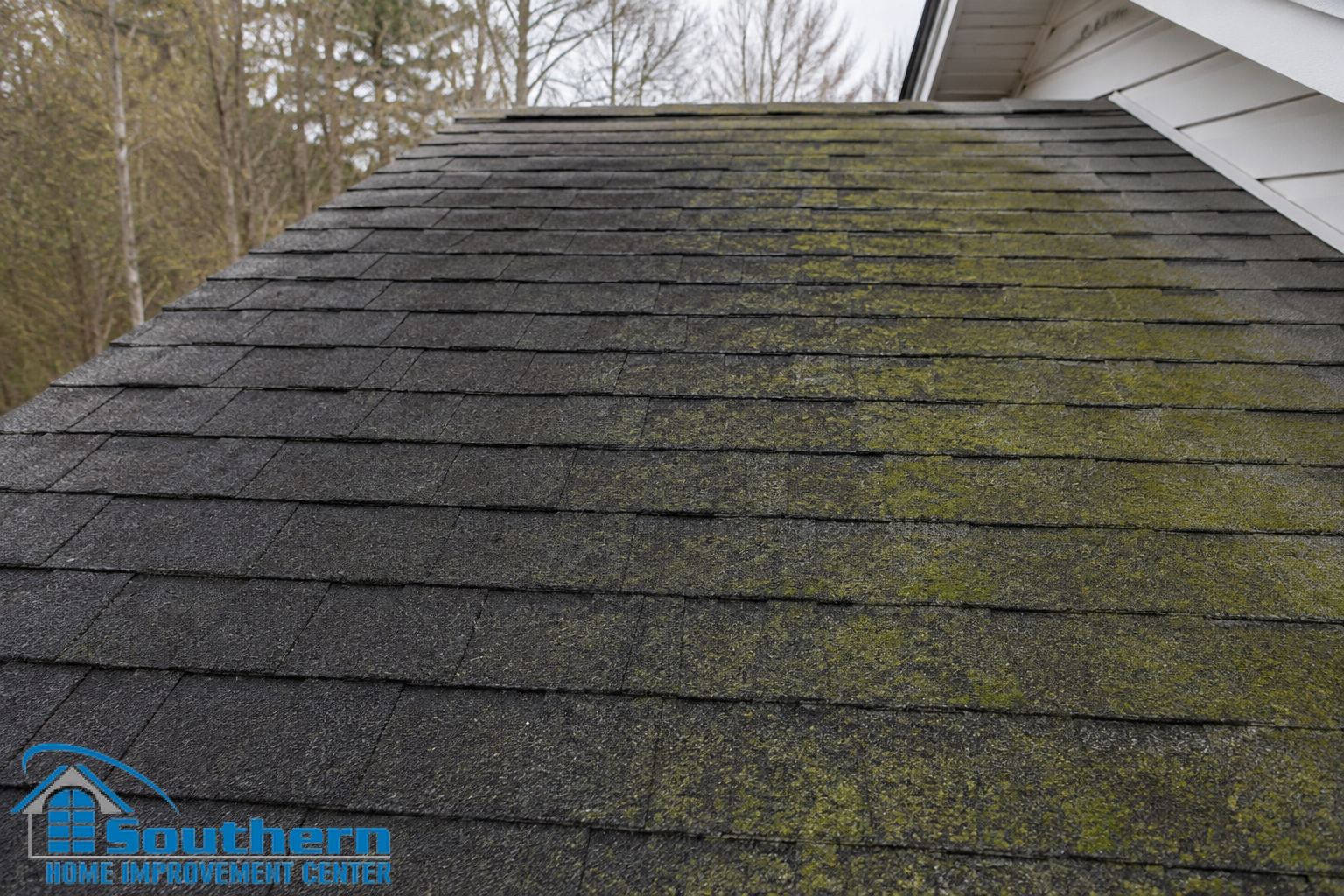
Black streaks on an asphalt roof are often algae discoloration, especially in the warm, humid Gulf Coast climate. Algae alone does not prove that shingles are damaged or that the roof needs replacement. The right first step is to identify the growth, check the roof’s condition, and follow the shingle manufacturer’s cleaning guidance.
Quick answer
Black streaks are usually a cleaning question, not a replacement diagnosis
The Asphalt Roofing Manufacturers Association (ARMA) says there is no scientific evidence that algae damages asphalt shingles, although it affects appearance. Moss is different: established moss can lift or curl shingle edges and may contribute to water movement. Do not pressure-wash, scrub, or walk a wet roof to find out which condition you have.

Why Gulf Coast roofs show streaking
What causes black streaks on roof shingles?
Brown-to-black roof streaks are commonly associated with airborne blue-green algae, often identified as Gloeocapsa magma. The organism produces a dark protective pigment, so a colony that began as small spots can eventually look like long stains running down a roof plane.
Warm, humid conditions
Algae discoloration is widespread in the Gulf States. Roof areas that stay damp longer can show growth sooner or more heavily than faster-drying areas.
Airborne spread
Algae can travel by wind or animals. That helps explain why similar streaking may appear across several homes in the same neighborhood.
Shade and slow drying
North-facing slopes, overhanging branches, roof valleys, and debris-covered areas may retain moisture and receive less direct sun.
Identify before treating
Roof algae vs. moss, lichen, dirt, and shingle wear
A driveway photo can show the pattern, but it may not establish the material condition underneath. Use visible clues to choose the next step, then avoid scraping or probing the roof yourself.
| Condition | Typical appearance | Why the distinction matters |
|---|---|---|
| Algae discoloration | Flat brown or black spots, patches, or streaks that often run down the roof plane | Usually an appearance issue on conventional asphalt shingles; manufacturer-approved cleaning may lighten it |
| Moss | Raised green growth with visible texture, commonly in damp or shaded areas | Can hold moisture and lift or curl shingle edges; removal needs greater care |
| Lichen | Crusty, leaf-like, or circular growth attached firmly to the surface | Aggressive scraping can remove protective granules; have the condition evaluated before treatment |
| Dirt, soot, pollen, or tree debris | Localized deposits that correspond with a chimney, tree canopy, drainage path, or nearby source | The source and safe cleaning method may differ from algae treatment |
| Granule loss or exposed asphalt | Dark, shiny, or bare-looking areas within shingles rather than a surface film | This is a roof-condition concern, not a stain to wash away |
Separate appearance from performance
Does roof algae damage asphalt shingles?
For conventional asphalt shingles, ARMA reports no scientific evidence that algae itself damages the roof covering. The most immediate effect is visible discoloration and reduced curb appeal. Algae growth on a highly reflective “cool roof” can also reduce the surface’s reflectance by covering reflective granules.
That does not mean every streaked roof is healthy. Algae can exist on a roof that also has age-related wear, storm damage, loose flashing, granule loss, or a leak. Those conditions should be evaluated on their own evidence instead of being attributed to the stain.
Algae streaks do not prove that the roof has:
- A leak or rotted roof deck
- Failed attic ventilation
- Lost its wind rating
- Reached the end of its service life
- Developed an indoor mold problem
- Become an automatic replacement candidate
Use the roof manufacturer’s method
How should roof algae be removed safely?
Start with the instructions for the exact shingle manufacturer and product line. ARMA describes a low-pressure bleach-and-water treatment for asphalt roofing, but mixture directions and restrictions can vary by manufacturer. Other chemicals or methods should not be used without manufacturer approval.
- 01
Confirm the roof covering
Identify the shingle manufacturer and product when possible. Metal, tile, wood, coated, and low-slope roofs require different guidance.
- 02
Inspect condition before cleaning
Brittle shingles, loose tabs, widespread granule loss, active leaks, moss, or lichen may change whether cleaning is appropriate.
- 03
Protect the property
A qualified provider should plan for landscaping, siding, painted surfaces, gutters, metals, runoff, hoses, electrical hazards, and safe access.
- 04
Use gentle application and rinsing
Manufacturer-aligned cleaning relies on controlled chemical treatment and low-pressure water, not forceful blasting or abrasive scrubbing.
- 05
Expect gradual results and possible recurrence
Some discoloration or dead growth may weather away over time. Cleaning can improve appearance, but airborne algae can return.
Do not pressure-wash asphalt shingles
High-pressure water can remove protective granules and damage the roof covering. “Soft wash” should describe a low-pressure, manufacturer-compatible process — not simply a marketing label.
Do not scrub or scrape the roof
Brushes, brooms, and aggressive mechanical removal can loosen granules or damage shingles. Moss should be killed and allowed to release according to approved guidance, not torn off.
Do not improvise chemical mixtures
Do not combine bleach with other cleaners. Chemical concentration, dwell time, rinse method, personal protection, and property protection must follow the applicable labels and instructions.
Do not walk a wet treated roof
A roof becomes especially slippery during treatment. ARMA recommends that trained professionals perform roof work and follow required safety practices.
Condition controls the decision
When cleaning may make sense — and when to inspect first
- The issue appears to be flat algae discoloration
- Shingles remain flexible, aligned, and uniformly surfaced
- There are no active leaks or widespread damaged areas
- The exact manufacturer permits a compatible method
- A qualified provider can protect the roof and property
- The roof has raised moss or firmly attached lichen
- Shingles are brittle, curled, cracked, lifted, or missing
- Dark areas look bare or shiny rather than stained
- Granules are accumulating heavily in gutters
- There are ceiling stains, damp decking, or repeated leaks
Reduce the conditions that support growth
How to reduce future algae and moss growth
Trim overhanging branches responsibly
More sunlight and less falling debris can help roof surfaces dry. Tree work should protect the house, the roof, and the health of the tree.
Keep roof drainage paths clear
Remove accumulated leaves and debris with a non-abrasive method. Keep gutters and downspouts clear so water does not remain at roof edges or discharge onto lower roofs.
Compare algae-resistant shingles at replacement
When the roof eventually needs replacement for condition-based reasons, compare products with algae-resistant granules and read the exact limited-warranty terms.
Treat ventilation as a separate roof-system issue
Balanced attic ventilation matters for heat and moisture management, but adding a vent is not a direct algae-removal treatment. Vent changes should be based on attic area, intake, exhaust, and roof geometry.
ARMA does not recommend adding these strips to an existing asphalt roof when installation would require exposed nails or breaking existing shingle sealant bonds. Those changes can create leak or wind-performance concerns.
Do not replace a serviceable roof for color alone
Does a roof with black streaks need replacement?
Not because of algae alone. Replacement becomes a practical discussion when the roof also has widespread deterioration, repeated leaks, storm damage, brittle or missing shingles, exposed substrate, failing flashings, or repair limitations across several areas.
If replacement is already justified by condition, algae resistance can be one product-selection factor alongside wind classification, impact rating, roof slope, underlayment, flashing, ventilation, accessories, installation instructions, and warranty terms.
A useful roof evaluation should separate:
- Surface staining from material loss
- Algae from moss and lichen
- Cosmetic cleaning from needed repair
- Roof-covering wear from flashing or leak paths
- Current condition from future product preferences
Continue with the right question
Roof condition and maintenance resources
Homeowner questions
Roof algae and black streaks FAQ
What are the black streaks on my roof?
On many Gulf Coast asphalt roofs, flat brown-to-black streaks are algae discoloration rather than dirt or indoor-type mold. Raised green growth is more consistent with moss, while crusty growth may be lichen. Granule loss can also create dark areas, so the pattern should be identified before treatment.
Will roof algae shorten the life of asphalt shingles?
ARMA states that there is no scientific evidence that algae damages conventional asphalt shingles, although it affects appearance. Moss is different and can lift or curl shingle edges. A streaked roof may still have unrelated wear or damage that requires evaluation.
What is the safest way to remove algae from roof shingles?
Use the exact shingle manufacturer’s approved cleaning instructions and a trained provider who can work with low pressure, protect the property, and follow chemical labels and roof-safety requirements. Do not rely on a generic recipe when the manufacturer specifies a different method.
Can I pressure-wash black streaks off my roof?
No. ARMA warns that pressure washing is likely to damage asphalt roofing and remove granules. Abrasive brushing or scraping can also harm the shingle surface.
Is bleach safe for asphalt shingles?
ARMA describes a bleach-and-water cleaning approach, but the shingle manufacturer’s current instructions control the mixture, application, dwell time, and rinsing. Bleach must never be mixed with other cleaners, and nearby plants, metals, finishes, and runoff paths require protection.
Will algae return after roof cleaning?
It can. Algae is airborne, and cleaning does not permanently prevent new growth. Shade, debris, slow drying, surrounding exposure, roof material, and climate can all influence recurrence.
Should I install copper or zinc strips to prevent streaks?
Do not add them to an existing asphalt roof without manufacturer-compatible details. ARMA cautions against retrofits that use exposed nails or break shingle sealant bonds. When replacement is independently warranted, compare shingles designed with algae-resistant granules instead.
When should black streaks lead to a roof inspection?
Request an evaluation when the growth is raised, shingles are brittle or damaged, dark areas appear bare or shiny, granule loss is heavy, a storm recently affected the roof, or interior moisture signs are present. Algae alone is not a replacement diagnosis.
Roof condition evaluation
Not sure whether the roof is stained or worn?
Southern Home Improvement Center can evaluate visible roof conditions, separate cosmetic streaking from repair concerns, and explain whether monitoring, manufacturer-compatible cleaning, targeted roofing work, or replacement planning is the practical next step.
Request a Roof EvaluationNew Orleans / Jefferson(504) 833-1835
Slidell / Northshore(985) 643-6611
Baton Rouge(225) 766-4244
Mississippi Gulf Coast(228) 467-7484