
Gulf Coast Roofing Guide
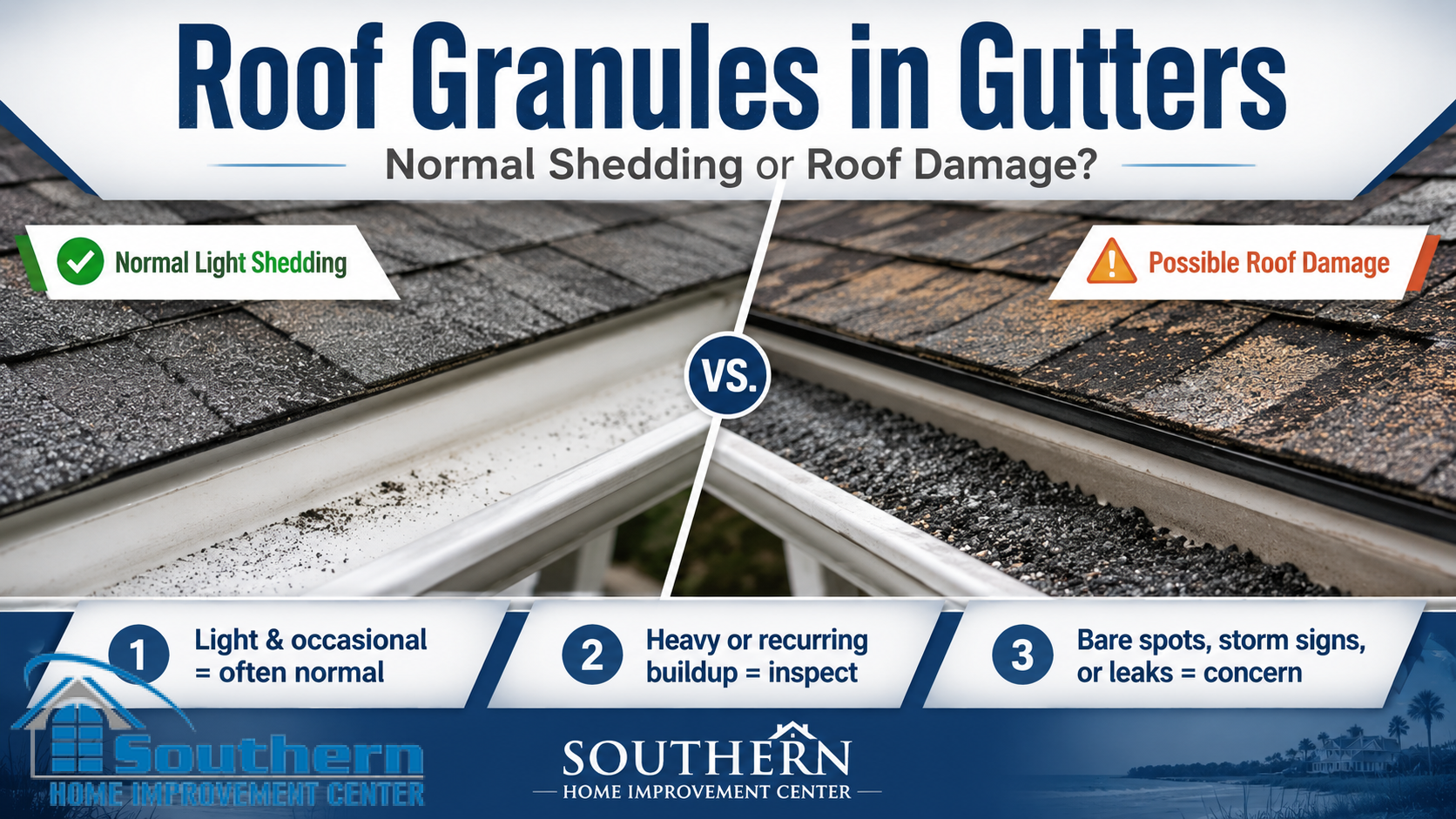
Roof Granules in Gutters: Normal Shedding or Roof Damage?
Finding sand-like material in a gutter or below a downspout can be unsettling. Those particles are usually mineral granules from asphalt shingles. A small amount can be normal, especially on a newer roof, but recurring piles, visible bare spots, or a sudden increase after severe weather deserve a closer look.
The right response depends on the pattern, not one handful of grit. Roof age, the amount and location of the loss, recent storms, visible shingle condition, and any interior moisture signs all help determine whether the roof should be monitored, repaired, or evaluated for replacement.
Quick answer
Are roof granules in gutters always a problem?
No. Asphalt shingles may release loose surface granules after installation, and normal weathering can move a limited amount into gutters over time. The condition becomes more concerning when the buildup is heavy or keeps returning, the roof has dark or shiny bare areas, granule loss is concentrated on one slope, or the change follows hail, falling debris, or another storm.
Granules cannot be glued back onto a worn shingle in the field. The practical question is whether the loss is light and superficial, isolated to a repairable area, or widespread enough to affect the remaining serviceability of the roof covering.
What Roof Granules Do
Asphalt shingles are surfaced with small mineral granules. They give the roof its finished color and help shield the asphalt layer from sunlight and everyday weather exposure. Granules are part of the shingle surface, but not every loose particle means the protective layer is failing.
Manufacturing and handling can leave some granules resting on the surface without being fully embedded. Rain carries these loose particles toward valleys, eaves, gutters, and downspouts, where they become easier to notice. This is why a small amount of granule shedding can look more dramatic at the bottom of a drainage path than it does across the roof itself.
When Shingle Granule Loss May Be Normal
The roof is relatively new
New asphalt shingles may release excess surface granules after installation. Light shedding without visible bare asphalt or damaged shingles is not automatically a defect.
The amount is light and occasional
A thin layer of grit found during routine gutter cleaning can reflect ordinary surface loss, especially when it does not return heavily after each rainfall.
The roof still looks uniform
Light shedding is less concerning when the visible roof surface remains even in color and texture, with no broad dark patches, cracks, curling, or missing material.
Important: there is no reliable homeowner formula that converts a cup or handful of granules into a remaining roof lifespan. Gutters collect runoff from large roof areas, so quantity must be interpreted together with the roof surface and its history.
Signs Granule Loss Needs a Roof Inspection
Granule loss matters most when it forms a pattern. One observation may only justify monitoring; several related signs can point to accelerated wear or storm damage.
Heavy buildup keeps returning
The gutter or downspout area fills with fresh grit again soon after cleaning, especially after ordinary rain rather than one unusual event.
Dark or shiny spots are visible
Sections of shingle appear smoother, darker, or bare because the asphalt surface is no longer evenly covered.
Loss is concentrated in one area
One slope, valley, downspout, tree-contact area, or section below a roof transition produces much more material than the rest.
The change followed severe weather
A sudden increase appears after hail, high wind, falling limbs, or wind-driven debris, particularly when vents, gutters, screens, or exterior metal also show marks.
Other shingle damage is present
Granule loss appears with cracks, curling edges, lifted tabs, missing shingles, exposed fasteners, or damaged ridge caps.
Interior moisture signs appear
Ceiling stains, damp attic insulation, darkened decking, peeling paint, or a musty odor become noticeable after rain.
What Causes Asphalt Shingles to Lose Granules?
Normal settling and weathering
Loose surface granules may wash away after installation. As a roof ages, long-term exposure also gradually changes the bond between the granules and the asphalt beneath them.
Gulf Coast heat and repeated rain
Strong sun, long cooling seasons, sudden downpours, and repeated wet-dry cycles place continuous stress on asphalt roof coverings in Southeast Louisiana and along the Mississippi Gulf Coast.
Hail, debris, and storm contact
Impact can displace granules or bruise the shingle surface. Granule loss alone does not prove hail damage; the complete pattern across roofing and nearby exterior components must be evaluated.
Foot traffic and mechanical abrasion
Walking on shingles, dragging equipment, repeated service access, or branches rubbing the roof can scuff the surface. Hot shingles may be especially vulnerable to unnecessary traffic.
Aggressive cleaning
Pressure washing, scrubbing, and unapproved cleaning methods can loosen the protective surface and may conflict with manufacturer instructions. Roof appearance should never be improved at the expense of shingle condition or personal safety.
Localized drainage or roof-detail problems
Concentrated flow at valleys, poor drainage, trapped debris, or repeated contact near a roof detail can create uneven wear. The cause may be broader than the shingle directly above the gutter.
Granule Loss After a Storm: What the Pattern Can Tell You
Heavy rain can wash previously loosened granules into gutters without creating new roof damage. Hail, debris, and strong wind can also produce fresh surface loss. That is why the timing of the discovery matters, but timing alone is not proof of the cause.
A storm-focused review looks beyond the gutter. It may compare exposed roof slopes, valleys, ridges, vents, flashing, gutters, downspouts, siding, screens, and other surfaces for a consistent impact or wind pattern. Roof age and pre-existing wear also matter because an older shingle may respond differently to the same weather than a newer one.
Do not climb onto a storm-affected roof
Wet, loose, steep, or damaged roofing can be unsafe, and foot traffic may disturb already vulnerable shingles. Use ground-level observations and safe interior checks, then leave roof access to a qualified professional.
What to Do When You Find Roof Granules in the Gutters
- 1
Photograph what you found
Take clear photos of the gutter, downspout discharge, and any visible roof changes from the ground. Include a wider view so the location is easy to identify later.
- 2
Record the timing
Note whether the material appeared after installation, routine rain, gutter cleaning, hail, high wind, tree contact, or other exterior work.
- 3
Check for related symptoms
From a safe location, look for dark bare patches, damaged shingles, dented metal, ceiling stains, damp attic areas, or a change limited to one side of the home.
- 4
Avoid washing or coating the shingles
Do not use pressure, abrasion, sealants, roof coatings, or a so-called rejuvenator as a quick response. First identify the material, roof condition, and applicable manufacturer guidance.
- 5
Request an inspection when the pattern is unclear
A roof evaluation can determine whether the material is normal loose surfacing, localized damage, broad aging, or one part of a larger storm or drainage concern.
Can Granule Loss Be Repaired?
Missing granules are not normally restored by applying loose material, paint, coating, or sealant over the shingle. The repair decision depends on what caused the loss and how much of the roof is affected.
Monitor
Light shedding without exposed asphalt
Document the condition and recheck it during normal maintenance, especially after the next few heavy rains.
Repair
Localized damage with serviceable surrounding shingles
A limited shingle area may be repairable when compatible materials are available and the surrounding roof can accept a durable integration.
Plan replacement
Widespread bare areas or broad deterioration
Replacement may be more practical when several slopes show advanced wear, materials are brittle, leaks recur, or repairs would leave too much unreliable roofing in place.
What a Professional Roof Evaluation Should Consider
A useful inspection should explain the visible condition without turning every loose granule into an emergency. Depending on access and safety, the evaluation may review:
- Whether granule loss is uniform, isolated, impact-related, or concentrated along a drainage path
- Whether dark areas are normal color variation, algae staining, exposed asphalt, bruising, or another surface condition
- The age and repair history of the roof, including slopes installed at different times
- Shingle flexibility, cracking, lifting, missing material, and ridge or edge condition
- Evidence on vents, flashing, gutters, downspouts, siding, screens, and exterior metal after severe weather
- Accessible attic or interior moisture clues connected to the affected roof area
- Whether monitoring, targeted repair, storm documentation, or replacement planning is the most practical next step
Related Roofing Resources
Frequently Asked Questions About Roof Granule Loss
Why are there roof granules in my gutters after a new roof installation?
New asphalt shingles can release loose surface granules left from manufacturing, packaging, handling, and installation. Light shedding without visible bare asphalt or damaged shingles can be normal. Heavy recurring deposits or obvious bare spots should be evaluated.
Does granule loss mean my roof is leaking?
Not by itself. Granule loss concerns the shingle surface, while a leak requires a water-entry path through the roof system. The condition deserves faster attention when it appears with damaged shingles, failed flashing, ceiling stains, damp insulation, or wet decking.
Can heavy rain cause shingle granules to collect in gutters?
Yes. Rain can carry already-loose granules toward gutters and downspouts. A large discovery after rain does not automatically mean the rainfall damaged the roof. Look at whether the buildup is recurring and whether the roof shows bare or damaged areas.
Is granule loss always hail damage?
No. Granules can loosen because of normal settling, aging, foot traffic, branches, cleaning, impact, or other wear. Hail damage is evaluated from the complete pattern across the roof and nearby exterior surfaces, not from granules in a gutter alone.
Can roof coatings or rejuvenators replace missing granules?
Do not assume a field-applied coating restores the original shingle construction or manufacturer coverage. Some treatments can change shingle behavior or loosen surfacing. Review the exact product, roof condition, and shingle manufacturer's written guidance before authorizing any treatment.
Should I clean the granules out of my gutters?
Gutters and downspouts should remain open so roof runoff can drain properly. Remove accumulated debris only from a safe working position, or hire a qualified service provider. Photograph unusual deposits before cleanup if you may need the condition evaluated.
When should Gulf Coast homeowners schedule an inspection?
Schedule an evaluation when granule buildup is heavy or recurring, visible bare patches appear, shingle damage is present, the change followed hail or debris impact, or interior moisture signs develop. Active water entry or exposed roofing materials require prompt attention.
Clear Answers, Practical Next Steps
Concerned About Granule Loss on Your Roof?
Southern Home Improvement Center can evaluate visible shingle wear, storm-related concerns, roof details, and moisture clues, then explain whether monitoring, repair, or replacement planning makes sense for your home.
Request a Roof Evaluation