
FORTIFIED Roof in New Orleans, LA — Step-by-Step Installation
A FORTIFIED roof in New Orleans, LA should be viewed as more than a standard reroof. In Southeast Louisiana, a roof system has to perform through heat, humidity, wind-driven rain, and hurricane-season weather. That is why this project is best understood as a full FORTIFIED roof system built from the deck up — not just a basic shingle replacement.
For homeowners considering a FORTIFIED roof, this project shows why the installation sequence matters. The visible shingles are only one part of the assembly. The long-term value of a stronger roof depends on how the deck is secured, how the deck is sealed, how the roof edge is reinforced, and how each layer is installed to support the next. That is the practical difference between a routine reroof and a more resilient, storm-focused build.

Why This FORTIFIED Roof Process Matters
Many homeowners begin by asking about fortified roof cost, but price alone does not explain the real difference between systems. What matters most is how the roof is built. A stronger roof starts with stronger deck attachment, better moisture protection, improved starter performance, and more reliable shingle fastening.
This is also why the FORTIFIED roof program draws so much attention. Homeowners are not just looking for a new roof — they are looking for a roof assembly designed to perform better under severe weather conditions. In a market like New Orleans, that makes a step-by-step installation approach especially important.

Step 1 — Re-Nailing the Entire Roof Deck
The project began with a full tear-off. The old shingles and all layers of felt were removed so the roof deck could be fully exposed, prepared, and rebuilt correctly. Once the deck was ready, the entire roof deck was re-nailed using 2 3/8-inch ring-shank nails.
This is one of the most important details in a FORTIFIED roof installation. Stronger deck attachment helps reduce movement under wind pressure and creates a more secure base for the rest of the roofing assembly. Instead of placing new materials over an uncertain substrate, this project began by reinforcing the structural foundation first.

Step 2 — Sealing the Roof Deck
After the deck was re-fastened, an ice and water barrier was installed over the prepared roof deck. This created a sealed roof deck, adding a secondary layer of protection beneath the shingles.
For a home in New Orleans, this matters because wind-driven rain can penetrate quickly if the outer roofing layer is damaged during a storm. A sealed deck helps reduce the risk of interior water intrusion by providing an added protective layer directly over the decking. When homeowners compare fortified roof requirements, this is one of the core performance-focused details they expect to see.

Step 3 — Bond Break Installation
Once the sealed deck layer was in place, an additional layer of synthetic felt was installed as a bond break. This layer helps prevent the ice and water barrier from adhering directly to the shingles.
That detail is important for future roof serviceability. Without a bond break, later repairs or full replacement can become more difficult and more disruptive than necessary. To preserve proper starter performance, the bond break was installed a minimum of 8 inches from the roof edge, so it would not interfere with the starter system at the eaves.

Step 4 — Self-Adhering Starter Roll
The next step was the installation of a self-adhering starter roll. Compared with bundled starters, a self-adhering starter roll adheres directly to the drip edge and includes a factory-applied adhesive strip at the top to help hold the first course of shingles in place during high-wind events.
This creates a stronger bond between the starter and the shingles above it. Since the roof edge is one of the most vulnerable areas during storms, this upgraded detail improves wind resistance where many roof failures begin. In a true FORTIFIED roof system, edge performance is not a minor detail — it is a critical part of the installation.

Step 5 — Installing IKO Cambridge Shingles
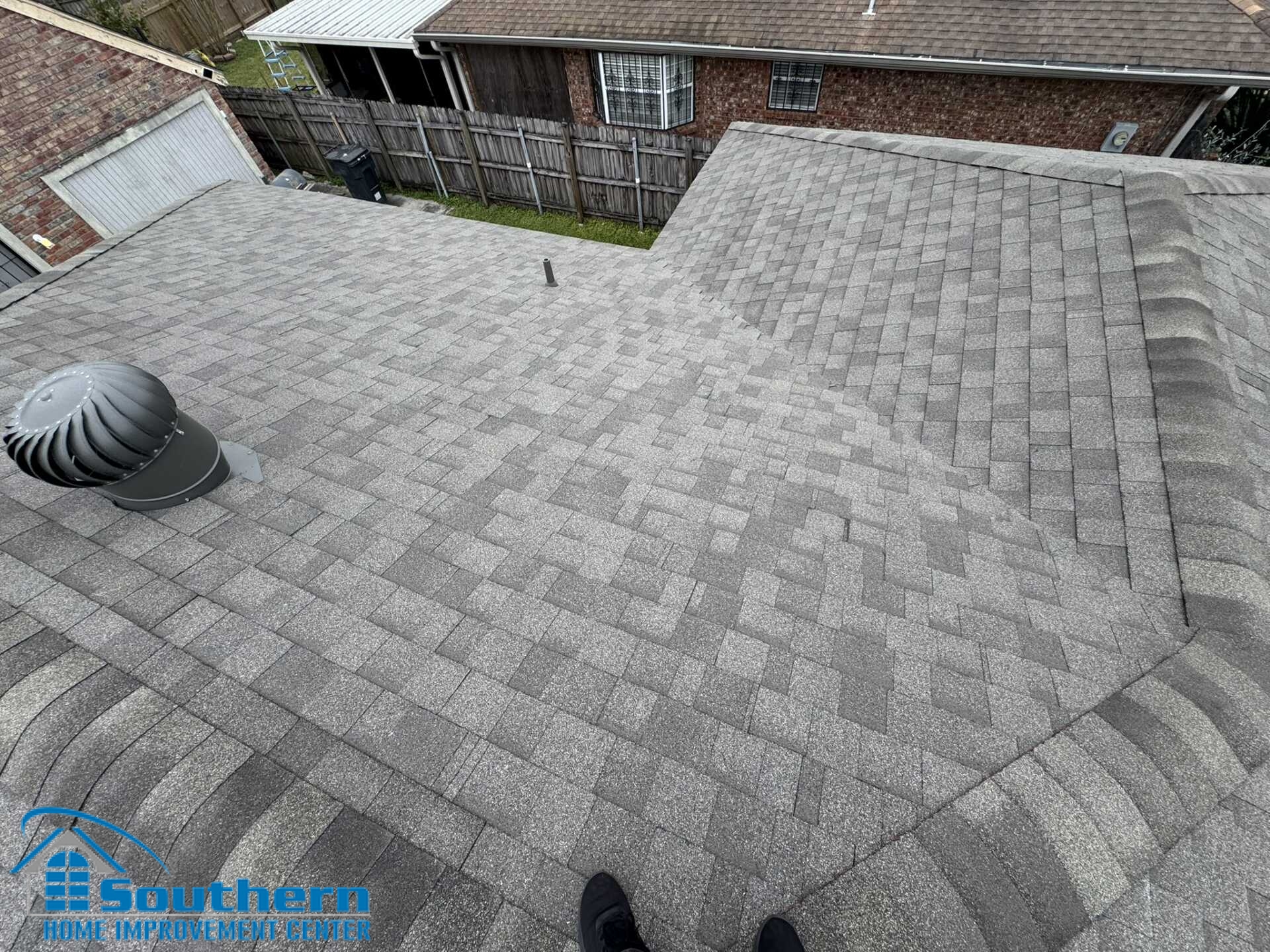
With the lower roofing layers complete, the roof was finished with IKO Cambridge shingles. Each shingle was installed with a minimum of six nails per shingle, which is a key part of a storm-focused roofing build.
Fastener count and placement directly affect shingle retention during severe weather. In a coastal climate like New Orleans, that matters. Homeowners often focus on the shingle style or color first, but the long-term value of a FORTIFIED roof in New Orleans, LA depends just as much on how the shingles are fastened as on how they look once the job is finished.

Step 6 — TAS-100A Approved Ventilation and Roofing Accessories
The system was then completed with new TAS-100A-approved ventilation and other roofing accessories. Ventilation is a critical part of roof performance because it helps regulate heat and moisture movement in the attic over time.
In Louisiana’s hot and humid climate, poor ventilation can shorten the life of roofing materials and contribute to avoidable roofing problems. When ventilation, underlayment, deck protection, and fastening details are installed as one coordinated system, the roof performs more reliably as a whole.

Step 7 — Completing the FORTIFIED Roof System
At completion, the home received a rebuilt FORTIFIED roof system installed through a clear step-by-step process: re-nailed decking, sealed roof deck protection, bond break separation, self-adhering starter roll installation, six-nail shingle fastening, and upgraded ventilation components.
That combination creates a stronger, more resilient roof assembly designed for real Gulf Coast exposure. This is the difference between simply replacing shingles and building a roof with greater attention to wind resistance, moisture defense, and long-term performance.

How This Project Fits Within the FORTIFIED Standard
Homeowners often ask how a project like this relates to the broader FORTIFIED program developed by IBHS. The short answer is that the installation details are what matter most. Strong deck attachment, sealed-deck protection, reinforced roof edges, and proper fastening all help create a roof system designed for better performance in severe weather.
It is also important to describe this accurately. FORTIFIED certification is based on the completed system, along with any required documentation, inspection, and verification — not on a single product alone. Shingles by themselves do not make a roof FORTIFIED. What matters is how the full assembly is built and whether it meets the applicable standard. Homeowners who are comparing scope, paperwork, and timing can review the Louisiana Fortify Homes Program guide for a clearer picture of how the process is typically documented.

Why This Matters for Homeowners in New Orleans
For homeowners comparing roof replacement in New Orleans, LA, this project is a strong example of why the installation process should be reviewed as closely as the material list. The visible shingles matter, but the performance of the roof often depends on what happens underneath them: deck fastening, sealed deck protection, edge reinforcement, shingle fastening, and ventilation.
A homeowner looking for a stronger roofing solution should not only ask what shingles will be installed. They should also ask how the full roof assembly will be built, which details support wind resistance, and whether the contractor understands the process behind a true FORTIFIED roof. If storm exposure or recent damage is part of that decision, a free storm roof inspection in New Orleans & Jefferson Parish can help clarify the right next step.
Work With a Fortified Roofing Company in New Orleans
Southern Home Improvement Center (SHIC) approaches roofing as a full-system installation built for local conditions. If you are looking for a fortified roofing company in the New Orleans area and want a roof designed with stronger performance in mind, call (504) 833-1835 or use the contact form at the bottom of the page to request an estimate.