
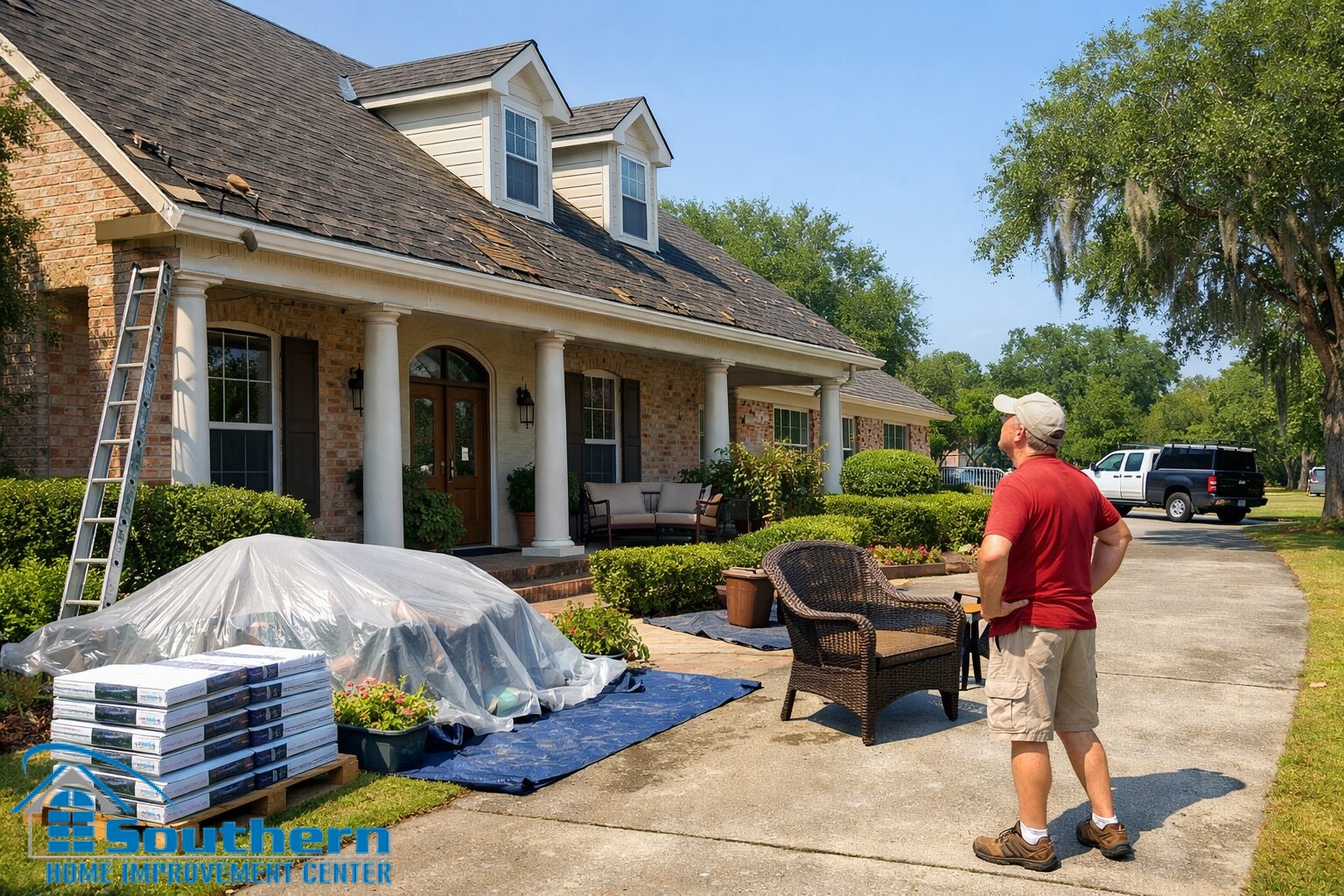
HOMEOWNER GUIDE · BEFORE THE CREW ARRIVES
How to Prepare Your Home for Roof Replacement Day
To prepare for a roof replacement, move vehicles before deliveries arrive, clear the areas around your home, protect fragile indoor items and attic storage, and make a plan for children and pets. Confirm crew access, cleanup, and weather updates with your roofer before installation day.
For homeowners in Southeast Louisiana, a little advance planning can make a noisy, busy project easier to manage. Use this guide to organize the evening before, the morning of the job, and the handoff after work.
START HERE
Your Roof Replacement Preparation Checklist
The evening before
- Confirm the arrival window and save your project contact’s number.
- Move outdoor furniture, grills, planters, and fragile decorations.
- Secure loose wall décor and protect accessible attic storage.
- Arrange a quiet place for children, pets, and important calls.
Before the crew arrives
- Move vehicles outside the agreed work and delivery zones.
- Clear gates and the agreed access route.
- Close windows and keep people away from material unloading.
- Point out fragile landscaping and confirm the safe entrance to the house.
PREPARE YOUR PROPERTY
Work Through These Areas Before Installation Day
Move Vehicles and Clear Driveway Access
One of the first things to handle is access around the house. Roofing crews often need room for trucks, trailers, material delivery, ladders, and debris collection. If vehicles are left too close to the work zone, they can get in the way and may be exposed to dust or falling debris.
Before the project starts, make sure the driveway and the immediate area around the home are as open as possible:
- Move cars, trucks, and trailers away from the driveway and garage area.
- Leave enough space for material delivery and crew access.
- Keep the side yard or gate area clear if the crew will need access there.
- Ask in advance where the dumpster or debris trailer will be placed.
Clearing vehicle access early prevents delays and gives the crew a safer, more organized work area from the moment they arrive.
Protect Patio Furniture, Plants, and Outdoor Items
Roofing work affects more than the roof surface. As old materials are removed and new materials are installed, small debris, nails, dust, and shingle granules can end up around the perimeter of the home. That is why outdoor furniture and fragile yard items should be addressed before installation day.
Take a few minutes to protect the exterior areas closest to the house:
- Move patio furniture, grills, potted plants, and decorative items away from the work zone.
- Store lightweight outdoor items that could be damaged by dust or falling debris.
- Identify fragile landscaping, garden edging, or planters near the house.
- Let the contractor know about sprinkler heads, hidden drain lines, or delicate features in the yard.
These small steps help reduce the chance of accidental damage and make cleanup easier once the project is finished.
What to Do Inside the House Before Roofing Starts
Many homeowners focus only on the outside of the home, but roof replacement can also affect the interior. Hammering, foot traffic, and material movement on the roof can create vibration throughout the structure, especially in older homes or homes with lighter wall attachments.
Before work begins, it is smart to check a few interior items:
- Remove or secure fragile wall décor, frames, and mirrors.
- Protect valuable items on shelves in case of vibration.
- Cover items in areas where dust may be a concern.
- Plan for elevated noise levels during the workday.
This does not mean the inside of the home will be disrupted heavily, but a little preparation can prevent minor damage and make the day more comfortable.
How to Prepare Your Attic Before Roof Replacement
The attic is one of the most overlooked parts of roof replacement preparation. During tear-off and installation, dust and small debris can sometimes enter the attic space, especially in older homes or homes with exposed storage areas.
If you use your attic for storage, take time to prepare it before the crew arrives:
- Cover stored items with sheets or plastic if they could be affected by dust.
- Move valuables away from exposed deck joints or open areas.
- Do not leave delicate electronics or important paper items unprotected.
- Make sure the attic access area is not blocked if inspection is needed.
Protecting attic storage is a simple precaution that can save time on cleanup after the job is complete.
Only move items you can reach from a safe, stable storage area. Do not step between framing members or cover equipment, vents, or heat sources. If access is unsafe, discuss protection with the contractor instead.
Pets, Children, and Roof Replacement Day Safety
Roof replacement can be loud, busy, and stressful for both children and pets. Constant noise, unfamiliar workers, open access points, and movement around the property can make the environment feel very different from a normal day at home.
Before work begins, make a plan for family safety and comfort:
- Keep children away from the work zone and driveway area.
- Keep pets indoors, contained, or off-site if possible.
- Use a quieter room inside the home if pets are sensitive to noise.
- Do not allow children or pets to explore around the house during active work.
Even a well-managed roofing project is still an active construction site, so limiting foot traffic around the work area is the safest approach.
What to Expect From Noise, Debris, and Crew Movement
One of the best ways to reduce stress on roof replacement day is to know what is normal. Roof work is naturally noisy. You may hear repeated hammering, footsteps on the roof, material movement, and debris being removed throughout the day.
It also helps to expect regular movement around the property. Crew members may be working on different sides of the home, carrying materials, checking flashing areas, and cleaning the perimeter as the project moves forward. Temporary noise and activity are part of the process, but a professional crew should still keep the job organized and maintain a clear work pattern.
What to Photograph Before the Project Starts
Taking a few photos before work begins is a smart and practical step. It gives you a clear visual record of the property condition before materials arrive and before the crew begins moving around the home.
Before installation day, photograph these areas:
- The driveway and vehicle parking areas.
- Flower beds, shrubs, and landscaping near the house.
- Patio furniture, grills, and exterior accessories.
- The roofline and visible exterior walls.
- Any existing cracks, stains, or surface conditions you want documented in advance.
This does not need to be complicated. A quick set of phone photos is usually enough to document the condition of the property before the project starts.
Questions to Ask Your Roofer Before Installation Day
Homeowners usually feel more confident when they know exactly how the project will be handled. A few direct questions before installation day can make expectations much clearer and help avoid confusion once the work begins.
Before the scheduled start date, ask your roofing contractor about the following:
- What time the crew is expected to arrive.
- Where materials and debris equipment will be placed.
- How cleanup will be handled during and after the project.
- Whether magnetic nail sweeping is included.
- What areas around the home should remain clear.
- Who to contact if you have a question during the installation.
- How schedule changes will be communicated if rain is forecast.
- Which entrance you can use safely during work.
- Whether outdoor power or water access is needed.
These questions help establish a smoother process and make it easier to prepare the home properly before work begins.
AGREE ON THE DETAILS
Homeowner Preparation vs. Contractor Arrangements
Confirm responsibilities before the job. Protection, cleanup, and equipment placement should match your project agreement.
Homeowner tasks
- Move personal belongings and vehicles.
- Identify fragile or hidden property features.
- Arrange for pets, children, and access.
- Take ground-level photos of existing conditions.
- Stay reachable if the crew needs a decision.
Confirm with your contractor
- Delivery, dumpster, ladder, and crew locations.
- Protection around landscaping and exterior features.
- Weather decisions and temporary roof protection.
- How unexpected deck repairs are documented and approved.
- Debris removal, nail collection, and the final walkthrough.
GULF COAST WEATHER
What If Rain Changes the Roofing Schedule?
Ask when the roofer will confirm the start date, who will contact you, and how a postponement affects delivery and dumpster placement. Keep your household arrangements flexible until the start is confirmed.
If weather changes during work, contact the project lead about the protection plan. Stay outside the work zone and leave roof coverings and tarps to the crew. Do not assume every replacement will be completed in a single day; ask for the expected schedule for your house.
BEFORE YOU MOVE EVERYTHING BACK
Check Access and Cleanup After the Work
Wait for the contractor to release the work area before moving cars, furniture, children, or pets back into it. Review accessible paths, the driveway, planting beds, and the patio together. Ask about nail collection and report any remaining debris; a magnetic sweep does not guarantee that every sharp object is gone.
Keep this handoff focused on cleanup and safe access. Use the separate walkthrough guide for the full review of completed work and project records.
New Roof Final Walkthrough ChecklistReview the finished project, documents, and follow-up items →PRACTICAL ANSWERS
Roof Replacement Day FAQ
Can I stay home during a roof replacement?
It may be possible, but confirm with your contractor that your project allows safe occupancy and an agreed entrance. Expect substantial noise and vibration. Plan to be elsewhere if you need quiet, have sensitive pets, or cannot keep children away from work areas.
Can I work from home while the roof is being replaced?
Hammering and tear-off can interrupt calls, meetings, and concentration. If your work depends on quiet, arrange another location for the loudest stages. Ask the project lead about the planned sequence, but allow for changes.
Should I move my car out of the garage?
If you need the car during the project, move it before the crew and deliveries arrive. The driveway or garage entrance may be blocked by equipment or included in the work zone. Confirm where you can park and when access will reopen.
Do I need to empty the attic before a roof replacement?
Not necessarily. Ask what protection the project requires. Move or cover accessible stored belongings that could collect dust, protect valuables, and keep access clear. Do not enter an unfinished or unsafe area just to move boxes.
Should I tell my neighbors before roofing starts?
A brief notice can help them plan around noise, deliveries, and parking. Share the expected start date and let them know it may change with the weather. Any use of a neighbor’s property needs their agreement in advance.
Should I remove a satellite dish or solar panels myself?
No. Tell your roofer about rooftop equipment before scheduling the job. Confirm who will arrange any required removal, reinstallation, and reconnection with the appropriate provider or installer.
Plan the Next Step
SOUTHERN HOME IMPROVEMENT CENTER
Plan Your Roof Replacement in Southeast Louisiana
Talk with SHIC about your roofing project and what to prepare before work begins. Call our Slidell or Baton Rouge office, or use the form below to request a free estimate.