
Gulf Coast Homeowner Guide
How to Spot a Roof Leak Before It Reaches Your Ceiling
A ceiling stain is often a late clue — not the beginning of a roof leak. Water can enter around shingles, flashing, roof edges, or penetrations and then travel along decking, rafters, fasteners, or insulation before it becomes visible in a room.
The best early warning signs usually appear in the attic, around upper walls and trim, or along the exterior roofline after rain. You can document many of these clues safely without climbing onto the roof.
Look for darkened roof decking, damp or compressed insulation, rust on fasteners, a musty odor that returns after rain, bubbling paint near upper walls, stained soffit or fascia, and visible roof changes from the ground. One clue does not confirm the source, but a pattern tied to rainfall deserves a professional inspection.
Why Early Detection Matters
A Leak Can Travel Before You See a Ceiling Stain
Water follows the easiest available path. After passing beneath the roof covering, it may run across the underside of the deck, follow a rafter, collect in insulation, or reach a nail or joint where it finally drops. The visible symptom can be several feet away from the actual entry point.
That is why painting over a stain or sealing the area directly above it does not necessarily solve the problem. The useful question is not only “Where is the water showing?” but also “What changed after the last rain, and which roof detail is uphill from the symptom?”
Early Warning Signs
Eight Clues to Check Before Water Reaches the Ceiling
No single clue proves that the roof is leaking. Look for changes that appear or become stronger after rain, especially when two or more signs occur in the same part of the home.
Darkened Roof Decking
From a safe attic access point, look for wood that appears darker than surrounding areas, irregular water marks, or trails that follow the grain or a framing member.
Damp or Compressed Insulation
Wet insulation may look matted, darker, displaced, or shiny under a flashlight. Do not touch questionable material or enter an unsafe attic area.
Rust on Fasteners or Metal
Rust on nail tips, straps, or nearby metal can signal repeated moisture. It can also result from condensation, so the timing and surrounding conditions matter.
A Musty Odor After Rain
An odor that becomes noticeable in an attic, closet, or upper room after wet weather can be an early moisture clue even when surfaces still look dry.
Bubbling or Peeling Finish
Paint that bubbles, flakes, or separates near ceiling corners, upper walls, chimneys, or skylights may indicate moisture moving behind the finished surface.
Damp Soffit, Fascia, or Trim
Peeling paint, dark streaks, swollen trim, or recurring dampness along the roof edge can point to overflow, edge-metal, flashing, or roof-to-wall problems.
Roof Changes Seen From the Ground
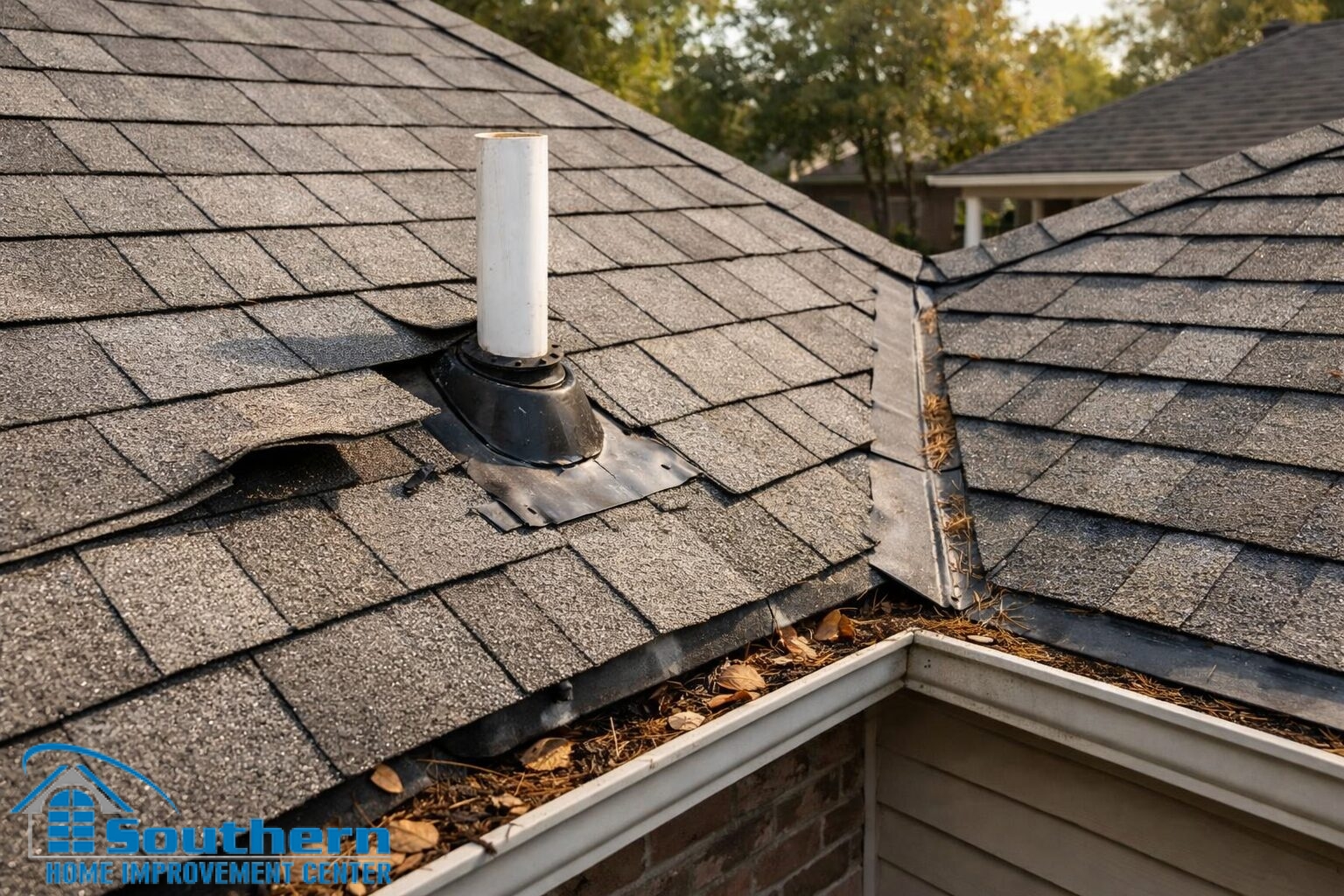
Missing, lifted, creased, or displaced shingles and visible changes around vents or flashing deserve attention. Use binoculars or phone zoom — never climb up for a closer look.
A Repeatable Rain Pattern
A smell, damp spot, drip sound, or finish change that returns during rain from the same direction is stronger evidence than a symptom that occurs randomly.
Stay Off the Roof
How to Check for Early Signs Safely
Your job is to collect useful clues, not to locate the exact opening or perform a repair. Stop whenever access, footing, heat, insulation, electricity, or structural conditions make the check unsafe.
Inside the Living Space
- Check upper walls, ceiling corners, closets, and areas around skylights or chimneys.
- Note musty odors, peeling paint, softened drywall, or changes in texture.
- Photograph the full room and then the close-up detail.
- Record whether the clue appeared during rain or afterward.
From a Safe Attic Access
- Look with a flashlight from stable flooring or a safe access platform.
- Scan decking, rafters, fasteners, insulation, and areas near penetrations.
- Do not step between joists, disturb unfamiliar insulation, or crawl toward a wet area.
- Leave immediately if you see sagging materials, exposed wiring, animals, or unsafe heat.
From the Ground Outside
- Walk the perimeter only when weather and ground conditions are safe.
- Use binoculars or camera zoom to view roof edges, valleys, vents, and flashing.
- Watch for gutter overflow, streaked fascia, damaged trim, or water bypassing a corner.
- Photograph the side of the home that matches the indoor symptom.
Do not puncture a bulging ceiling or touch wet electrical fixtures. If water is near wiring, lights, or an electrical panel — or if a ceiling is sagging — keep people away from the area and contact the appropriate qualified professional promptly.
Use the Weather as Evidence
Why the Timing of the Symptom Matters
The rain pattern does not confirm the cause, but it gives the inspector a better starting point. Write down what the weather was doing when the symptom appeared.
| When the clue appears | Areas that may need closer review |
|---|---|
| Wind-driven rain | Roof-to-wall transitions, step or kick-out flashing, sidewalls, vents, and openings exposed to that wind direction. |
| Short, heavy downpour | Valleys, gutters, downspout outlets, low-slope transitions, and areas handling concentrated runoff. |
| Long, steady rain | Slow entry around aging materials, penetrations, flashing laps, underlayment, or a previously repaired area. |
| Humid weather without rain | Attic ventilation, condensation, HVAC drainage, plumbing, or another non-roof moisture source. |
Avoid the Wrong Repair
When the Moisture May Not Be Coming From the Roof
Ceiling and upper-wall moisture can resemble a roof leak even when the source is elsewhere. Plumbing lines, an overflowing drain pan, HVAC condensation, bathroom exhaust, window openings, siding transitions, or attic humidity can create similar symptoms.
Plumbing
A symptom below a bathroom, laundry area, water line, or plumbing wall may occur even when there has been no rain.
HVAC or Condensation
Moisture near an air handler, duct, drain line, or poorly ventilated attic may follow temperature and humidity instead of rainfall.
Windows or Siding
Wind-driven rain can enter around window, trim, cladding, or wall-flashing details and travel through framing before appearing indoors.
Roof System
A symptom that reliably returns after rain remains a strong reason to inspect the roof covering, edges, transitions, and penetrations.
Document, Protect, Inspect
What to Do When You Notice an Early Warning Sign
- 1
Photograph the Clue
Take a wide photo for location and a close photo for detail. Repeat after the next safe rain observation if the condition changes.
- 2
Record the Weather
Note the date, rain intensity, wind direction if known, and whether the symptom appeared during the storm or several hours later.
- 3
Protect the Interior
Move furniture and valuables away. Catch dripping water only when the area is stable and free from electrical hazards.
- 4
Avoid Guessing With Sealant
Random caulk or roof cement can hide evidence, redirect water, and make the correct repair harder to identify.
- 5
Schedule an Inspection
A qualified roof inspection should connect the visible clues to the likely entry area and explain whether the issue is isolated or part of a broader condition.
Do Not Wait for Another Storm
Signs That Need Prompt Professional Attention
A Clear Next Decision
What a Professional Roof Inspection Should Determine
The goal is not simply to confirm that moisture exists. A useful inspection should explain where the likely entry area is, what allowed water in, and which scope is appropriate.
Likely Entry Area
The roof section, transition, penetration, edge, or adjacent exterior detail connected to the moisture pattern.
Affected Components
Visible roof materials, flashing, decking, insulation, trim, or other components that may need attention.
Repair Limits
Whether a targeted correction is practical or recurring and widespread conditions point toward a larger scope.
Immediate Protection
Whether the home needs temporary dry-in, interior protection, or another urgent step before permanent work.
Choose the Right Next Resource
Roof Leak Help From SHIC
Common Questions
Early Roof Leak Signs FAQ
Can a roof leak exist without a ceiling stain?
Yes. Water can remain in insulation, run along decking or framing, or exit near a wall or soffit before it marks the ceiling. Attic and exterior clues may appear first.
Is a musty smell after rain an early leak sign?
It can be. An odor that repeatedly appears after rain deserves investigation, especially when it is limited to an attic, closet, or upper room. Condensation, HVAC, plumbing, and wall leaks should also be considered.
Do rusted nail tips always mean the roof is leaking?
No. Rust can result from repeated roof moisture, but attic condensation can create similar evidence. Look at nearby staining, insulation, ventilation conditions, and whether the clue changes after rain.
Can overflowing gutters cause an interior leak?
Overflow can soak fascia, stress roof-edge details, and send water behind exterior finishes. It may worsen an existing vulnerability, but the full drainage and roof-edge condition should be inspected before assigning the cause.
Should I enter the attic while it is raining?
Only observe from a safe, stable access point if conditions are comfortable and there are no electrical, structural, insulation, heat, or footing hazards. Do not crawl across joists or toward active water. Skip the attic check when you are unsure.
Does one early warning sign mean I need a new roof?
No. Many leaks are connected to a localized flashing, penetration, shingle, or edge problem. Replacement becomes a stronger consideration when leaks repeat, damage is widespread, materials are near the end of service, or the roof has multiple failure areas.
Catch the Problem Before It Spreads
Schedule a Roof Inspection With SHIC
If a moisture clue returns after rain, Southern Home Improvement Center can inspect the roof, document visible conditions, and provide a clear written recommendation for your records.
Request a Free Estimate