How to Tell if Your Roof Needs Repair or Full Replacement
One of the most common questions homeowners ask after spotting roof damage is whether they need a targeted repair or a full replacement. The answer depends on more than one visible problem. A roof can sometimes be repaired successfully when the damage is limited and the rest of the system is still in good condition. In other cases, a repair only delays a larger problem and adds cost without solving the real issue.
The key is to look at the full picture — not just one missing shingle or one ceiling stain. Roof age, the extent of the damage, repeated leaks, storm exposure, and the condition of the underlying system all matter. If you understand what to look for, it becomes much easier to make a practical decision instead of reacting to the first visible symptom.
Understanding the Difference Between Roof Repair and Full Replacement
A roof repair is usually a targeted fix. It addresses a specific problem area, such as damaged shingles, flashing failure, a localized leak, or a small section affected by wind or impact. A full replacement is a larger system decision. It usually makes sense when the roof has widespread wear, recurring failures, or enough age and deterioration that isolated repairs no longer provide reliable value.
In simple terms, repair is often the right choice when the roof still has useful life left and the damage is contained. Replacement is often the smarter choice when the roof is declining as a system, not just in one isolated spot.
When a roof repair usually makes sense
A repair is often the better option when the problem is limited and the surrounding roofing materials are still performing normally.
- A small number of shingles are damaged or missing after wind exposure
- The leak appears to come from one identifiable area
- Flashing around a pipe, valley, wall, or chimney has failed in one section
- The roof is still in generally good condition overall
- The issue is recent, isolated, and has not caused widespread moisture damage
In those cases, a focused repair can restore performance without forcing the homeowner into an unnecessary full reroof.
When full roof replacement is usually the smarter move
A full replacement becomes more practical when the roof is showing signs of system-wide decline rather than one localized problem.
- Leaks keep returning in different areas
- Shingle damage is widespread across multiple slopes
- The roof is near the end of its service life
- Shingles are curling, cracking, brittle, or losing a large amount of granules
- The decking, underlayment, or roof structure may be compromised
- The cost of repeated repairs is starting to approach the value of replacement
At that stage, replacement often saves money in the long run because it addresses the whole system instead of chasing one symptom at a time.
The Biggest Warning Signs Homeowners Should Watch For
Some roofing problems are obvious, while others develop quietly. The earlier you recognize the pattern, the easier it is to decide whether you are dealing with a repair issue or a replacement issue.
Leaks, stains, and interior moisture signs
A water stain on a ceiling does not automatically mean you need a full replacement, but it should never be ignored. The key question is whether the leak is isolated or part of a broader pattern. One leak tied to one flashing detail may be repairable. Multiple stains, recurring leaks, attic dampness, or moisture showing up in more than one room often point to deeper roofing failure.
- Ceiling stains that continue to grow
- Repeated leak activity during heavy rain
- Damp attic insulation
- Mold or mildew smells near the ceiling or in attic spaces
- Visible signs of water intrusion around penetrations or roof transitions
When water has been entering for a while, the concern is no longer just the surface shingles. The hidden layers may already be affected.
Visible shingle damage
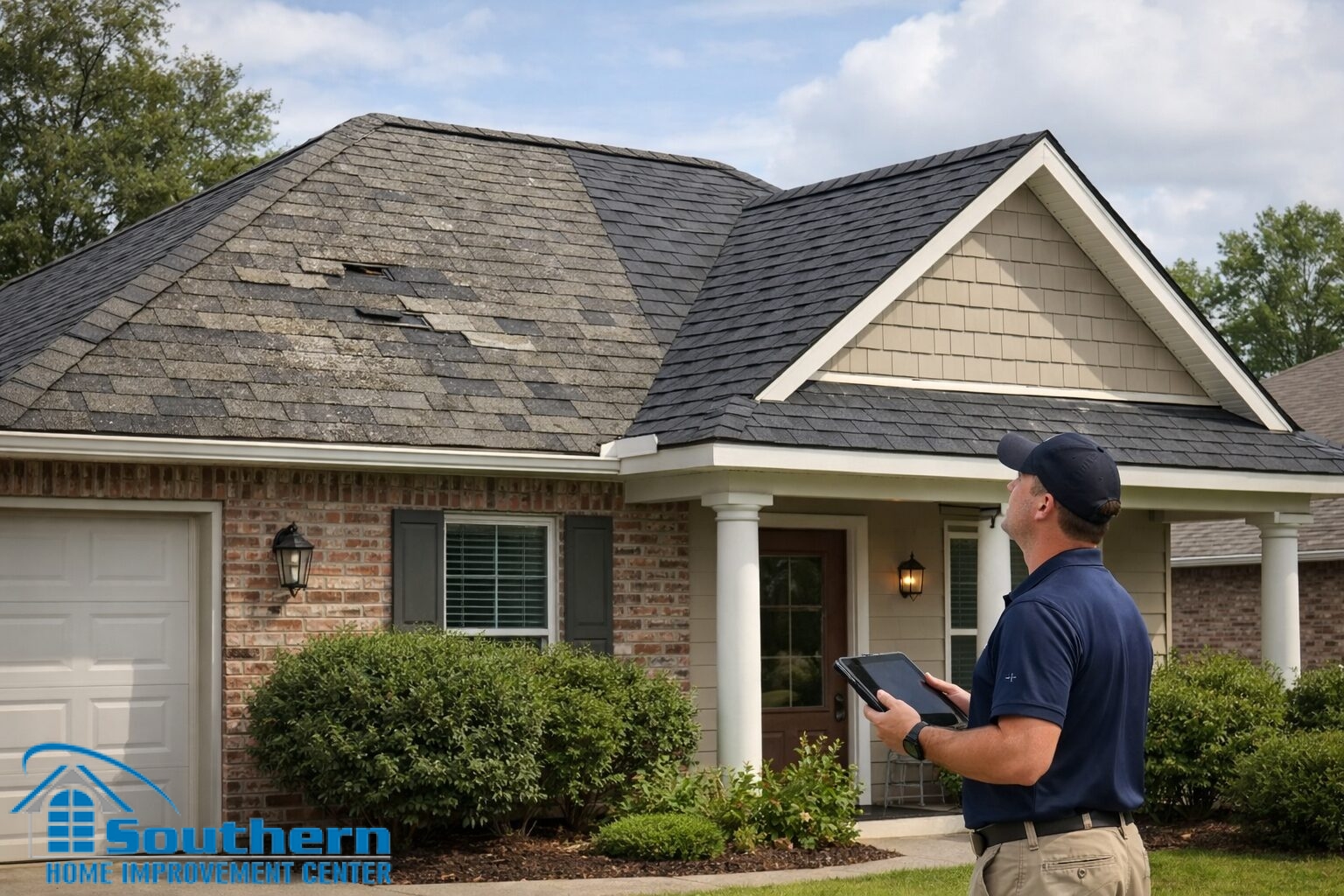
Shingles often give clear warning signs before the roof fails completely. Some defects can be repaired if they are limited to a small section. Others indicate the roof is aging out or wearing down across the whole surface.
- Missing shingles after wind
- Lifted or creased shingles
- Curling or cupping edges
- Cracking or brittleness
- Uneven color loss and heavy granule loss
- Exposed shingle mat in multiple areas
If the damage is concentrated in one area, repair may still be reasonable. If the same deterioration is visible across many sections, replacement usually becomes the more durable solution.
Structural and support-related red flags
Some of the most serious signs are not cosmetic. They indicate the roof system may be failing underneath the visible surface.
- Sagging rooflines
- Soft or spongy decking underfoot
- Visible dips between framing lines
- Daylight visible through the attic in places where it should not be
- Persistent attic heat and moisture problems that accelerate roof wear
These issues move the conversation beyond a shingle repair. They often mean the roof needs broader corrective work, and that can make full replacement the better path.
Roof Age Matters More Than Most Homeowners Realize
Many homeowners focus only on visible damage, but roof age is one of the biggest factors in the repair vs. replacement decision. Even if a roof does not look catastrophic from the ground, an older system may no longer respond well to patching. Materials become more brittle, seal lines weaken, and matching repairs become less reliable over time.
That does not mean every older roof automatically needs replacement. It does mean that repairs should be judged more carefully when the roof is already in the later stage of its life cycle. A repair on a relatively healthy roof can extend useful service. A repair on a roof that is already wearing out may only buy a short amount of time.
Storm Damage Can Change the Decision Quickly
In South Louisiana, storm damage can move a roof from “repairable” to “replace soon” much faster than normal aging alone. Wind, heavy rain, and impact can damage shingles, loosen seal lines, expose fasteners, and create weak points that are not always visible from the ground. That is why the decision should be based on the total extent of the damage, not just the first spot you notice.
After a storm, homeowners should pay close attention to changes that suggest the roof system may have been affected more broadly.
- Shingles missing in more than one area
- Lifted or creased tabs after high wind
- New leaks that were not present before the storm
- Fallen branches or impact marks on roof sections
- Debris accumulation in valleys or near penetrations
If you are already moving toward a full reroof because of storm-related damage, it can also be smart to review stronger system options and current Louisiana guidance for resilient roofing. For homeowners exploring that path, our article on FORTIFIED roof requirements in Louisiana is a useful next read.
Repair vs. Replacement Cost — What Actually Saves Money
Homeowners often start with one simple question: which option costs less? In the short term, repair usually costs less. In the long term, that is not always true. The right question is whether the repair solves the problem in a durable way or simply postpones a full replacement that is already unavoidable.
When a repair is usually the better financial decision
A repair tends to offer strong value when the roof is still fundamentally sound and the problem is limited.
- The issue is isolated to one section
- The surrounding shingles are still secure and aging evenly
- The leak source is identifiable and limited
- The repair meaningfully extends the useful life of the roof
In those situations, a targeted repair can protect the home without forcing a major capital expense too early.
When repeated repairs stop making financial sense
There is a point where “repairing again” becomes the expensive option because it keeps consuming money without restoring confidence in the roof as a system.
- You have already paid for multiple repairs in a short period
- New leaks keep showing up in different places
- Different roof components are failing one after another
- The roof is old enough that each repair has a limited payoff
- You are trying to patch around widespread wear instead of one defect
That is often when replacement becomes the more efficient decision. If you are comparing what a larger upgrade can look like in practice, review our roof replacement in Baton Rouge page and this recent Baton Rouge roofing project for a real-world example of what a completed roof system can look like.
What a Professional Roof Inspection Should Confirm
Before deciding on repair or replacement, the most useful step is a proper inspection that evaluates the whole system rather than just one visible symptom. A good inspection should help answer not only “what is damaged,” but also “how far the problem extends” and “whether repair has real long-term value.”
- The location and likely cause of the damage
- Whether the issue is isolated or repeated across multiple sections
- The condition of shingles, flashing, penetrations, valleys, and ridge areas
- Whether the decking or underlying layers may be affected
- Whether age and overall wear make future failures likely
- Whether a repair is likely to be durable or only temporary
This is where many homeowners gain clarity. The goal is not just to identify one problem spot. The goal is to determine whether the roof still has enough healthy life left to justify repair.
A Simple Way to Decide Between Repair and Replacement
If you want a practical framework, the easiest way to think about the decision is to combine damage scope, roof age, and repeat failure history.
- If the damage is isolated, the roof is still in good overall condition, and this is the first issue, repair is often the right first step.
- If the damage is spreading, leaks are recurring, or multiple components are failing, replacement becomes more likely.
- If the roof is older and already showing broad wear, repairs should be evaluated carefully because the payoff may be short-lived.
- If the roof has storm-related damage in several areas, the decision should be based on the total system impact, not just one visible defect.
- If repeated repairs are becoming routine, replacement is usually the more stable long-term answer.
This framework helps homeowners avoid two common mistakes — replacing too early when a repair would have been enough, or repairing too long when replacement would have saved time, money, and frustration.
FAQ
Can a leaking roof be repaired instead of replaced?
Yes, if the leak is tied to one repairable issue and the rest of the roof is still in good condition. If leaks are recurring, appearing in multiple places, or tied to broader wear, replacement may be the better long-term solution.
How do I know if missing shingles mean I need a full replacement?
A few missing shingles in one section may be repairable. Missing shingles across multiple slopes, repeated wind damage, or surrounding shingles that are already brittle often point to a larger replacement decision.
Does roof age automatically mean I need a new roof?
No. Age alone does not decide the issue, but it changes the value of repairs. The older the roof is, the more important it becomes to evaluate whether a repair will genuinely extend useful life or only delay replacement briefly.
Is it better to repair or replace a storm-damaged roof?
That depends on how widespread the damage is. Localized storm damage may be repairable. If the storm affected multiple areas, loosened shingles broadly, or introduced repeated leaks, replacement may be the safer and more durable option.
What is the biggest mistake homeowners make?
The most common mistake is deciding based on one visible symptom instead of the full roof condition. A small repair can be the right move, but only if the rest of the roof still has healthy life left.
If you are trying to decide whether your roof needs a repair or a full replacement, Southern Home Improvement Center (SHIC) can inspect the condition of your roof, explain what is happening, and help you compare the most practical next step for your home. Call Slidell / Northshore at (985) 643-6611 or Baton Rouge at (225) 766-4244, or fill out the form at the bottom of the page to request your free estimate.