
National Roofing Cost Guide · Updated July 2026
How Much Does a New Roof Cost in 2026?
A professional roof replacement costs about $9,605 on average in one widely cited 2026 national benchmark. Published projects span a much wider range — roughly $5,900 to $46,000 — while a practical early-planning range is about $4 to $11 per square foot of measured roof surface. Your actual price depends on roof size, material, pitch, tear-off, decking, flashing, ventilation, access, permits, and the exact work included in the proposal.
2026 roof replacement cost: the fast answer
Angi’s March 2026 national benchmark.
Small asphalt roofs and large premium systems are not comparable projects.
Use estimated roof surface area — not interior living area.
A 2,000-square-foot roof contains about 20 roofing squares.
Important: These are national budgeting references, not SHIC prices or a quote for a specific home. Local labor, weather requirements, roof geometry, and the written scope can move a project below or above a published range.
National benchmarks
What is the average roof replacement cost in 2026?
There is no standardized “average roof.” Major consumer guides publish different numbers because they use different project sizes, material assumptions, homeowner surveys, contractor data, and estimating models. A simple one-story gable roof with asphalt shingles should not be compared directly with a steep two-story roof containing dormers, valleys, skylights, chimney transitions, damaged decking, or premium materials.
| 2026 cost source | Published benchmark | What it represents |
|---|---|---|
| Angi | $9,605 average $5,900–$46,000 broad range $4–$11 per sq ft | A national consumer cost model covering roofs with widely different sizes, materials, pitches, and locations. |
| NerdWallet | About $9,500 average About $5,800–$46,000 $4–$11 per sq ft | A national planning guide using Angi cost data and separating material and labor considerations. |
| This Old House | $15,439 average $6,885–$23,993 typical range | A modeled 2,000-square-foot asphalt-shingle roof using a different methodology and homeowner research. |
How to use national averages correctly
Use the figures to establish a broad budget and recognize unrealistic assumptions. Do not use one national average to decide whether a local proposal is fair. First confirm roof measurements and scope, then compare the proposal with projects that use similar materials, access, complexity, removal, and installation details.
Cost by roof area
Roof replacement cost by size
The table below applies the widely published national planning band of $4–$11 per square foot. It is useful for early budgeting only. The calculation must use approximate roof surface area, including slope and overhangs, rather than the home’s interior square footage.
Example: 2,000 sq ft of roof surface × $4–$11 = approximately $8,000–$22,000.
| Approximate roof surface | Roofing squares | National planning range | What may move the price |
|---|---|---|---|
| 1,000 sq ft | 10 squares | $4,000–$11,000 | Small-job setup, access, minimum crew requirements, and material choice. |
| 1,500 sq ft | 15 squares | $6,000–$16,500 | Pitch, tear-off layers, valleys, flashing work, and decking repairs. |
| 1,800 sq ft | 18 squares | $7,200–$19,800 | Roof geometry, ventilation changes, penetrations, staging, and disposal. |
| 2,000 sq ft | 20 squares | $8,000–$22,000 | Stories, steep slopes, complex transitions, upgrades, and local labor. |
| 2,500 sq ft | 25 squares | $10,000–$27,500 | More ridge, hips, valleys, waste, crew time, protection, and cleanup. |
| 3,000 sq ft | 30 squares | $12,000–$33,000 | Large or premium systems, detailed rooflines, structural work, and specialty labor. |
Roof area is not home area
A 2,000-square-foot home may have a smaller or larger roof surface depending on its footprint, number of floors, attached garage, porches, overhangs, and roof pitch. A contractor should measure the roof rather than multiply the living area by a universal factor.
Waste is not automatically overcharging
Roofing layouts require cuts at hips, valleys, ridges, rakes, and penetrations. Material quantities must also account for roof geometry and usable packaging. Ask how the waste allowance was calculated instead of assuming every percentage fits every roof.
Material comparison
How roofing material changes the cost of a new roof
Material choice can move a project from a standard replacement into a premium system. These examples use This Old House’s 2026 modeled averages for a 2,000-square-foot roof with builder-grade materials, medium labor costs, and a standard low-slope roof shape. They show the relative difference between materials; they are not SHIC prices or Gulf Coast quotes.
| Roofing material | Illustrative 2,000 sq ft cost | Illustrative cost per sq ft | Main cost considerations |
|---|---|---|---|
| Asphalt shingles | $10,042 | $5.02 | Product tier, impact classification, underlayment, ventilation, flashing scope, and warranty system. |
| Wood shake | $25,376 | $12.69 | Material grade, specialized installation, fire requirements, maintenance, and local suitability. |
| Metal roofing | $37,285 | $18.64 | Panel profile, metal type, fabrication, clips, trims, penetrations, transitions, and installer specialization. |
| Clay tile | $42,743 | $21.37 | Structural capacity, underlayment system, flashing details, breakage allowance, and specialty labor. |
Material-only pricing is not installed-roof pricing. A complete proposal may also include tear-off, disposal, deck repairs, underlayment, starter, ridge materials, flashings, pipe boots, ventilation, fasteners, permits, property protection, cleanup, supervision, and warranty documentation.
Labor versus materials
What percentage of roof replacement cost is labor?
There is no reliable fixed labor percentage for every roof. National guides often describe labor as a large share of the installed price, but a real proposal contains costs that do not fit neatly into two buckets. Delivery, equipment, tear-off, disposal, supervision, insurance, permits, property protection, documentation, warranty administration, and overhead are all part of delivering the finished system.
Visible roofing materials
Shingles or panels, underlayment, starter, hip and ridge, fasteners, flashings, vents, boots, edge metals, and accessories.
Changes with brand, product line, roof design, material availability, and system requirements.Installation labor
Tear-off, deck preparation, loading, layout, cutting, fastening, flashing, ventilation work, edge details, and final installation.
Changes with pitch, height, complexity, access, weather windows, safety requirements, and crew productivity.Removal and disposal
Debris handling, containers, dump fees, multiple layers, site cleanup, and magnetic sweeping.
Changes with material weight, layer count, driveway access, landscaping, and local disposal costs.Detail and correction work
Decking, wall and chimney flashing, pipe boots, low-slope transitions, ventilation corrections, and specialty carpentry.
Changes with existing conditions and whether the proposal defines replacement, repair, or reuse.Project delivery
Measurement, estimating, ordering, delivery, equipment, supervision, permits, inspections, records, and closeout.
Changes with jurisdiction, project size, scheduling, documentation, and warranty program.The better comparison rule
Do not compare one contractor’s “labor percentage” with another contractor’s “material percentage.” Compare exactly what each written proposal removes, replaces, upgrades, documents, warrants, and excludes.
2026 market context
Why roof prices do not move with shingle prices alone
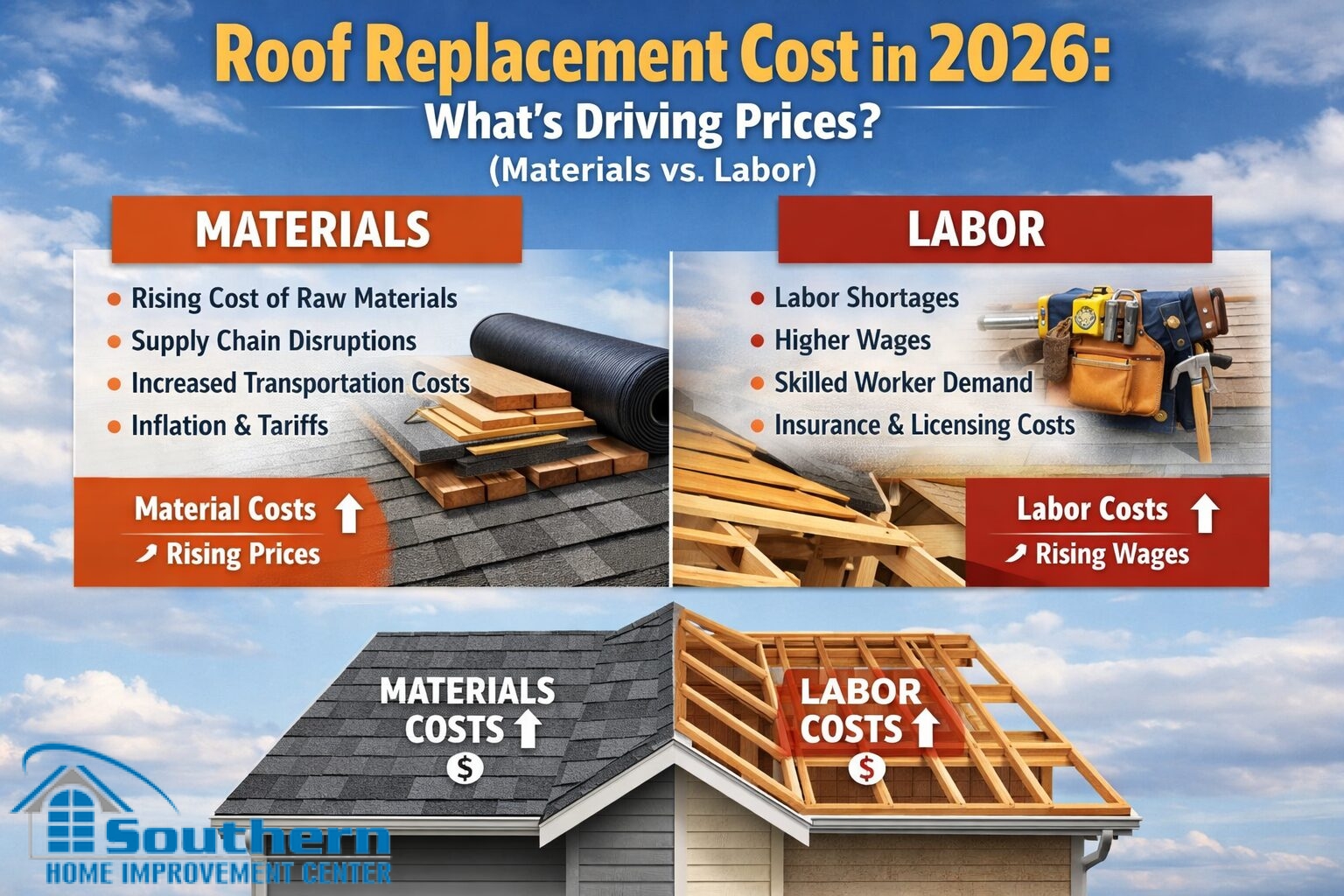
Roofing-material and contractor price indexes do not always move at the same rate. That is one reason an installed roof proposal does not rise or fall in direct proportion to the price of one shingle bundle or one raw material.
Material markets
Asphalt inputs, metals, membranes, packaging, accessories, freight, and regional availability can change independently.
Installation capacity
Skilled labor, supervision, safety planning, equipment, insurance, and weather-sensitive scheduling affect installed pricing.
Project-specific scope
Decking, flashings, ventilation, removal, access, permits, drainage, and resilience upgrades can outweigh a small material-price movement.
The 2026 takeaway is simple: the cost of a roof is not controlled by shingles alone. Ask for a current written proposal based on the measured roof and defined construction scope rather than applying a national inflation headline to an older quote.
Project variables
What determines the final roof replacement price?
Two contractors can measure the same roof and still produce different totals because their proposals include different materials, details, allowances, and assumptions. The following factors commonly explain the difference.
Roof size
More measured roof surface requires more material, labor, tear-off, disposal, and production time.
Pitch and height
Steep slopes and multi-story access affect setup, safety, material handling, and crew hours.
Roof shape
Hips, valleys, dormers, short planes, wall intersections, chimneys, and skylights add detail work.
Tear-off scope
Layer count, adhered materials, deck preparation, debris weight, container access, and disposal all matter.
Decking condition
Soft, rotten, delaminated, damaged, or unsuitable sheathing may not be fully visible until tear-off.
Flashing details
Valleys, walls, chimneys, skylights, pipes, roof-to-wall transitions, and kick-outs need defined scope.
Ventilation
A vented attic may need intake and exhaust evaluated together; an unvented assembly requires a different approach.
Material system
Roof covering, underlayment, starter, ridge, accessories, impact options, and warranty tier affect cost.
Permits and inspections
Requirements vary by jurisdiction and can affect fees, paperwork, corrections, and scheduling.
Property access
Tight lots, pools, landscaping, attached structures, parking, and long material carries add production work.
Drainage and edges
Existing gutters, fascia, soffit, drip edge, damaged trim, and runoff concerns may require coordination.
Documentation and warranty
Photos, manufacturer system requirements, registration, inspection records, and contractor support add value beyond shingles.
Potential additions
Roof replacement costs that may be missing from a headline price
A strong estimate states which items are included, which are allowances, which carry unit prices if discovered, and which are excluded. These items frequently explain why a final project total differs from a generic online estimate.
- Decking replacement: The proposal should explain how unsuitable sheathing is documented, approved, and priced after tear-off.
- Additional roof layers: Extra layers can increase demolition time, debris weight, container use, and disposal.
- Wall and chimney flashing: Reuse, new flashing, counterflashing, masonry interfaces, crickets, and sealant-only work are different scopes.
- Skylights and penetrations: Replacement, reflashing, curb work, pipe boots, vents, and specialty penetrations should be identified.
- Ventilation modifications: Intake, exhaust, blocked soffits, powered vents, turbines, and ridge vent changes can alter the price.
- Permits and inspections: The proposal should state responsibility for fees, scheduling, corrections, and closeout.
- Gutters and edge conditions: Existing gutters, guards, drip edge, fascia, rotten trim, and reinstallation responsibilities should be clear.
- Structural or specialty work: Rafters, trusses, masonry, solar equipment, low-slope tie-ins, and unusual substrates may require separate work.
Apples-to-apples review
How to compare roof replacement quotes
The lowest initial total is not automatically the lowest final cost. A short proposal can leave major decisions to change orders, while a more complete proposal can appear higher because it defines the actual roof system before work begins.
| Proposal item | What should be clear | Question to resolve |
|---|---|---|
| Measured scope | Approximate squares, slopes, stories, roof sections, and included structures. | Was the roof measured, or was only living square footage listed? |
| Tear-off | Known layers, disposal, containers, deck preparation, and cleanup. | What changes if another layer is discovered? |
| Decking | Included quantity, unit price, documentation, and approval process. | How are concealed repairs authorized? |
| Roof-system materials | Manufacturer, product line, underlayment, starter, ridge, fasteners, and accessories. | Are all components named and compatible? |
| Flashing scope | Valleys, walls, chimneys, skylights, pipes, and transitions. | Which flashings are replaced, rebuilt, reused, or excluded? |
| Ventilation | Existing attic design, intake, exhaust, and proposed changes. | Was the full attic system evaluated? |
| Permits and closeout | Permit responsibility, inspections, walkthrough, photos, warranties, and cleanup. | Which records will the homeowner receive? |
Compare three roofing quotes line by line
Use the SHIC Roof Estimate Decoder to check tear-off, decking, underlayment, flashings, ventilation, permits, warranties, payment terms, and exclusions.
Regional planning
National averages are not Louisiana or Mississippi Gulf Coast quotes
This page owns national roof replacement cost planning. Local pricing belongs in the separate Louisiana and Mississippi guides because storm exposure, permitting, wind requirements, humidity, ventilation, roof geometry, access, and regional labor conditions affect the actual scope.
Scope decision
When is roof repair more practical than replacement?
Repair may be appropriate when damage is isolated, the surrounding roofing remains serviceable, compatible materials are available, and the roof system does not show widespread deterioration. Replacement becomes more practical when problems affect several areas or a localized repair cannot be integrated reliably.
Repair may fit
- Localized wind damage or a limited flashing problem
- One small penetration leak or isolated defect
- Serviceable surrounding materials
- A repair that can be integrated without creating weak transitions
Replacement review may fit
- Repeated leaks in different areas
- Brittle, missing, or deteriorated materials across several slopes
- Extensive deck, flashing, underlayment, or ventilation concerns
- Multiple repairs that no longer produce a dependable system
A roof’s age alone does not determine the correct scope. Condition, installation quality, maintenance history, storm exposure, leak behavior, material availability, and the location of the failure all matter.
Common questions
Roof replacement cost FAQ
How much does a roof replacement cost in 2026?
Angi’s March 2026 national benchmark places the professional roof replacement average near $9,605, with a broad published range of about $5,900–$46,000. A practical early-planning range is approximately $4–$11 per square foot of measured roof surface. A specific roof may fall outside those figures.
How much does it cost to replace a 2,000-square-foot roof?
Using a broad national planning range of $4–$11 per square foot, a 2,000-square-foot roof may fall around $8,000–$22,000. Material, pitch, stories, tear-off, decking, flashing, ventilation, access, permits, and local labor can move the final price outside that range.
Is roof replacement cost based on home square footage?
No. Roofing is planned from roof surface measurements. Interior living area does not include pitch, overhangs, attached garages, porches, or the footprint differences between one-story and two-story homes.
How many square feet are in one roofing square?
One roofing square equals 100 square feet of roof surface. A roof measuring approximately 2,000 square feet contains about 20 roofing squares before allowances for roof layout and material waste.
Why is one roofing quote much lower than another?
The proposals may not include the same tear-off, underlayment, flashing replacement, ventilation, decking allowances, permits, cleanup, warranty system, and documentation. Compare the written scope before comparing the total price.
Does homeowners insurance pay for roof replacement?
Coverage depends on the cause of damage and the policy. Sudden covered storm damage may be handled differently from age, wear, deterioration, maintenance problems, or excluded causes. Review coverage, deductibles, settlement terms, deadlines, and upgrade limitations directly with the insurer or an appropriately licensed professional.
Is installing new shingles over old shingles cheaper?
An overlay may reduce tear-off and disposal, but it also prevents a complete deck review and may not be appropriate under local requirements, manufacturer instructions, roof condition, or existing layer count. Compare the lower initial price with the limitations of the proposed assembly.
What should a roof replacement estimate include?
A useful estimate identifies measured scope, tear-off, disposal, decking terms, underlayment, roof covering, starter and ridge materials, flashings, penetrations, ventilation, edge details, permits, cleanup, warranties, exclusions, allowances, and how concealed damage is approved.
Can financing change the total roof cost?
Financing terms can affect the total amount paid over time. Compare the cash price, financed amount, interest or promotional terms, fees, payment schedule, and conditions separately from the roofing scope so that the construction proposals remain comparable.
Methodology and sources
How this 2026 roof cost guide was built
National cost figures were compared across current consumer pricing guides rather than presented as one universal quote. Market-direction references come from Producer Price Index series published by the U.S. Bureau of Labor Statistics and distributed through FRED. Cost data and indexes can change; all figures are planning references rather than fixed prices, offers, or guarantees.
Local written estimate
Price the actual roof — not a national average
Southern Home Improvement Center serves Southeast Louisiana and select Mississippi Gulf Coast communities. Request a roof evaluation and a written proposal based on the home’s measurements, condition, materials, access, ventilation, flashing, and complete project scope.
Request a Free Roof Estimate