
FORTIFIED™ Roof in Slidell, LA — Storm-Ready Roofing Case Study
On Louisiana’s Northshore, a roof isn’t just a cosmetic upgrade — it’s a risk-control system. In Slidell, hurricane exposure, wind-driven rain, and long humid seasons put pressure on every weak point: inconsistent fastening, underlayment shortcuts, and perimeter details that weren’t built for storm-driven uplift.
This case study documents a residential roofing upgrade built around one outcome: reduce storm-related damage by improving attachment reliability, adding extra water protection under the shingles, and reinforcing key perimeter details — while preserving long-term curb appeal in a climate where algae staining can undermine resale perception.

Executive Summary: FORTIFIED™ Roof Upgrade in Slidell, LA
Practice shows that storm-readiness comes from system thinking — not one “magic” product choice:
- Objective: Upgrade a standard residential roof assembly to a FORTIFIED™ Roof — aligned approach focused on better wind performance, improved water protection, and inspection-ready documentation.
- Project location: Slidell, Louisiana — where wind uplift and wind-driven rain are real design drivers.
To make the scope clear, the installation was documented as a complete assembly with defined materials and perimeter details.

System Summary: HP42 Shingles, Summit 60, and 26-Gauge Drip Edge
The system summary below reflects what was specified and installed for this roof:
- Shingles: Atlas Pinnacle® Pristine HP42® with Scotchgard™ Protector (3M), color Oyster Shell
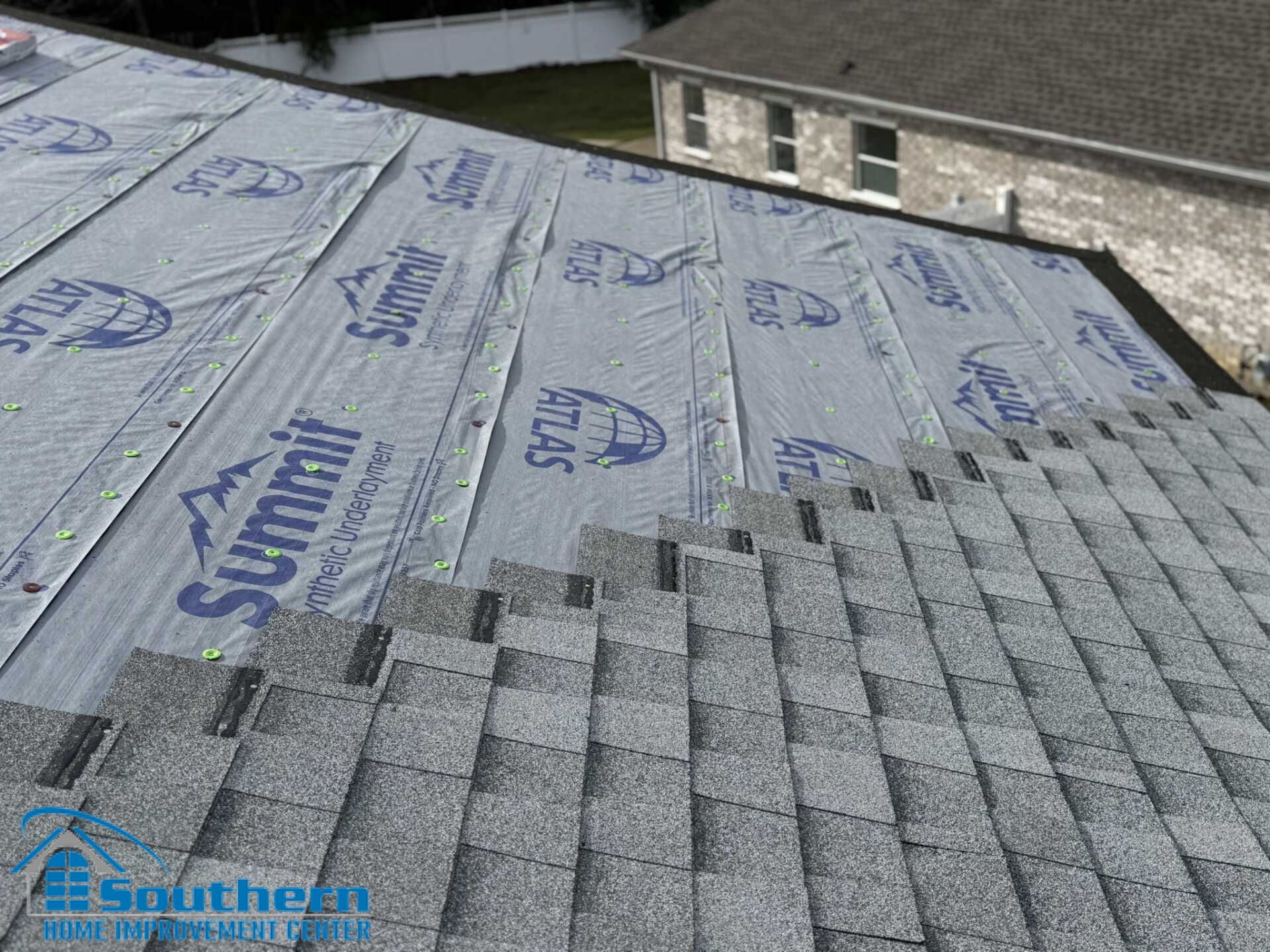
- Extra water protection under the shingles: Atlas Summit® 60 synthetic underlayment installed in a two-layer overlap approach with documented laps and transitions
- Perimeter metal: 6-inch, 26-gauge drip edge, color White
This assembly is designed to support FORTIFIED™ intent and documentation. Final designation and any insurance implications depend on the inspection pathway, local requirements, and verified installation details.

Atlas HP42 Shingles in Oyster Shell: Why This Choice Works in Slidell
In high-wind markets, performance is less about the logo on the bundle and more about repeatable installation. HP42® shingles are designed to support more consistent fastening by making the intended fastening area easier to hit cleanly across the roof plane. That consistency matters because uplift problems often begin where fastening quality becomes uneven.
Atlas Pinnacle® Pristine also includes Scotchgard™ Protector (3M) to resist algae-related staining. In Southeast Louisiana, that’s not just cosmetic — dark streaking can make a newer roof look prematurely aged, which can affect perceived value.

Scotchgard™ Protector: Algae Resistance for Humid Louisiana Weather
In Slidell’s humidity, algae staining is a common curb-appeal problem. Scotchgard™ Protector helps the roof maintain a cleaner look longer, which supports long-term appearance and resale perception.
Color Match: Oyster Shell for Northshore Exteriors
Oyster Shell was selected for a clean coastal look that holds up well over time. It pairs naturally with white perimeter metal and fits common Northshore exterior palettes — a practical choice for homeowners who want the roof to look “new” longer, not just on day one.

Storm Water Protection Under the Shingles: Summit 60 Underlayment
Many storm losses follow the same chain: the roof covering is compromised, then water finds a path through joints and transitions. The goal of extra water protection under the shingles is to reduce the chance that a roof-cover event becomes a major interior-loss event.
Two-Layer Overlap Method: Clean Laps and Critical Transitions
This project used Atlas Summit® 60 synthetic underlayment in a two-layer overlap method. The focus wasn’t simply “two layers” — it was continuity: clean laps, reliable transitions, and tight execution in the places where wind-driven rain typically finds its way in (edges, penetrations, valleys, and tie-ins).
Why Underlayment Matters After Shingle Damage
When severe weather damages shingles, the underlayment layer becomes the difference between limited cleanup and major interior damage. A stronger underlayment approach is designed to keep water out longer and reduce moisture migration — protecting insulation, ceilings, and interior finishes that drive repair costs.

26-Gauge Drip Edge in Slidell, LA: Perimeter Reinforcement for Wind Uplift
Perimeters are high-pressure zones, and small shortcuts at edges can create disproportionate losses. That’s why edge metal, tie-ins, and fastening discipline matter so much in coastal and near-coastal conditions.
This roof used 6-inch, 26-gauge drip edge to strengthen perimeter control and support a more reliable tie-in to the underlayment system. The goal is straightforward: reduce the chance of perimeter lift and reduce opportunities for wind-driven rain entry at the roof edge.
Color is aesthetic. Gauge, placement, and fastening discipline are performance.
Why 6-Inch Edge Metal Helps Reduce Lift Risk
A wider drip edge helps improve edge stability and provides a stronger foundation for tie-in details where storm-driven uplift pressure is highest.
Fastening and Tie-In Details That Matter in Storms
A roof performs as an assembly: deck attachment, underlayment continuity, perimeter reinforcement, and shingle fastening must work together. Strong shingles can’t compensate for weak edge decisions, and underlayment can’t correct inconsistent fastening habits. This scope was executed as a system to reduce uplift-driven failures and limit water entry pathways during severe weather.
Request a FORTIFIED™ Roofing Quote in Slidell, LA
A FORTIFIED™ roof isn’t just “a new roof with better shingles.” It’s a stronger setup that helps your home handle storms — with better water protection under the shingles and reinforced edges where wind damage often starts.
If you’re in Slidell and want a roof built with FORTIFIED™ intent, Southern Home Improvement Center (SHIC) can walk you through the best system for your home and explain the options. Call (985) 643-6611 to talk with our team, or request a free estimate.


