
How Dual Grey Changes the Look of a New Orleans Roof
Not every completed roof stands out for the same reason. Some projects are memorable because of the product line, others because of the scope, and some because the finished roof simply looks right on the home. This New Orleans project falls into that last category. Using IKO Cambridge shingles in Dual Grey, Southern Home Improvement Center (SHIC) gave this home a cleaner, calmer roofline that feels more intentional from every angle.
This page is written as a visual case study rather than a general roofing guide. The focus here is on roof shape, surface pattern, ridge lines, and how the finished color blend changes the way the home reads from above and from the street.
This Roof Works Because the Finish Feels Controlled
The first thing that stands out on this project is not one isolated feature. It is the overall discipline of the finished roof. The shingle pattern stays calm across the broad slopes, the hips and ridges read cleanly, and the color blend brings contrast without making the home look too dark or too busy.
That kind of result matters on a New Orleans home. A roof here has to do more than look fresh for a few weeks after installation. It should feel visually settled on the house, hold its own through heat and humidity, and still read as a practical long-term exterior improvement rather than a cosmetic swap.

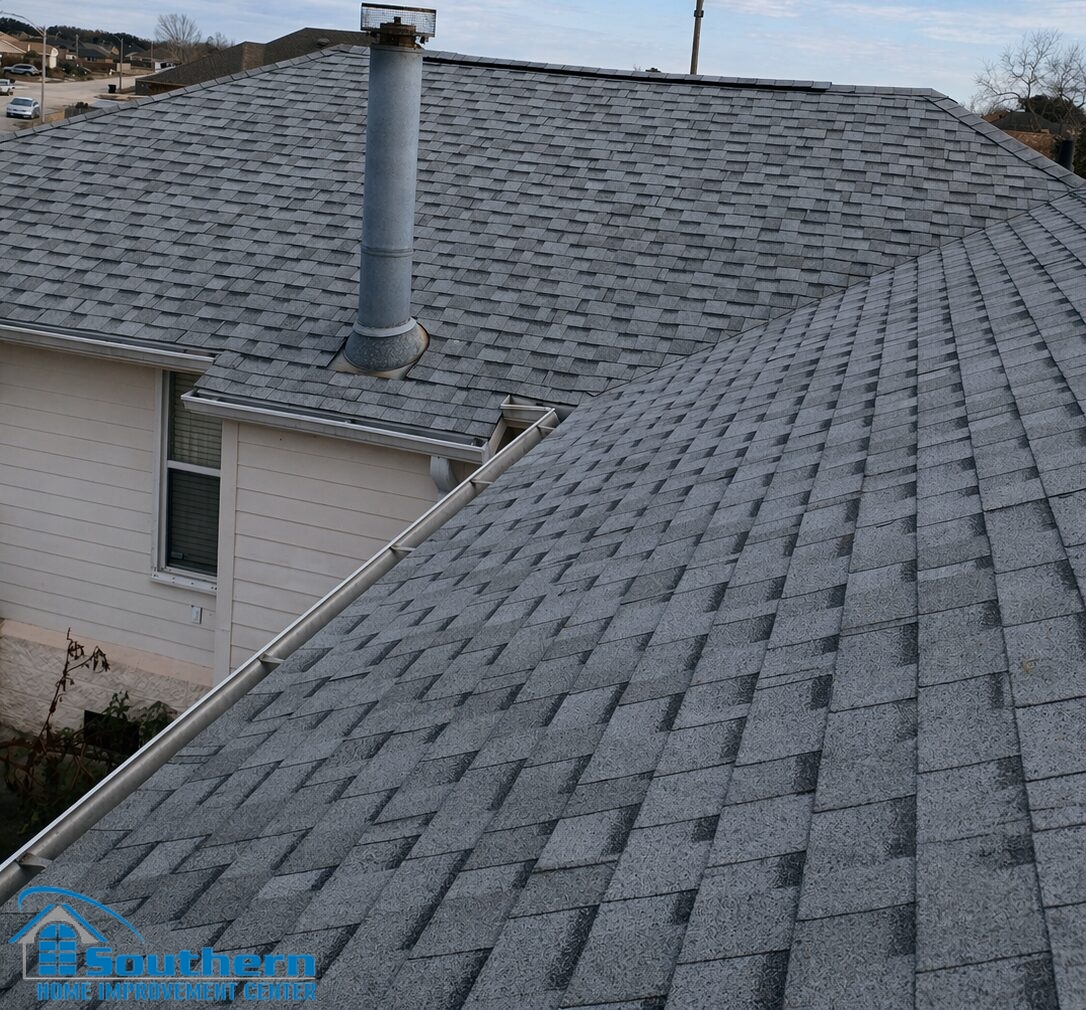
The long visible slope makes the finished shingle pattern easy to judge, which is exactly why consistency matters on a project like this.
Long Roof Planes Make the Color Blend Do More Work
On a roof with broad uninterrupted planes, uneven visual weight becomes obvious very quickly. If the color is too flat, the roof can look dull. If the contrast is too aggressive, the whole house can feel heavier than it should. Dual Grey lands in a better place here. It gives the field shingles enough variation to keep the surface alive, but it stays composed instead of loud.
That is one reason this project feels different from a generic “new roof” post. The roof planes are large enough that you can actually see whether the finished shingle layout works. Here, it does. The surface reads as even, the lines stay clean, and the house ends up looking more refined rather than simply newer.

The chimney area and adjoining roof surfaces show whether the finished roof still feels balanced once penetrations and offsets enter the picture.
The Roof Is Judged at the Transitions, Not Just the Big Slopes
Clean field shingles are only part of the story. The finished impression of a roof is also shaped by what happens at the transitions — where slopes meet, where the chimney interrupts the pattern, and where hips and ridge caps become visually dominant. Those are the places where a roof either looks composed or starts to feel messy.
On this home, the finished transitions help keep the project looking deliberate. Instead of the eye getting pulled toward awkward breaks or overly harsh contrast, the roof continues to read as one organized surface. That is a big part of why the final result feels stronger than a simple material swap.
Dual Grey Gives Contrast Without Making the House Feel Heavy
A darker roof can sharpen a home, but it can also overwhelm it. A lighter roof can open the exterior up, but it may lose definition. What makes Dual Grey useful on this project is that it sits between those two extremes. It adds enough contrast to define the roofline clearly, but it still keeps the overall look measured and versatile.
That balance shows up especially well where the roof meets lighter exterior surfaces. The shingles frame the structure cleanly instead of dominating it. In practical terms, the home ends up with more presence, but without the harsher visual weight that a deeper charcoal blend might create on this particular elevation.

This angle makes the ridge and hip work easy to read, which is exactly where many roofs either sharpen up or lose their visual discipline.
Hips and Ridge Caps Give the Project Its Finished Character
Some roof projects are mostly about surface replacement. This one also has a strong geometry component. The hips, ridges, and connecting slopes are visible enough that they shape the personality of the finished roof. That is why the project reads well from elevated angles and not just from ground level.
When those lines feel clean, the whole home benefits. The roof looks more structured, the silhouette becomes easier to read, and the property takes on a more complete architectural presence. That is one of the clearest strengths of this particular project.

The roof reads as calm even at the ridge and adjoining slope changes, which is one of the clearest signs of a visually successful finish.
This Project Is More About Finish Quality Than Marketing Language
The reason this roof stands out is not because it tries to carry too many talking points at once. It works because the finished result is easy to read. The shingle field stays controlled, the lines feel intentional, the color blend is balanced, and the roof supports the house instead of fighting it.
That makes this a useful project for homeowners who are trying to judge roof color and overall presentation, not just product names. If the question is, “What does a completed roof look like when the visual choices are right?” this New Orleans example answers that clearly.
Where This Project Fits in the Bigger Picture
This page is intentionally narrow. It is a project study built around visual finish, roof geometry, and the way Dual Grey performs on this particular home.
If you need broader information about scope, replacement planning, and estimate paths in this market, use the main Roof Replacement in New Orleans & Jefferson page. If your question is specifically about permit context, use the separate New Orleans re-roofing permit guide.
FAQ About This New Orleans Roof Project
What shingle color was used on this home?
IKO Cambridge shingles in Dual Grey were used on this completed roof replacement.
What stands out most on this roof?
The strongest visual points are the calm field pattern, the clean long slopes, and the way the hips and ridges stay organized without making the roof feel heavy.
Why does this page focus so much on roof appearance?
Because this project is most useful as a color-and-finish case study. It shows how the completed roof actually reads on the house instead of repeating generic replacement advice.
Is this meant to replace the main New Orleans service page?
No. This page supports it. The service page is for broader replacement planning, while this page shows a specific finished roof direction.
Where can I request a roof replacement estimate in New Orleans?
Contact Southern Home Improvement Center (SHIC) at (504) 833-1835 or use the form at the bottom of the page to request your free estimate.