
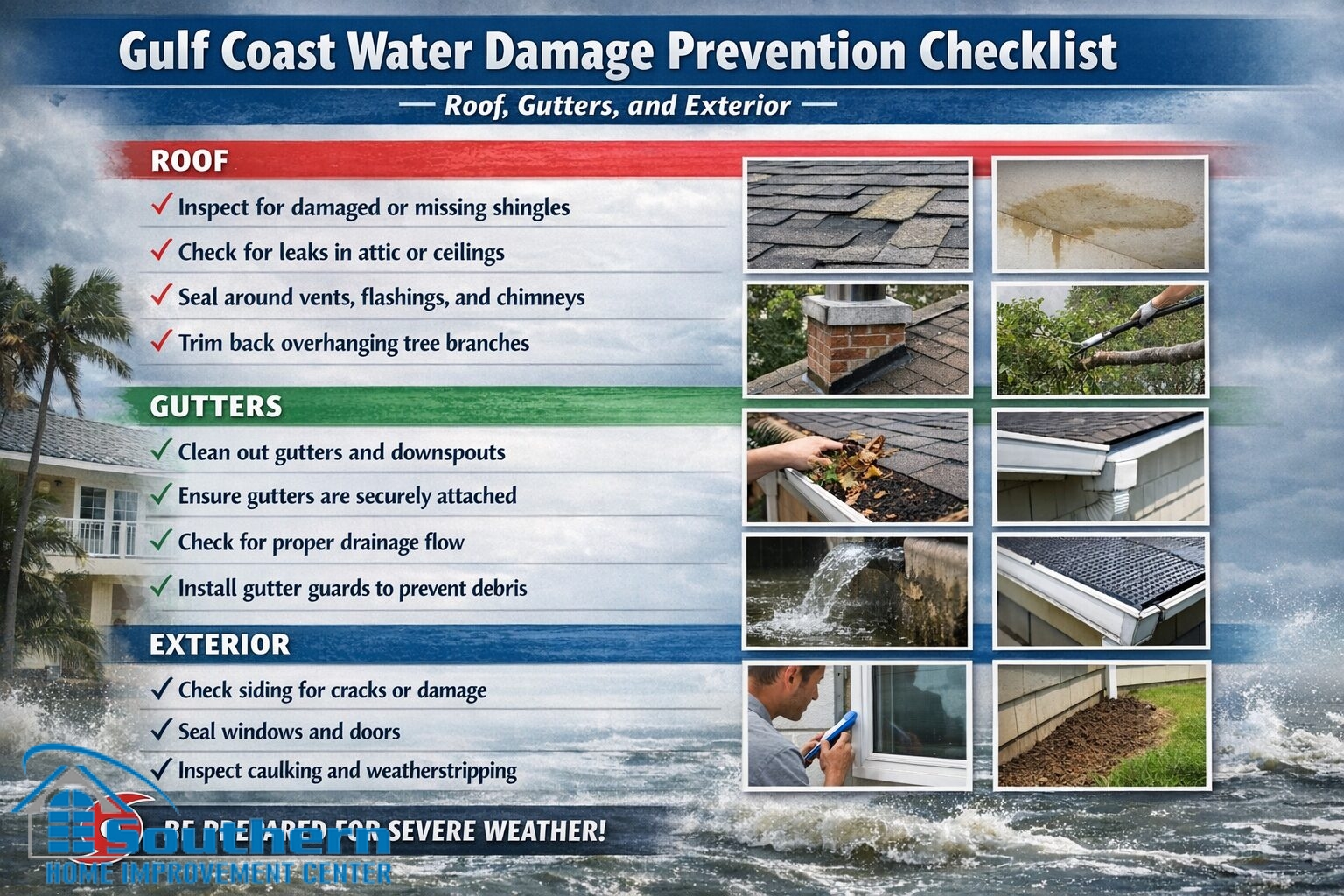
5 Gulf Coast Water Damage Risks Homeowners Miss — and the Simple Fix Plan
On the Louisiana and Mississippi Gulf Coast, “water damage” rarely comes from one dramatic moment. More often, it’s a small entry point plus a heavy rain band, wind shift, or overflow pattern that repeats until drywall, insulation, or framing finally shows the bill.
This guide is built for real homeowners — not contractors. It focuses on the five most common “quiet” water risks we see across Southeast Louisiana and the Mississippi Gulf Coast, and it gives you a practical prevention plan you can actually follow.
Why this matters (and why insurance can get complicated)
Before we get into the list, one clarity point helps homeowners make better decisions: different insurance policies often treat different sources of water differently. Flood insurance and homeowners insurance are not interchangeable, and “wind-driven rain” is typically treated differently than floodwater in NFIP guidance.
Practice also shows that many policies scrutinize long-term or maintenance-related leaks more aggressively than sudden, storm-created openings. The best defense is simple: reduce the chance of water entry and document what you find when weather hits.
The 5 water risks Gulf Coast homeowners forget
1) Roof edges and transitions (where “good shingles” still leak)
Most recurring leaks don’t start in the middle of a shingle field. They start where systems change: roof-to-wall lines, step flashing zones, valleys, pipe penetrations, chimneys, and skylight perimeters. In Gulf storms, wind can push water sideways and exploit tiny gaps that look harmless in fair weather.
If you want a prevention-first approach (not storm-only), start with a targeted inspection and small corrective work instead of waiting for interior stains. See our preventive scope here: Roof Maintenance & Preventive Repairs.
The takeaway is straightforward: if you stop water at transitions, you prevent most “mystery leaks” that show up days later.
2) Gutter overflow that looks like “just rain” (but feeds rot)
Gulf rain is high-volume. When gutters are undersized, out of pitch, or choked at outlets, water doesn’t just spill — it sheets onto fascia, soffit, and siding, then splashes back into vulnerable edges. That creates paint failure, soft wood, and hidden rot long before you notice damage.
If you see overflow lines, drip trails, or repeated staining, don’t default to “clean again.” Diagnose flow and bottlenecks. A practical deep dive is here: Stop Gutter Overflow — Downspout Upgrades & Outlet Fixes.
The takeaway: gutters are part of the roof system. If water cannot exit cleanly, the roof cannot protect the home the way you expect.
3) Water behind siding and trim (wind-driven rain finds the seams)
Along the coast, water intrusion isn’t only a roofing story. Wind-driven rain can slip behind corner boards, around penetrations, and at window/door transitions — especially where caulk has cracked or flashing details were skipped. The result can look like “random interior moisture” even when the roof is fine.
If you’ve had repeat wet spots near exterior walls, use a diagnostic approach instead of guessing. Start here: Siding Repair & Leak Diagnostics.
The takeaway: if you treat every leak as “roof only,” you can waste months while the real entry path keeps running.
4) Downspout discharge and grade (foundation splash is not harmless)
Even a perfect roof can’t win if water is dumped at the base of the home. Short downspouts, missing extensions, back-slope landscaping, and “buried drains with no cleanouts” are common causes of recurring wet spots, slab edge moisture, and crawlspace humidity.
If your home shows splash-back damage or persistent wet zones, this guide is a strong starting point: Gulf Coast Gutter Overflow: Diagnosis & Fixes.
The takeaway: control where water lands — not just where it flows on the roof.
5) The documentation gap (small damage becomes a slow claim)
When water shows up inside, homeowners often scramble — and lose time. The faster you can show (a) where water entered, (b) what was damaged, and (c) what you did to prevent further damage, the cleaner the next steps tend to be. That applies whether you file a claim or not.
If you want an insurer-friendly way to organize photos and notes after storms, use this process: Hurricane Roof Insurance Claims in Louisiana & Mississippi.
The takeaway: a simple evidence folder can prevent weeks of back-and-forth.
The simple fix plan (15 minutes now, fewer surprises later)
Practice shows the best plan is not “do everything.” It’s a short routine that targets the highest-risk leak paths and repeats on a schedule that matches Gulf Coast weather patterns:
- Quarterly ground scan: walk the perimeter, look for overflow stains, displaced downspouts, soft fascia edges, and siding gaps.
- After heavy rain + wind: check ceilings, attic access points, and any known “repeat leak” rooms within 24–48 hours.
- Before storm season: clear drainage, confirm downspout discharge, and fix small transition defects before they become interior damage.
- When something looks off: document with photos first, then schedule a professional inspection so the scope is clear.
This routine is intentionally simple. It catches the patterns that usually turn into expensive repairs — without turning homeownership into a full-time job.
FAQ
How often should I check my roof and gutters on the Gulf Coast?
At minimum: a quarterly ground-level scan plus checks after major rain-and-wind events. If you have heavy tree cover or chronic overflow, you may need more frequent gutter attention.
Does flood insurance cover wind-driven rain that enters through the roof or a damaged window?
NFIP guidance generally separates floodwater from wind-driven rain and roof-opening water. If you have coverage questions, confirm with your agent based on your specific policy and loss scenario.
Is “roof repair” always the right move when I see a ceiling stain?
Not always. Some stains are roof-related, but others come from siding, windows, or condensation issues. A diagnostic inspection prevents wasted repairs.
Do gutter guards solve overflow?
Sometimes they help with debris, but they do not fix pitch problems, undersized outlets, too-few downspouts, or bad discharge. Overflow is a flow problem first.
What’s the fastest way to reduce leak risk without a full replacement?
Target the transitions: roof-to-wall lines, penetrations, and known recurring zones — plus fix overflow and discharge. Small details create most big leak stories.
When should I stop DIY checks and call a pro?
If water is entering, if stains repeat after multiple storms, or if you see sagging/soft edges, call for a documented inspection and a clear scope. Avoid climbing on the roof without training and safety equipment.
If you want a documented roof or exterior inspection with clear photos and next-step recommendations, contact Southern Home Improvement Center (SHIC) — call (985) 643-6611 or (225) 766-4244.


