Louisiana Enforcement Action Shows Why Homeowners Should Verify a Contractor’s License and Insurance
Louisiana homeowners do not need to follow every regulatory headline. But some enforcement actions are worth paying attention to because they show exactly where a routine repair decision can go wrong.
A recent Louisiana Department of Insurance enforcement action is one of those cases. State officials said a contractor was issued a cease-and-desist order and was later arrested after allegedly falsifying documents while applying for a new contractor’s license. According to the LDI release, the case involved allegedly doctored inspection records and two fraudulent certificates of insurance presented as proof of commercial liability and workers’ compensation coverage.
For homeowners, the lesson is not that every contractor should be treated with suspicion. The lesson is that paperwork should be verified, not simply accepted at face value. When a job involves roofing, storm repairs, insurance-related work, or any project being sold under time pressure, that distinction matters.
What Happened in the Louisiana Enforcement Action
According to the Louisiana Department of Insurance, Commissioner Tim Temple issued a cease-and-desist order after determining that Jon Andersen and Andersen Design + Build LLC violated Louisiana insurance and unfair trade practice laws designed to protect Louisiana consumers. LDI said the documents were used while applying for a new contractor’s license even though the contractor’s prior license had been revoked in July 2025. The release also says Andersen was later arrested in Jefferson Parish on February 25 on charges of fraud, filing false public records, and forgery.
That is the official enforcement angle. For homeowners, the more practical takeaway is simpler: a proposal packet, certificate, or license claim shown during a sales conversation is not the same thing as verified, current information.
Why This Matters to Homeowners Before Hiring a Contractor
Many repair decisions happen under pressure. A homeowner may be dealing with storm damage, active leaks, missing shingles, or an insurance deadline. In that situation, it is easy to assume that if the contractor sounds experienced and shows a stack of documents, the basics must already be in order.
This case is a reminder that homeowners should slow down and verify key items independently. LDI’s own release specifically references allegedly falsified licensing-related records and fraudulent certificates of insurance. That makes this more than a contractor story. It is a homeowner paperwork story.
It also fits the broader message already present in your site’s consumer-protection content: a contractor’s identity, license status, insurance documents, and written scope should all line up cleanly before any contract is signed or deposit is paid.
What Homeowners Should Verify Before Signing
The first thing to verify is the contractor’s exact legal business name. It should match across the proposal, insurance paperwork, and any state license lookup. If the names do not match cleanly, that is not a small detail.
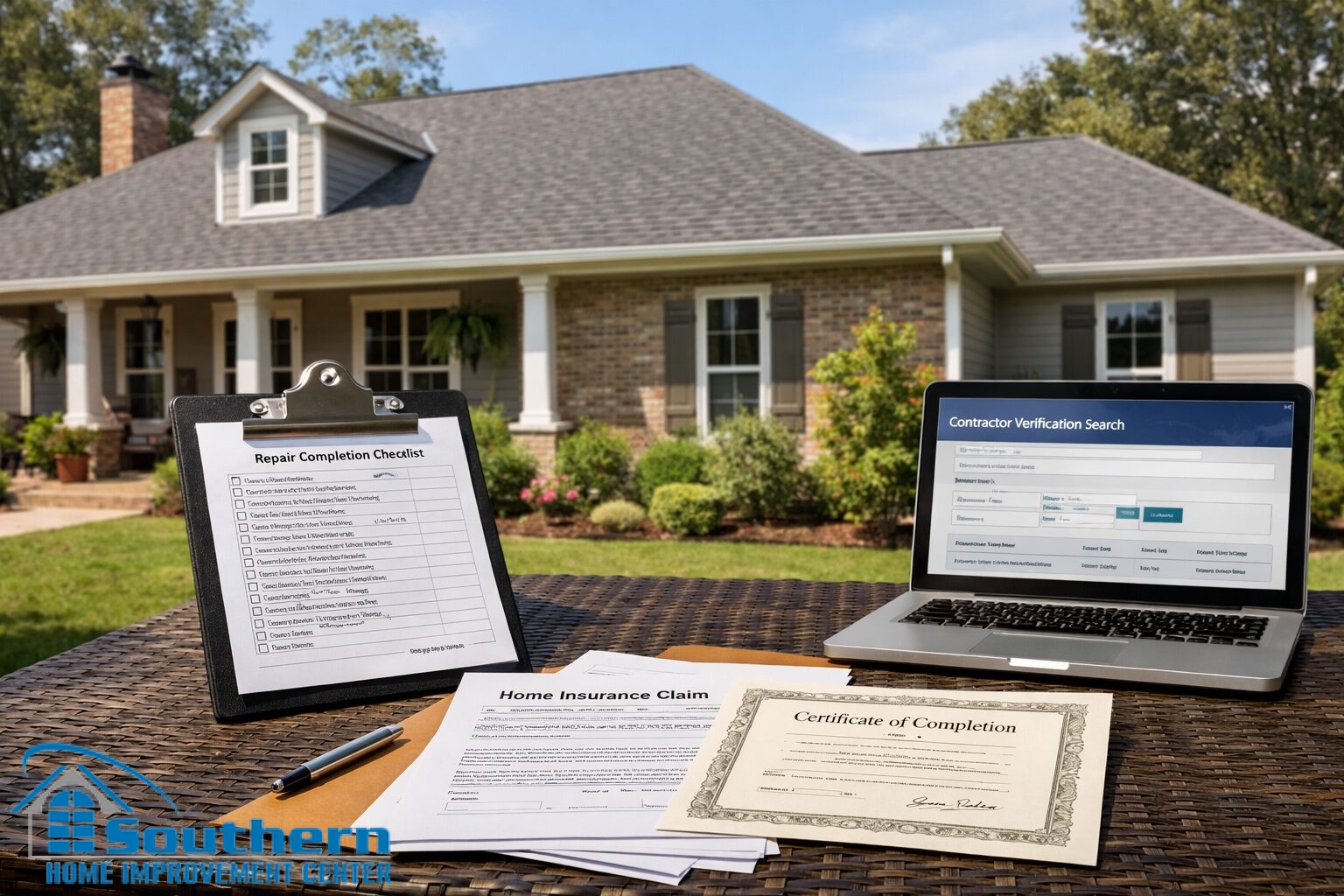
The second thing to verify is current license status through the appropriate official source. Homeowners should use the state’s official contractor search tools rather than relying on screenshots, verbal claims, or branded documents.
The third thing is insurance documentation. A certificate of insurance should not be treated as something to glance at for two seconds. Homeowners should check dates, company names, and coverage types carefully. This is especially important on roofing and storm-repair jobs, where liability and workers’ compensation questions can become more serious very quickly.
The fourth thing is the written scope itself. If a contractor is promising to handle permits, documentation, insurance-related items, or extra protection measures, those promises should appear clearly in writing rather than living only in a sales conversation.
Why This Is Not the Same as a General Fraud Alert
A general fraud alert gives homeowners a repeatable checklist. This case works differently because it is tied to a specific enforcement action. That makes it a timely reminder that verification still matters even when the sales process looks polished on the surface.
In other words, the value of this story is not only what happened. It is what the case shows homeowners to verify before they sign anything.
Bottom Line for Louisiana Homeowners
The takeaway is not panic. It is discipline.
If a contractor is legitimate, reasonable verification should not be a problem. Homeowners should feel comfortable checking the business name, confirming current license status, reviewing insurance paperwork carefully, and slowing the process down if something does not line up. A project can still move quickly without skipping basic verification.
For Louisiana homeowners, this enforcement action is a useful reminder that paperwork should be confirmed before money changes hands, not after a problem appears. The best time to catch a mismatch is before the contract is signed.
For a clearer screening process before any roof repair or replacement project, review our contractor verification guides and contact Southern Home Improvement Center (SHIC) through the form below or call the office nearest you to discuss your roofing project.