Before You File a Storm Claim, Be Careful What You Click
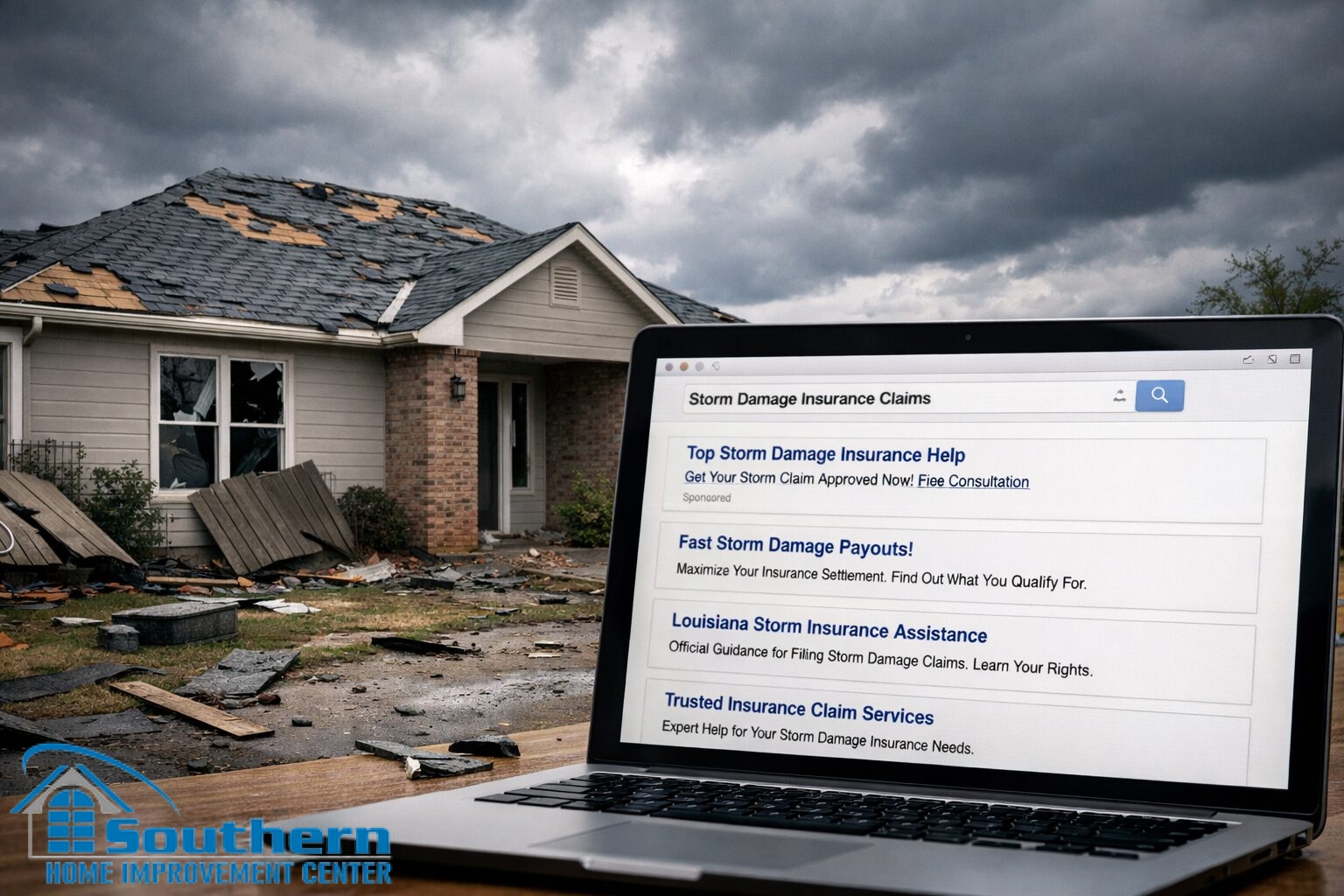
When a storm hits, many homeowners do the same thing within minutes: they open Google and start searching for help. That first search may seem harmless, but it can lead consumers in the wrong direction before they ever speak with their insurance company. Recent warnings from the Louisiana Department of Insurance show that some third-party actors use misleading digital tactics and lookalike websites that make policyholders think they are dealing directly with their insurer when they are not.
That is what makes this warning different from the usual advice about storm chasers and high-pressure sales tactics. The risk is no longer limited to who shows up at the door. It can begin with the first click, the first sponsored result, or the first claim-related page a homeowner opens while trying to move quickly after roof or property damage.
The First Mistake After a Storm May Happen Online
After severe weather, homeowners are often under pressure to act fast. They may be dealing with roof damage, water intrusion, cleanup, temporary protection, and urgent insurance questions all at once. In that environment, a polished website or official-looking claim page can appear trustworthy simply because the homeowner is trying to move quickly.
That is where the risk starts. Not every storm claim search result is there to help the policyholder. Some pages are built to capture attention, collect information, or push consumers into a process that is not connected to their insurance company at all.
Why Misleading Search Results Are a Problem
Many homeowners assume the top search result is the safest place to begin. In reality, search rankings and paid placements do not guarantee that a page belongs to the insurer or an official consumer resource. A site may look professional, use urgent language, or mention storm claims in a way that feels legitimate while still directing the consumer away from the proper channel.
This matters because the early steps of a claim are important. If a homeowner starts in the wrong place, it can create confusion, delay communication, and add unnecessary stress during an already difficult situation.
What Homeowners Should Do First
The safest approach is to contact your insurance company directly before trusting a claim-related search result, sponsored ad, or unfamiliar website. Use the insurer’s official website, app, policy documents, or known customer service number rather than relying on whichever page appears first in search.
It also helps to slow the process down just enough to verify where a link is taking you. Be cautious with vague domain names, pages that ask for personal information immediately, or websites that create the impression they are handling your claim before you have confirmed who they are.
Storm Recovery Still Requires Care at Every Step
Once you have reached the right insurance channel, the rest of the recovery process becomes easier to manage. You can document visible damage, follow the carrier’s instructions, and make better decisions about inspections, temporary protection, and repair planning.
That is also the point where contractor verification becomes important. If you want to review what Louisiana homeowners should check before signing a roofing contract, read our related article: LDI Fraud Alert: What Louisiana Homeowners Should Verify Before Signing a Roofing Contract.
A Smarter First Step After Storm Damage
For Louisiana homeowners, the takeaway is simple: after a storm, the first mistake may happen online. Before you trust a search result, make sure you know exactly who is on the other side of the page. Reaching your actual insurer first is one of the simplest ways to avoid unnecessary confusion, delays, and claim-related problems.
If your home has visible storm damage and you need a professional inspection after contacting your insurer, Southern Home Improvement Center (SHIC) can help. Call Slidell / Northshore at (985) 643-6611, Baton Rouge at (225) 766-4244, or New Orleans at (504) 833-1835, or use the form at the bottom of the page to request an estimate.