
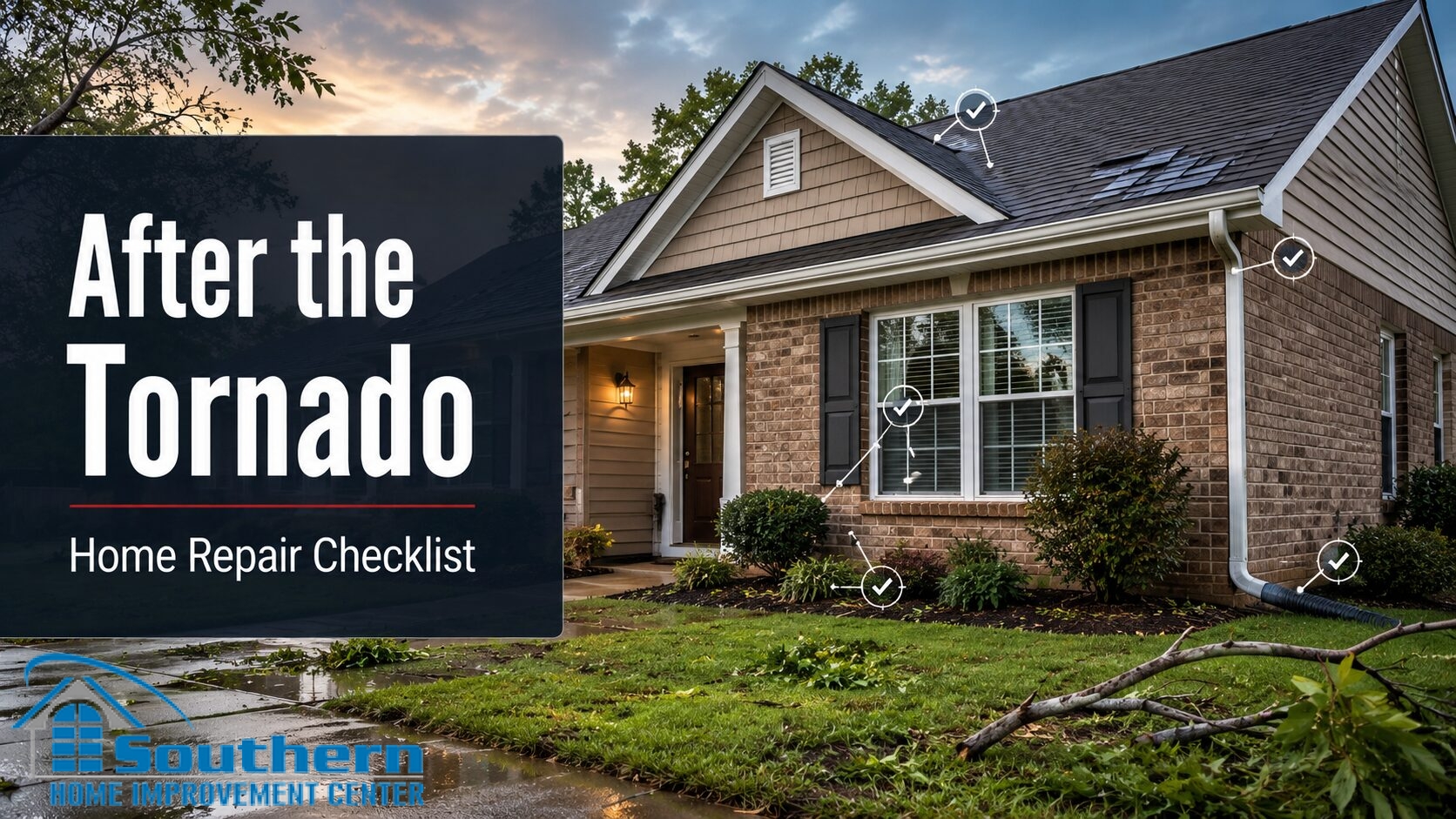
After the May 2026 South Mississippi Tornadoes: What Homeowners Should Check Before Repair Work Begins
When a tornado damages a home, the first instinct is to clean up quickly and start repairs as soon as possible. That is understandable. But before permanent repair work begins, homeowners should slow down long enough to document the damage, check the full exterior system, and separate temporary protection from long-term repair decisions.
In early May 2026, a series of tornadoes struck southern Mississippi, with authorities estimating that about 500 homes were damaged across five counties and at least 17 people were injured. Affected communities included areas such as Purvis and Bogue Chitto, where residents began the difficult process of assessing damage, clearing debris, and planning next steps.
This guide is written for Mississippi homeowners who need a practical repair checklist after tornado damage — not a storm alarm and not a generic roof-only article. The goal is to help you understand what to check before cleanup, temporary protection, insurance documentation, or permanent repair work moves too far ahead.
Take clear photos before debris removal, tarp work, gutter replacement, window repairs, or siding cleanup change the evidence.
Tornado damage can affect roofing, gutters, fascia, siding, windows, doors, patio covers, and drainage paths.
Emergency protection is important, but it should not replace a clear written repair scope for the full exterior system.
What Happened in South Mississippi
Powerful storms that included multiple tornadoes moved across southern Mississippi in early May 2026. AP reported that authorities estimated about 500 homes were damaged across five counties, with at least 17 people injured. The storms affected communities including Purvis and Bogue Chitto, where damage assessments and recovery work began after the tornadoes passed.
For homeowners outside the hardest-hit blocks, the damage may not always look dramatic from the street. A roof can lose shingles or flashing. Gutters can twist or pull away. Siding and fascia can be struck by debris. Windows and doors can shift, leak, or show impact damage. These smaller signs still matter because they can lead to water intrusion during the next heavy rain.
SHIC perspective: after a tornado, the question is not only “Is the roof still there?” The better question is whether the full exterior system is still keeping water out, moving runoff correctly, and protecting the home before the next storm.
Make the Property Safe Before Inspecting Anything
Before looking closely at the roof or exterior, homeowners should think about safety. Tornado damage can leave loose materials, unstable structures, broken glass, hidden sharp debris, downed limbs, and damaged electrical service. Do not climb onto a damaged roof, move heavy debris alone, or enter areas that appear unstable.
Start with a ground-level review. Look from a safe distance, take photos, and avoid touching electrical components, leaning structures, or materials that may shift. If the home has active leaking, visible structural movement, or exposed interior areas, temporary protection may be needed before a full repair plan can be prepared.
Do not start with the roof. Start with people, power, access, and stability. A roof inspection can wait until it can be done safely by someone equipped to review storm damage.
Document the Damage Before Cleanup or Repairs Begin
Good documentation helps homeowners, contractors, and insurers understand what happened before temporary work changes the scene. Take wide photos of all sides of the home, then closer photos of specific damage. Capture the roofline, gutters, windows, doors, siding, fascia, soffits, patio covers, fences, detached structures, and any interior water staining.
Do not rely only on close-ups. A close-up may show a broken shingle or dented gutter, but a wide shot shows where that damage is located on the home. Both are useful. Keep photos organized by area: front elevation, rear elevation, left side, right side, roofline, attic, interior stains, and debris impact points.
Photograph all elevations before debris removal or temporary work begins.
Show missing shingles, lifted metal, cracked trim, broken glass, damaged gutters, and impact marks.
Photograph ceiling stains, attic moisture, damp insulation, and water entry points.
Keep estimates, invoices, tarp photos, material details, and final completion photos.
Tornado Roof Damage Is Not Always Obvious From the Ground
After a tornado, roof damage can include more than missing shingles. Wind can lift, crease, loosen, or shift materials without removing them entirely. Debris can damage shingles, ridge areas, vents, pipe boots, flashing, gutters, and roof edges. Water can then enter during a later rain event even if the roof looked mostly intact immediately after the storm.
Homeowners should avoid climbing on a damaged roof, but they can look for warning signs from the ground and inside the home. Check for missing shingles, unusual roofline changes, exposed underlayment, displaced vents, loose ridge materials, bent metal, ceiling stains, attic moisture, or new daylight visible through roof areas.
Look for missing, lifted, curled, creased, or displaced shingles, especially near edges and ridges.
Pipe boots, turbines, vents, skylights, and flashing should be checked because these areas are common leak points.
Fresh stains, damp insulation, musty odors, or new light gaps can indicate that water has a path into the home.
Gutters, Fascia, Siding, Windows, and Doors Also Need Review
A tornado can damage more than the roof covering. Gutters can pull loose or twist. Fascia and soffit can separate. Siding can crack, shift, or take debris impact. Windows and doors can show broken seals, cracked glass, frame movement, or water entry after wind-driven rain.
This is why the repair scope should not be written from one visible issue alone. A missing shingle may be obvious, but a bent gutter, loosened fascia, or shifted door threshold can become the next water problem if it is ignored.
| Area to Check | What to Look For | Why It Matters |
|---|---|---|
| Gutters and downspouts | Bent sections, loose hangers, pulled corners, crushed downspouts, overflow points | Poor water control can damage fascia, siding, landscaping, and slab-adjacent areas. |
| Fascia and soffit | Loose boards, gaps, cracks, staining, detached soffit panels | These areas protect roof edges and attic ventilation zones from moisture and pests. |
| Siding and exterior trim | Cracks, impact marks, shifted panels, loose trim, water stains | Damaged siding or trim can let water behind the exterior surface. |
| Windows and doors | Cracked glass, frame movement, wet sills, door drag, broken seals | Openings are vulnerable during wind-driven rain and should be checked before repainting or caulking over symptoms. |
| Patio covers and attached structures | Loose fasteners, bent panels, roof tie-in damage, water collecting near the wall | Attached structures can transfer water problems back toward the home if connections are damaged. |
Emergency Protection Is Not the Same as a Repair Plan
Temporary protection can be necessary after tornado damage. Tarps, temporary covering, board-up work, and short-term weather protection can help reduce additional water entry while the full damage is reviewed. But temporary work should not replace a proper written repair scope.
Homeowners should keep photos of the damage before temporary protection is installed, then photograph the temporary protection after it is in place. That creates a clearer record of what was damaged and what was done to reduce further exposure.
Photograph the original damage clearly before tarps, boards, or cleanup hide the affected areas.
Save photos, receipts, dates, and notes describing what was covered and why.
Ask for a written scope that separates roof, gutter, siding, window, fascia, and interior water-related concerns.
Be Careful With Fast Repair Offers After a Storm
After widespread storm damage, homeowners may receive repair offers quickly. Speed can be helpful when a home needs emergency protection, but permanent repairs should still be handled with a clear scope, written estimate, material details, and photos that support the recommended work.
Before signing, ask what the contractor inspected, what photos were taken, what materials are proposed, how water entry will be addressed, and whether the estimate covers the full exterior system or only the most visible damage. A good repair plan should make the next step clearer, not more confusing.
- Ask for a written scope before permanent work begins.
- Confirm which areas were inspected: roof, gutters, fascia, soffit, siding, windows, doors, and attached structures.
- Keep copies of photos, estimates, invoices, and material details.
- Avoid approving cosmetic cleanup before hidden water-entry risks are reviewed.
- Make sure temporary protection does not become the only “repair” plan.
Start With a Clear Record, Then Build the Repair Plan
After tornado damage, cleanup and temporary protection may need to happen quickly. Permanent repair decisions should be more deliberate. Before work begins, homeowners should document the damage, review the full exterior, separate emergency protection from permanent repairs, and make sure the written scope reflects what the home actually needs.
For South Mississippi homeowners, that means looking beyond the roof surface alone. Gutters, fascia, soffit, siding, windows, doors, patio covers, and drainage areas can all affect how the home performs when the next heavy rain arrives.
South Mississippi Tornado Home Repair FAQ
Should I climb onto the roof after a tornado to check damage?
No. Start with a ground-level visual check and interior signs such as ceiling stains or attic moisture. A damaged roof can be unsafe, especially after wind, debris impact, or rain.
What should I photograph before cleanup?
Photograph all sides of the home, the roofline, gutters, siding, fascia, soffits, windows, doors, patio covers, debris impact areas, interior stains, attic moisture, and any temporary protection work.
Can tornado roof damage be hidden?
Yes. Wind can lift, crease, loosen, or shift roofing materials without removing them completely. Damage around vents, pipe boots, flashing, ridges, and roof edges may not be obvious from the ground.
Is temporary tarping the same as roof repair?
No. Temporary protection can help reduce additional water entry, but it does not replace a full inspection, written repair scope, or permanent repair plan.
What exterior areas should be checked besides the roof?
Gutters, downspouts, fascia, soffits, siding, exterior trim, windows, doors, patio covers, attached structures, and drainage areas should also be reviewed after tornado damage.
Talk With Southern Home Improvement Center (SHIC)
If your home has roof damage, gutter damage, siding damage, window or door concerns, fascia issues, or water-entry signs after severe weather, Southern Home Improvement Center (SHIC) can review the exterior and help you understand the right next step for your home in Southeast Louisiana or the Mississippi Gulf Coast.
Call the office that serves your area or fill out the form at the bottom of the page to request your estimate with Southern Home Improvement Center (SHIC).