Mississippi Winter Storm Roof Damage Help — FEMA Assistance, SBA Loans, and What Homeowners Should Gather First
Mississippi homeowners dealing with roof damage after the January 23 – 27 winter storm may now have two separate forms of federal recovery help to review: FEMA Individual Assistance and low-interest SBA disaster loans. For homeowners sorting out leaks, wet insulation, ceiling stains, attic moisture, or larger roof repair decisions, understanding that difference early can make the documentation process much easier.
This is not a free roof replacement program, and it is not a blanket statewide approval for every Mississippi county. The current assistance is tied to the federal disaster declaration for the January winter storm and to the counties included in the present designation.
What Changed for Mississippi Homeowners in April 2026
The biggest change is that the recovery path is now more defined for residents in the currently approved disaster area. Mississippi homeowners in the designated winter storm counties may be able to apply for FEMA Individual Assistance, while eligible homeowners, renters, businesses, and private nonprofits may also review SBA disaster loan options tied to the same disaster.
For roof-related losses, this matters because recovery decisions become easier when the paperwork path is clearer. A homeowner dealing with storm-related leaks or visible roof damage can now organize the file with a specific assistance track in mind instead of waiting for general announcements to turn into actual application options.
The practical takeaway is simple: if your property is in the currently designated area, do not assume FEMA and SBA are interchangeable. They may both matter, but they serve different parts of the recovery process.
FEMA Assistance vs. SBA Disaster Loans for Roof Damage
Homeowners often hear “federal help” and assume it all works the same way. It does not. FEMA assistance and SBA disaster loans can both play a role, but they are not the same kind of support.
- FEMA Individual Assistance may help with certain serious disaster-related needs, including some home repair needs and other eligible recovery expenses.
- SBA disaster loans are low-interest loans intended to help eligible applicants recover more fully over the longer term.
- For homeowners, the published SBA limits include up to $500,000 for a primary residence and up to $100,000 for personal property.
- Mitigation improvements may also be possible through an SBA increase tied to verified physical damage, which can matter when a homeowner is considering stronger rebuilding measures instead of the minimum repair only.
For a roof-damage case, this distinction matters because the homeowner may be trying to handle temporary protection, interior moisture concerns, insurance coordination, and longer-term rebuilding choices at the same time.
Who Is Currently Eligible Under the Winter Storm Designation
The current approval is tied to the counties included in the existing January 23 – 27 winter storm declaration. That means homeowners should confirm that their county is part of the approved Individual Assistance or SBA disaster loan area before assuming they can move forward under this disaster number.
This is one reason documentation should start immediately even before every answer is final. Roof damage files tend to get weaker, not stronger, once cleanup begins, temporary repairs are added, and the visible conditions start changing.
What to Document Before Roof Repair or Temporary Protection Starts
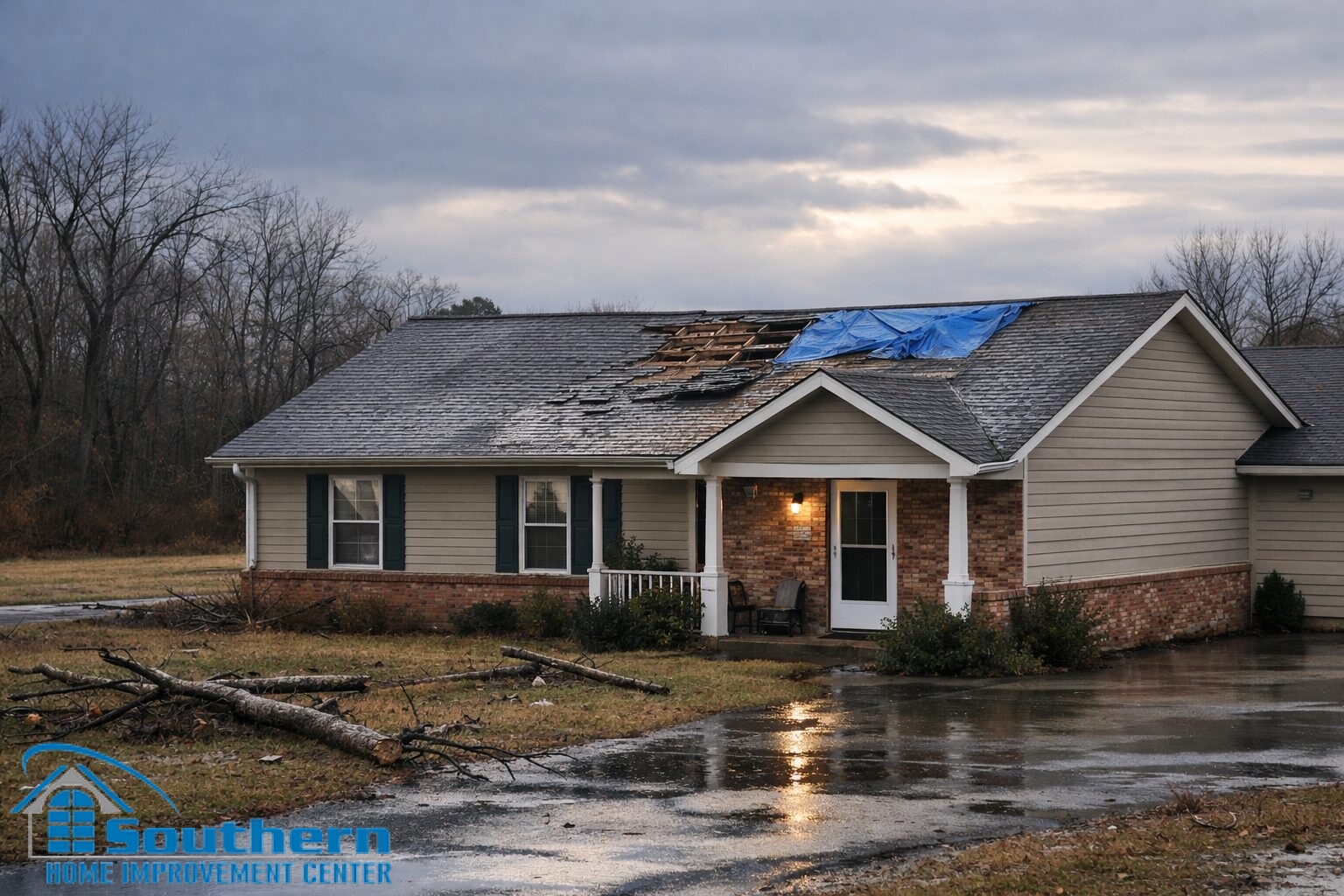
When storm-related roofing damage may be part of the loss, the smartest move is to organize the file before the home is cleaned up too aggressively or the roof condition changes. A stronger recovery file usually starts with the basics:
- Clear photos and video of visible roof damage, ceiling stains, attic moisture, wet insulation, detached gutters, siding damage, fallen limbs, and any active leak paths.
- A written timeline showing when the damage was discovered, what weather event it relates to, and what temporary steps were taken to limit further damage.
- Insurance communications, including claim numbers, adjuster contact details, inspection appointments, and requests for additional information.
- Contractor notes or inspection findings explaining what appears cosmetic, what appears functional, and what may worsen if left exposed.
- Receipts for temporary roof protection, emergency materials, cleanup, or other mitigation measures taken to prevent the damage from spreading.
A cleaner file can help whether the next conversation is with FEMA, SBA, the homeowner’s insurer, or a contractor helping define the repair scope. It also reduces the chance that temporary roof work creates confusion later about what was original storm damage and what changed afterward.
Important Note for Mississippi Gulf Coast Homeowners
This article is still useful for Gulf Coast homeowners, but it should be read carefully. The current January winter storm assistance approval is not the same thing as a live coastal program for every county SHIC serves most often. That is why the safer reading is practical rather than promotional: understand the federal recovery structure, confirm your current eligibility, and build a stronger roof-damage documentation file before larger repair decisions begin.
Even if a homeowner is outside the currently designated area, the same documentation habits still matter. Roof conditions change quickly after temporary tarping, cleanup, moisture exposure, and contractor traffic. The sooner the file is organized, the stronger the homeowner’s position usually is.
Related Storm Recovery Resources
Homeowners comparing next steps after a storm usually need more than one article. The resources below help connect federal assistance questions with documentation, insurance workflow, and stronger rebuilding decisions.
Together, these pages help turn a general recovery update into a more practical homeowner workflow.
FAQ — Mississippi Winter Storm Roof Damage Help
The questions below focus on the narrower intent of this page: disaster assistance, roof-damage documentation, and what should happen before larger repair work begins.
Does this mean FEMA or SBA will automatically pay for a full new roof?
No. Homeowners should not read this update as a blanket promise of full roof replacement. The safer approach is to document the damage carefully, confirm the current eligibility path, and then determine what part of the loss may be addressed through insurance, FEMA, SBA, or a combination of those channels.
Should homeowners wait to document roof damage until an adjuster or contractor arrives?
No. Basic photo and video documentation should start as soon as it is safe to do so. Waiting too long can make the file weaker, especially if temporary repairs, cleanup, or additional weather exposure change the condition of the roof.
What is the most common mistake after a storm-related roof loss?
One of the most common mistakes is letting cleanup move faster than documentation. Once debris is removed, tarps are added, wet areas dry out, or contractor traffic changes the roof surface, it can become harder to show the original condition clearly.
Need Help Reviewing Roof Damage Before Bigger Repair Decisions?
If you are on the Mississippi Gulf Coast and need help documenting roof damage before a larger repair decision, Southern Home Improvement Center (SHIC) can help you identify visible storm-related issues, organize photo documentation, and define the next practical step before temporary repairs create a weaker paper trail.
Call Southern Home Improvement Center (SHIC) or use the form at the bottom of the page to request a roof review before temporary work, cleanup, and ongoing exposure make the documentation trail harder to support.