
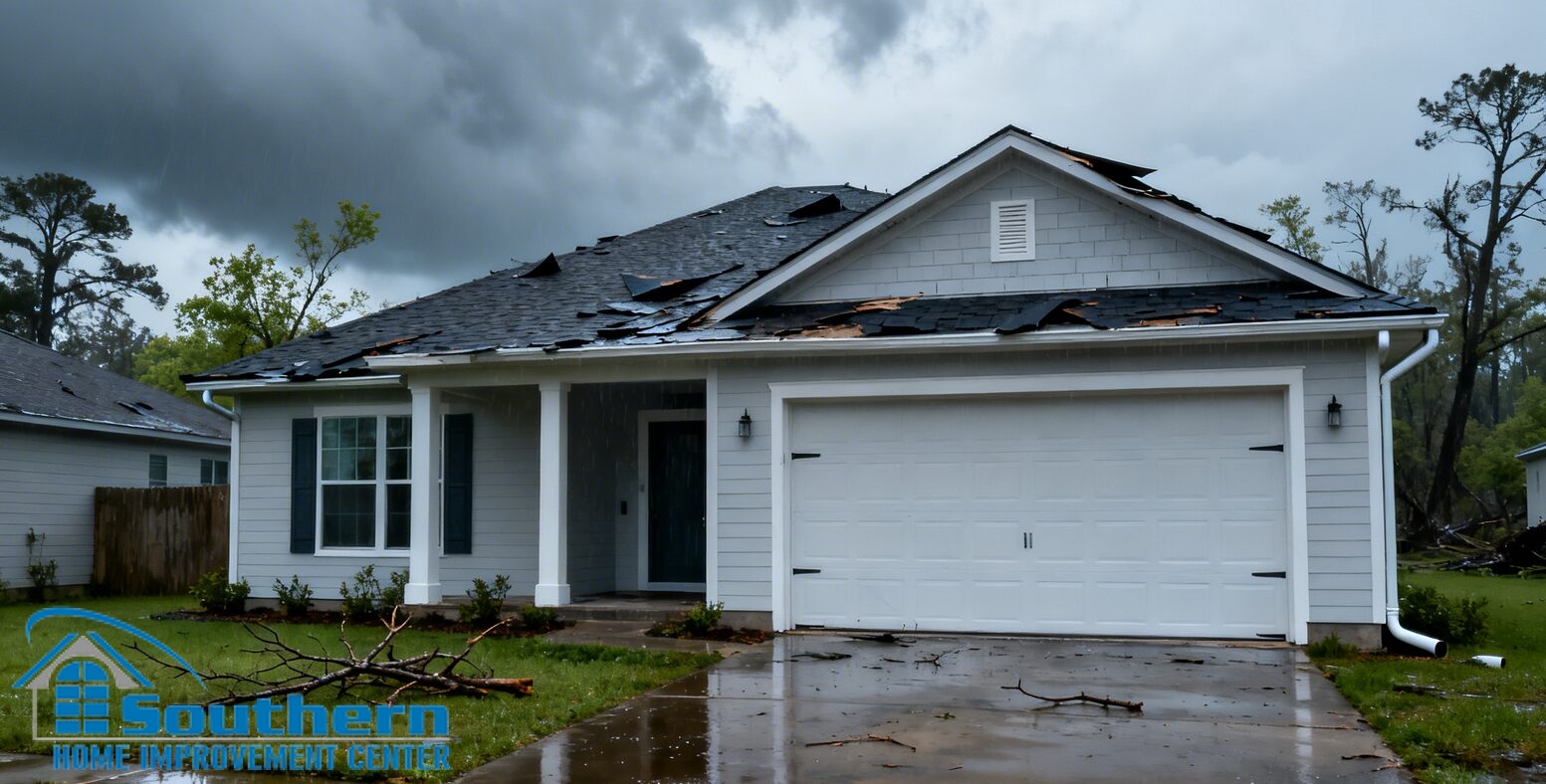
After the March 11 Tornadoes in Southeast Louisiana and South Mississippi — What Homeowners Should Inspect First
The March 11, 2026 storm system left behind a long list of tornado warnings, scattered roof damage, downed trees, power outages, and fast-moving homeowner decisions across Southeast Louisiana and South Mississippi. For many families, the next question is not whether the storm was serious. It is whether hidden roof and exterior damage may still be sitting above the ceiling line, around flashing, or behind siding and gutters.
Updated March 20, 2026: This page is built as a practical homeowner guide tied to the March 11 severe weather event. Southern Home Improvement Center (SHIC) provides inspections, documentation, temporary dry-in, repair, and replacement services. We do not provide legal advice or claims negotiation.
What Happened on March 11, 2026
The March 11 severe weather event was not a minor line of rain. The National Weather Service office in New Orleans/Baton Rouge later confirmed 14 tornadoes across Southeast Louisiana and Southwest Mississippi, marking the highest one-day tornado total in that area since April 10, 2024. Regional reporting also noted that the Slidell weather office issued 20 tornado warnings across its coverage area during the event, while local damage reports included trees down, damaged homes, road blockages, and widespread outages.
Local coverage on the Louisiana side documented Northshore damage in Tangipahoa and Washington Parish, including downed limbs, power lines, debris, blocked roads, and roof loss on at least one commercial structure in Franklinton. On the Mississippi side, MEMA reported storm damage in multiple counties, along with one death and three injuries in Lawrence County during the same weather event.
Why This Storm Still Matters to Homeowners After the Warnings End
Tornado warnings and severe wind events do not only damage the homes with dramatic visual loss. They also create less obvious failures that can stay quiet for days before showing up as attic moisture, stained drywall, lifted shingle edges, compromised flashing, loosened ridge material, or gutter separation. That is why post-storm inspections need to focus on more than the obvious “big damage” photo.
A careful inspection sequence matters because it protects both the home and the decision-making process. When you know where damage tends to hide, you can document better, reduce secondary water intrusion, and move into repairs with a clearer written scope.
What to Inspect on the Roof First
The roof is the first system to check because fast-moving storm damage can open a path for water long before an interior ceiling stain appears. The goal is not to climb the roof yourself after a major wind event. The goal is to look safely from the ground, from upper windows where possible, and through clear photo review.
Start with these visible roof checkpoints:
- Missing shingles, displaced ridge caps, or exposed underlayment.
- Lifted shingle tabs that no longer sit flat after the storm.
- Bent, peeled, or detached flashing around chimneys, wall intersections, and roof penetrations.
- Metal edging that looks loose, twisted, or uneven along the perimeter.
- Tree contact, branch impact, or fresh debris concentrated on one slope.
- Granule loss patterns near downspouts or on the ground after the event.
- Sagging, soft-looking sections that suggest decking or moisture trouble beneath the surface.
A homeowner does not need to diagnose every detail from the yard. The point is to identify whether the roof system shows enough warning signs to justify a storm-focused inspection and written documentation before the next hard rain.
What to Inspect in the Attic, Ceilings, and Interior
The second inspection zone is inside the home. Wind damage does not always announce itself at the roof edge. In many cases, the first reliable signal is moisture, staining, or airflow in the attic or ceiling plane.
These are the interior signs worth checking methodically:
- Fresh ceiling spots, ring stains, or new drywall discoloration after the March 11 event.
- Damp insulation, dark decking, or visible moisture trails in the attic.
- Daylight showing at penetrations, ridge areas, or roof-to-wall transitions where it should not appear.
- Musty odor that developed right after the storm system moved through.
- Peeling paint, swollen trim, or minor bubbling that indicates recent wetting.
- Interior leaks around chimneys, skylights, vent pipes, and valley-adjacent ceilings.
This step matters because interior evidence helps separate a cosmetic concern from an active water-entry issue. Even a small stain can point to a storm-created opening that grows larger with the next thunderstorm.
What to Inspect on Gutters, Siding, Fascia, and Trim
A severe wind event is not only a roofing problem. Gutters, soffit panels, fascia wraps, corner trim, and siding edges can all shift under pressure, and those failures can redirect water where it does not belong.
Give the rest of the exterior the same careful review:
- Gutters pulling away from the fascia or showing fresh separation at joints.
- Downspouts knocked loose or bent after branch or debris impact.
- Vinyl siding panels that unlocked, rattled loose, or show new gaps.
- Soffit panels missing, bowed, or hanging open after wind pressure.
- Trim wrap loosened around window frames, doors, and roof edges.
- Water wash marks at walls or foundation areas where drainage changed after the storm.
When these smaller exterior components shift, they can turn a manageable repair into a larger moisture problem. That is why a full post-storm inspection should treat the roof, drainage, and wall envelope as one connected system.
What This Means for Louisiana and Mississippi Homeowners Right Now
The March 11 event is already over, but its effect on homes is still an active issue where damage was scattered, intermittent, or partly hidden. The practical question is no longer “Was there severe weather?” The practical question is “Did my home absorb damage that has not fully shown itself yet?”
| What you see | What it may mean | Best next step |
|---|---|---|
| A few missing shingles or exposed roof area | The roof system may already be open to water intrusion | Schedule an inspection quickly and consider temporary dry-in if rain is expected |
| No obvious exterior loss, but a new ceiling stain | Wind may have lifted materials or opened flashing details | Document the stain and inspect attic and roof transitions |
| Loose guttering or soffit movement | Wind pressure may have compromised drainage and edge details | Check water paths and inspect fascia, soffit, and roof edge conditions |
| Tree limbs hit the roof or scraped the wall system | Impact damage may extend beyond what is visible from the yard | Inspect the contact zone, flashing, decking signs, and wall trim closely |
This kind of chart is useful because it keeps the response grounded in visible conditions. Homeowners do not need panic after a storm. They need a clean inspection path and a written scope when the evidence supports it.
What Not to Do After Storm Damage
The wrong move in the first few days can make the whole process harder. A calm response protects both the home and the homeowner’s options.
Avoid these common mistakes:
- Do not climb a steep or wet roof yourself after a tornado or severe wind event.
- Do not assume “no leak yet” means “no damage.”
- Do not discard storm-related debris before taking photos where it is safe to document it.
- Do not sign broad paperwork before you understand whether it is for inspection, emergency work, or full repair.
- Do not delay too long when visible roof openings, soffit loss, or active leaks are already present.
These points keep the process controlled. A short pause for documentation and role clarity is helpful. A long delay after visible storm damage is not.
When to Call for Inspection, Emergency Tarping, or Dry-In
The right next step depends on whether the home is stable or actively taking on water. A simple sequence helps homeowners move without guessing.
- Start with safety. If power lines are down, a tree impacted the structure, or the roof is visibly open, keep distance and control interior safety first.
- Document what you can from the ground. Take clear wide and close photos of visible exterior and interior signs.
- Protect the home from additional water. If the roof is open or leaking, emergency tarping or dry-in belongs early in the process.
- Get a storm-focused inspection. The inspection should identify visible damage, likely leak paths, and the difference between temporary stabilization and permanent repair.
- Move into a written scope. A clear estimate makes later decisions easier because the home’s condition has already been documented in an organized way.
This order works because it balances urgency with documentation. The home gets protected first, while the repair path stays organized instead of rushed.
Why This Story Matters Beyond One Storm Night
March 11 was a reminder that Gulf Coast damage is not limited to the homes that look catastrophic from the street. Tornadoes, severe straight-line winds, and branch impact can create smaller system failures that stay quiet until the next rainfall. That is why post-storm roof and exterior checks matter even when the damage pattern looks scattered from neighborhood to neighborhood.
FAQ
Do I need a roof inspection even if I do not see major damage from the street?
A storm with confirmed tornadoes and widespread wind damage can leave hidden roof and flashing issues that are not obvious from the driveway. A professional inspection makes sense when the home was in the weather path and new warning signs appear after the event.
What is the first sign that wind damage may be active inside the home?
A new ceiling stain, damp attic insulation, musty smell, or fresh discoloration after the storm is enough to justify a closer look at the roof system and attic space.
Should I wait until the next storm to see whether the roof leaks?
Waiting is risky when visible roof loss, lifted materials, or fresh interior signs are already present. It is better to inspect and document conditions before the next rainfall tests an already weakened area.
Can storm damage affect siding and gutters even when the roof looks mostly intact?
Yes. Wind pressure, debris impact, and drainage changes can loosen gutters, soffit, fascia wrap, and siding edges even when roof loss looks limited at first glance.
If your home in Southeast Louisiana or the Mississippi Gulf Coast may have roof, gutter, siding, or soffit damage after the March 11 storms, contact Southern Home Improvement Center (SHIC) at (985) 643-6611 for Slidell / Northshore, (504) 833-1835 for New Orleans / Jefferson, (225) 766-4244 for Baton Rouge, or (228) 467-7484 for the Mississippi Gulf Coast, or use the form at the bottom of the page to request an inspection and a clear written scope.